The port-conscious laptop player
If your laptop has Bluetooth but few free USB ports, a Bluetooth mouse with replaceable batteries lets you play without occupying a receiver port or routinely charging the mouse.


Choose a Bluetooth gaming mouse with replaceable batteries if keeping both a charging socket and a USB port free matters most, provided your computer supports Bluetooth. A dual-wireless model adds the option of a 2.4 GHz receiver, but that mode uses a USB port; check its power arrangement, shape and button layout before choosing.
If your laptop has Bluetooth but few free USB ports, a Bluetooth mouse with replaceable batteries lets you play without occupying a receiver port or routinely charging the mouse.
When you spend extended sessions reading clues and exploring, consider how often the mouse needs power and whether its size and shape suit your hand.
If you repeatedly open a journal, map or inventory, remappable buttons may be useful. Check that you can reach them comfortably rather than choosing by button count alone.
Start with the connection and power arrangement: Bluetooth can free a USB port, while replaceable batteries avoid routine mouse charging. Then weigh uninterrupted play against the controls and shape you actually want.
| Concern | What to check | Who this matters to |
|---|---|---|
| Free ports and sockets | Confirm that both the computer and mouse support Bluetooth, and check whether the mouse uses replaceable batteries or needs charging. | If my laptop has few free ports and nearby sockets are occupied, I want to play without a USB receiver or routine mouse charging. Around 50% of consumers put conserving ports and sockets first. |
| Uninterrupted sessions | Check the battery size, the maker's runtime conditions and whether a compatible spare can be kept ready. | While following clues over a long session, I would rather change a battery than stop to charge the mouse. For around 30% of consumers, avoiding that interruption is the primary concern. |
| Shortcuts and comfort | Identify the actions you would remap, then check button reach, shell dimensions and grip fit. | For repeated journal or inventory actions, I want accessible buttons without a shape that feels awkward to hold. Comfortable shortcut control comes first for around 20% of consumers. |
A mouse connected through a 2.4 GHz USB receiver still occupies a port, even though it has no cable to the mouse.
If that port needs to stay free, check for an actual Bluetooth connection mode and confirm that your computer supports it.
Connection mode, settings and battery type can affect runtime. Razer states its Orochi V2 figures of up to 1,100 hours on Bluetooth and up to 445 hours on HyperSpeed for an AA lithium battery.
Check the conditions behind a model's stated figure and keep the correct battery size available for longer sessions.
A replaceable-battery mouse also means keeping suitable spare batteries and arranging their disposal.
SteelSeries says the Rival 3 Wireless switches to 125 Hz polling and default settings in Bluetooth mode.
Check the exact model's mode-specific settings before deciding to use Bluetooth as your only connection.
Batteries and electrical products need appropriate collection routes. GOV.UK advises taping lithium-battery terminals before recycling to reduce fire risk.
Use an available local battery or electrical-waste collection route when the batteries or mouse reach the end of their useful life.
The compact Orochi V2 suits consideration when Bluetooth and replaceable-battery operation matter; the DeathAdder V2 X HyperSpeed offers a larger shape and more programmable controls.
The G305 offers a receiver-based, replaceable-battery route, while the G309 LIGHTSPEED has both Bluetooth and LIGHTSPEED wireless connectivity.
The Rival 3 Wireless is a dual-wireless option for players who want to alternate between Bluetooth and a dedicated receiver.
These dual-wireless gaming mice offer Bluetooth for a computer with limited USB ports and a 2.4 GHz option when you want to use a receiver. Check their power arrangements separately if avoiding a charging socket is essential.
 No image available
Consider its Bluetooth mode if you need to leave a USB port free; check how the charging dock is powered and whether it is included if sockets are scarce.
The product name lists Bluetooth, 2.4G and USB-C modes, a PAW3311 sensor and up to 24,000 DPI. Check the expected interval between charges for your intended mode.
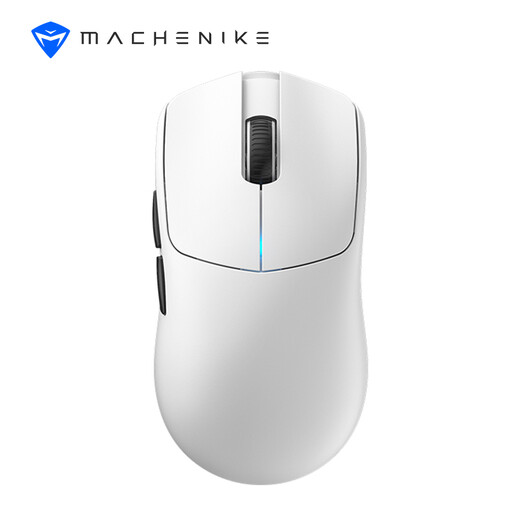 No image available
Its Bluetooth option may suit a laptop with few free USB ports. If avoiding a charging socket matters too, confirm how this model is powered before choosing it.
The product name lists wired, 2.4G and Bluetooth modes, a PAW3395 sensor and a 49 g weight. Check that its shape suits your grip for longer sessions.
Bluetooth keeps the receiver port free if your computer and mouse both support it. A dual-wireless mouse lets you switch to its 2.4 GHz receiver when preferred, but the receiver then occupies a USB port; SteelSeries also specifies different Bluetooth settings for the Rival 3 Wireless.
Choose a mouse that uses replaceable batteries and keep the correct spare available. Check the battery type behind any runtime claim: Razer's maximum Orochi V2 figures, for example, are stated for an AA lithium battery.
Extra buttons are useful when you have repeated actions you want to move off the keyboard, such as opening a journal or inventory; button count alone is not a reason to choose a mouse. The Razer DeathAdder V2 X HyperSpeed has seven programmable buttons, but their reach and the shell shape still need to suit your hand.
Use an appropriate local battery collection route rather than general waste. GOV.UK advises taping lithium-battery terminals before recycling to reduce fire risk; use an electrical-waste collection route when disposing of the mouse itself.