Racing players who bind extra controls
You want commands such as camera changes, look-back or a handbrake within reach of your mouse hand. Check whether the buttons you plan to use are comfortably placed, not just how many the mouse has.


For racing games in a bright room, choose a mouse whose extra controls you can reach by feel and whose grip and connection suit your desk, rather than treating RGB lighting as a visibility aid. A wired mouse avoids charging but leaves a cable; wireless removes the desk cable but requires a charging routine. Neither choice establishes better control visibility under bright room lighting.
You want commands such as camera changes, look-back or a handbrake within reach of your mouse hand. Check whether the buttons you plan to use are comfortably placed, not just how many the mouse has.
You would rather identify a control by its position and feel than rely on decorative lighting. Button separation and thumb reach matter more to this choice than the number of RGB effects.
You need to balance cable routing against charging. The connection that suits you depends on how your mouse moves across the desk and whether you are willing to maintain its charge.
For racing games in a bright room, decide which commands need to be reachable without looking, then consider the control layout, grip and connection that make those inputs practical.
| Concern | What to check | Who this matters to |
|---|---|---|
| Reachable extra controls | Check the position of programmable buttons and whether the exact model supports the bindings you need. | If I put look-back or camera changes on my mouse, I need to reach those buttons without pressing the wrong one; around 42% of consumers would put command access first. |
| Controls identifiable by feel | Look at button separation, thumb reach and any adjustable controls; do not use RGB features as a substitute for layout. | In a bright room, I want to find controls by feel rather than depend on illuminated accents; roughly 33% of consumers would make tactile layout their primary concern. |
| Connection and comfort | Consider cable routing or charging, then check the stated weight and shape of the exact variant. | I want freedom from a desk cable, or I would rather avoid charging another device; about 25% of consumers would put connection and hand comfort first. |
Lighting options describe customisation, not how readily you can identify a button by touch in a bright room.
Compare physical button spacing and reach first. Treat RGB as a separate preference.
Extra controls are useful only if your grip lets you distinguish and press the intended button without accidental inputs.
Inspect the exact model’s side-button layout and handle the mouse in person where possible. If it has an adjustable DPI-shift button, check whether its position works for your thumb.
Battery figures depend on settings such as connection mode and polling rate, so a quoted maximum need not apply to your setup.
Check the stated test conditions, charging method and supplied accessories for the exact variant.
Higher-polling accessories for some models are sold separately.
The G502 X models are relevant if you want a control-rich layout and a choice between wired and wireless versions.
The researched Basilisk V3 Pro models suit a closer look if you want a right-handed shape with numerous assignable controls.
The wired Rival 5 is relevant if you want several side controls without moving to a wireless setup.
These gaming mice offer wired or wireless setups for racing-game play. Compare their controls and grip for the commands you intend to bind; the product choices here are not a bright-room performance ranking.
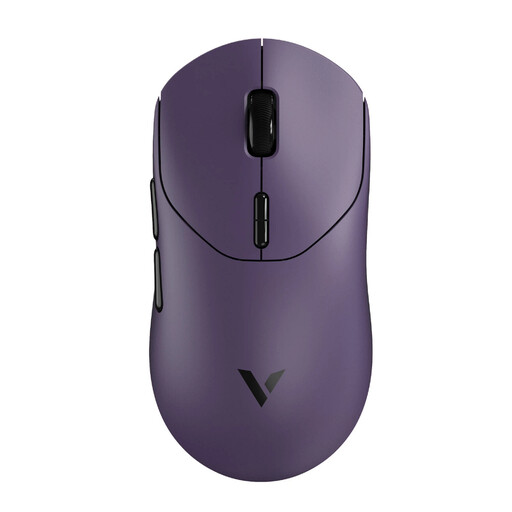 No image available
Consider this wireless option if you want to assign several secondary racing commands to the mouse.
The stated specifications include 53 g, 10 programmable buttons and an 8K wireless polling rate. Check whether the button positions suit your grip.
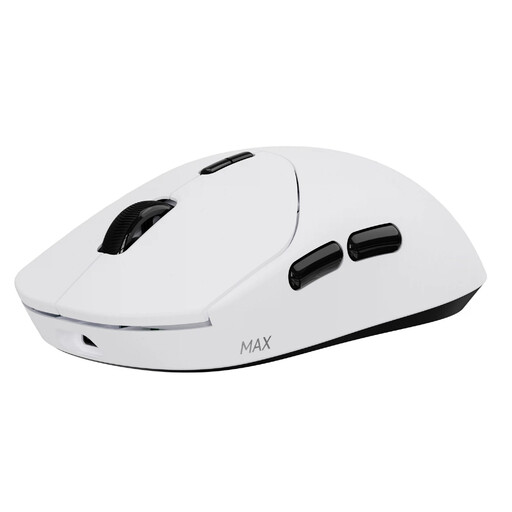 No image available
Consider the VT2 MAX if you want a wireless mouse with multiple assignable controls for racing commands.
Its stated specifications include 53 g, 10 programmable buttons, an optical switch and an 8K wireless polling rate. Check button reach and the conditions behind any battery-runtime claim.
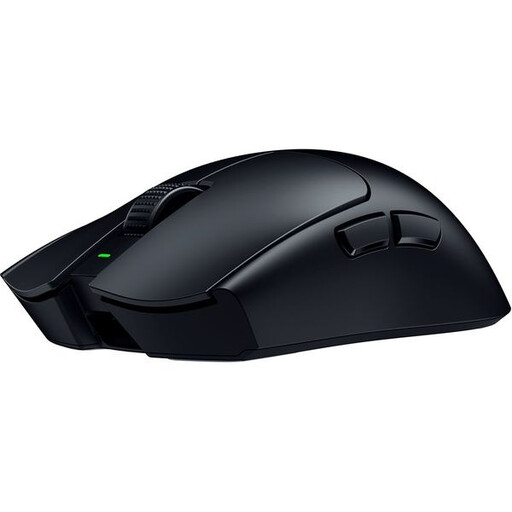 No image available
Consider this model if you prefer a wireless mouse but still need to check where its controls fall under your fingers for racing-game bindings.
The stated specifications include 54 g, a Focus Pro 35K Sensor Gen-2 and up to 8KHz polling. Confirm that its available controls cover the commands you want to assign.
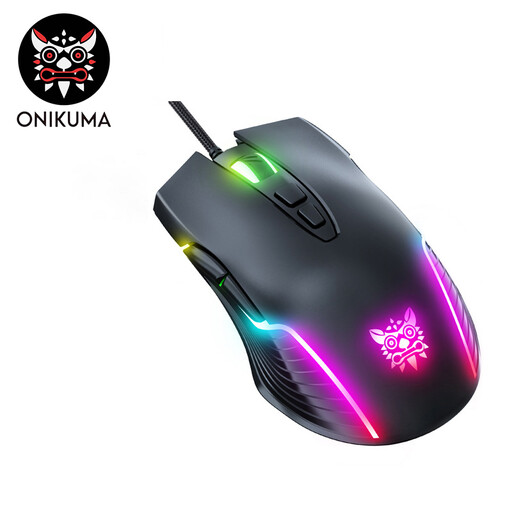 No image available
This is a wired option if you would rather route a cable than maintain a mouse battery.
It has RGB lighting modes and is described as having programmable buttons. Check which controls can be reassigned and whether their spacing suits your grip; lighting alone does not establish easier control in a bright room.
 No image available
Consider this model if you want to choose between wireless and USB-C connections for your desk setup.
Its stated connection modes are Bluetooth, 2.4G and USB-C, with a 24000 DPI PAW3311 sensor. The listed weight figures conflict, so confirm the mouse’s actual weight and which buttons can be reassigned before ordering.
Choose wired if avoiding a charging routine matters more than cable freedom; choose wireless if you prefer an unobstructed desk and are willing to charge the mouse. When comparing wireless runtimes, check the connection and polling settings behind each figure: Razer’s up-to-140-hour claim for the Basilisk V3 Pro 35K is specified for HyperSpeed Wireless at 1,000 Hz.
Start with commands you can reach reliably by feel, then add bindings after trying them in a practice session. Check the exact mouse’s button positions and remapping software before assigning an action to a control that might be easy to press accidentally.
Look for an appropriate electrical-equipment recycling route for an old gaming mouse. GOV.UK explains that electrical and electronic equipment is regulated to reduce electrical waste.