Small-desk builders
If the keyboard leaves little clear surface, start with mouse travel and a cable path that will not cross it. A wireless connection removes the cable during play, but shape still determines how the mouse feels in that space.


Choose a mouse that can move comfortably in the clear space beside your keyboard, then decide how many building-game commands you want within reach. A compact wireless shape addresses cable interference; a larger multi-button shape makes more sense when frequently used shortcuts matter more than compactness. Check hand fit, power and software requirements before committing to either.
If the keyboard leaves little clear surface, start with mouse travel and a cable path that will not cross it. A wireless connection removes the cable during play, but shape still determines how the mouse feels in that space.
If build, rotate, tool, inventory and communication actions repeatedly send your hand back to the keyboard, look for controls you can reach and assign reliably. A higher button count is useful only when those positions suit your grip.
If you expect extended sessions, assess hand fit, shape and weight before adding buttons or lighting to your requirements. A mouse described as compact or ergonomic will not suit every hand and grip.
Start with the movement area and cable route, then map your most-used game actions to reachable buttons. Treat fit and power arrangements as separate checks: neither follows automatically from the button count.
| Concern | What to check | Who this matters to |
|---|---|---|
| Movement space and cable | Measure the clear area beside the keyboard and check for desk-edge snags. Choose a connection method that works with your devices. | When my mouse has little room to travel, I need the cable and keyboard to stay out of its path. Around 36% of consumers put usable movement space first. |
| Reachable shortcuts | List recurring build actions; check button positions, remapping software and profile support for the exact model. | If I often switch tools or rotate pieces, I want the commands I use most on buttons I can press accurately. Around 29% of consumers prioritise shortcut access. |
| Hand fit | Compare the shape with your hand and usual grip; check the seller's return terms if you cannot try it. | For longer sessions, a shape that feels controllable matters more to me than another feature on the specification list. Around 21% of consumers make fit their primary concern. |
| Power and setup | Check whether the mouse charges or takes replaceable cells, and whether custom controls require compatible software. | I want to know how I will power and configure the mouse before making it part of my regular setup. Around 14% of consumers put these practicalities first. |
Extra controls help only when you can reach them and assign actions you actually repeat. Remapping also takes configuration on models that support it.
Write down your regular build, rotate, inventory, tool and communication commands, then match them to button positions before choosing a layout.
Published runtimes can depend on lighting, connection mode and use conditions. Razer's stated weight of under 60 g for the Orochi V2 excludes its battery.
Read the conditions attached to the model's figures and decide whether charging or replaceable cells fit your routine.
A replaceable-cell mouse needs spare batteries over time; a rechargeable one needs access to charging.
Logitech G positions the G705 for smaller hands, but neither that positioning nor a symmetrical shape establishes a fit for every grip.
Prioritise the shape you can control comfortably. If you cannot try the mouse, check the seller's return terms before ordering.
GOV.UK guidance says electrical products and batteries should not go in household rubbish.
Use an appropriate electrical or battery collection point when replacing them.
Its G705, G203 and G502 HERO illustrate different choices: smaller-hand wireless, straightforward wired controls and more programmable buttons.
The compact Orochi V2 and Basilisk models offer distinct approaches to movement space and shortcut access.
The M75 AIR is a symmetrical wireless model to consider when weight and movement matter more than a large shortcut array.
These mice offer wireless options for keeping a cable out of the movement area and wired options for avoiding battery management. Compare each model's controls and shape with your desk and building-game bindings rather than treating the list as a single type of mouse.
 Image unavailable
Consider this wireless model if a cable obstructs movement and you want several assigned building-game actions. The listing states 10 programmable buttons, macro support and a 53 g weight. Its stated battery life of up to 750 hours requires an updated driver and low-power mode; check the shape against your grip as well as those settings.
 Image unavailable
Its Bluetooth, 2.4G wireless and USB-C wired modes suit a setup that needs connection choices. The description lists six buttons and driver-based remapping, while positioning the shape for medium-to-large hands. Check button placement for your bindings and confirm the weight before using it to compare models: the listing gives both 63 g and 65 g.
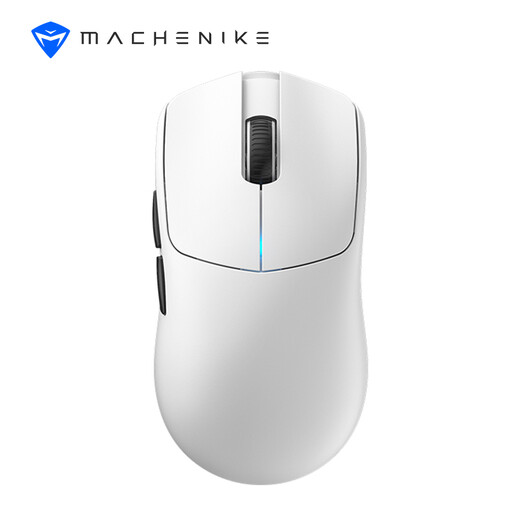 Image unavailable
Consider this model if low stated weight and a symmetrical shape matter more than a confirmed shortcut layout. Its description states 49 g, a 122 mm symmetrical design and wired, 2.4G and Bluetooth modes. Check its button layout and remapping options against your game controls before relying on mouse-bound shortcuts.
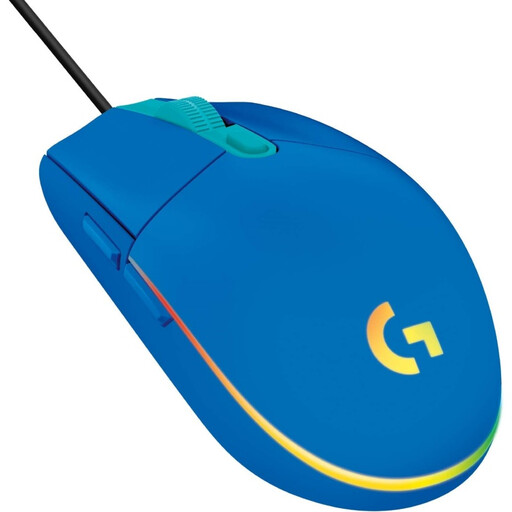 Image unavailable
This wired option suits a desk where you can route the cable clear of the mousing area and want to avoid battery management. The description lists six buttons, customisation through Logitech G HUB, an 8,000 DPI sensor and a 1,000 Hz report rate. Check the shape for your hand; those sensor figures alone do not determine how well it suits building-game controls.
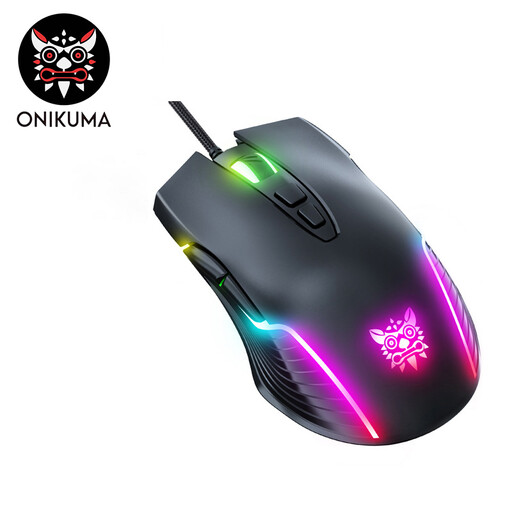 Image unavailable
This wired, symmetrical model is an option if a cable can stay clear of your limited movement area. Its detailed description lists seven buttons and six preset DPI levels. Check whether its controls can be remapped before planning custom building-game bindings, and assess the shape against your grip.
Choose by the commands you repeat and can reach reliably, not by the largest available count. Razer lists six programmable buttons for the Orochi V2, nine controls for the Basilisk V3 X HyperSpeed and 11 for the Basilisk V3; Logitech G lists 11 for the G502 HERO. Map your essential actions before deciding whether extra positions would help.
Wireless is useful when a cable crosses your limited mousing area or catches at the desk edge; a wired mouse remains practical if you can route its cable clear. Check the power arrangement too: the G705 charges by USB-C, while the Orochi V2 and G305 use replaceable batteries.
Model-specific button remapping can require the manufacturer's software. Logitech G says G HUB supports DPI changes and button remapping; confirm that the exact mouse and your computer's operating system are supported before depending on a custom profile.
Take old electrical products and batteries to an appropriate collection point rather than putting them in household rubbish, as GOV.UK advises. Check local electrical and battery collection options when replacing a mouse.