Players short on mouse space
If the keyboard and other desk items leave little room to aim, keeping the mouse path clear matters more than adding features that do not help with movement.


Choose a gaming mouse that fits your grip and leaves enough clear space for aiming; wireless removes the mouse cable from that space, while a wired mouse remains an option if you can route its cable clear of your movements. Check that the buttons you need for co-operative actions are easy to reach, and do not trade comfortable shape and placement for a lower weight figure alone.
If the keyboard and other desk items leave little room to aim, keeping the mouse path clear matters more than adding features that do not help with movement.
Reachable controls can help with repeated actions such as pinging or push-to-talk, provided the buttons do not force a change of grip.
For extended play, shell shape and grip fit deserve attention alongside weight and other headline specifications.
Work out how much mouse space remains beside your keyboard, then narrow the choice by button reach, grip fit and the routine you are willing to manage.
| Concern | What to check | Who this matters to |
|---|---|---|
| Clear movement space | Measure the usable area beside the keyboard. If considering wireless, check the exact mouse’s gaming connection and receiver; if considering wired, plan a cable path that stays clear. | If a cable crosses my limited aiming area, I need a mouse path that lets me move and reset without catching it. Around 36% of consumers would put clear movement space first. |
| Reachable co-op controls | List the actions you want on the mouse, then check button placement and whether the exact model supports the remapping you need. | When I regularly ping or use push-to-talk, I want those actions within reach without shifting my grip. Accessible controls would come first for around 29% of consumers. |
| Grip and shell fit | Compare the mouse’s dimensions and shape with a mouse you find comfortable, taking your palm, claw or fingertip grip into account. | During a long session, I need the shell to suit my hand even if another mouse has a lower stated weight. Roughly 21% of consumers would prioritise grip fit. |
| Battery and upkeep | For wireless models, check the exact power arrangement, what is included and how the mouse connects while you play. | If I do not want charging or battery changes to interrupt play, I need a power routine I can live with. Around 14% of consumers would make upkeep their primary concern. |
A lower stated weight does not tell you whether a shell suits your hand or whether its side buttons are within comfortable reach.
Settle on a suitable shape and grip first, then compare weights between mice that meet those conditions. Razer positions its DeathAdder line for right-handed palm and claw grip and its Viper V3 HyperSpeed for claw or fingertip grip; neither description establishes fit for every hand.
A mouse offering Bluetooth may also have a dedicated gaming connection, but the presence of one mode does not establish how the exact model connects during play.
Check the connection modes and whether the required receiver is included before relying on a wireless setup for co-operative shooters.
Wired, wireless and later-generation mice in the same family can have different specifications. SteelSeries Support, for example, lists different weights for the Aerox 3 wired and Aerox 3 Wireless models.
Match the full model and variant name when comparing weight, power arrangements and connection modes.
An old mouse needs an electrical-waste route when it is no longer usable.
Check the retailer’s take-back arrangements or a suitable local electrical-recycling option before replacing it. GOV.UK provides guidance on retailers’ electrical-waste take-back responsibilities.
Its G203 and G305 illustrate different choices for this desk setup: a wired six-button layout and a LIGHTSPEED wireless model.
Its DeathAdder and Viper lines offer different grip-oriented starting points rather than one shape for every player.
The Aerox range is relevant when considering a lighter mouse and, for the Aerox 3 Wireless Gen 2, a choice of wireless connection modes.
These wireless mice are options to examine if removing a cable from your small mouse area matters. Compare their shapes, controls and power arrangements before choosing; a wired mouse may still suit a desk where its cable can be kept clear.
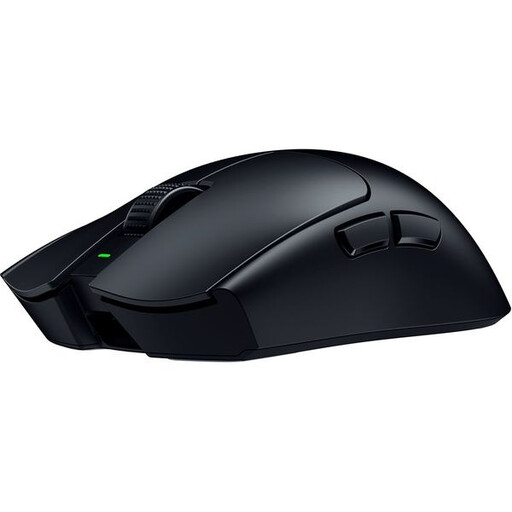 No image available
Consider this wireless model if a cable would interfere with movement beside your keyboard. Its title states a 54 g weight and names a Focus Pro 35K Sensor Gen-2 and HyperPolling 8 kHz; compare its shape and side-button reach with your grip before deciding.
 No image available
This wireless option is worth examining if you want mouse controls for several co-op actions. The title states 53 g, a True 8K wireless polling mode and 10 programmable buttons; check whether those buttons are reachable with your grip rather than judging by their number alone.
 No image available
This model offers a wireless mouse path, but allow room for its magnetic charging base on the desk. The title states 56 g and 2.4G and wired modes; confirm the exact connection modes and the number and reach of the buttons you intend to use.
 No image available
Consider the AJ200 AI MC if its wireless connection and dock suit your desk layout. Its title lists Bluetooth, 2.4G and USB-C modes; check the shell against your grip and leave space for the dock. Confirm the exact SKU’s weight before using it to compare mice, as the stated figures conflict.
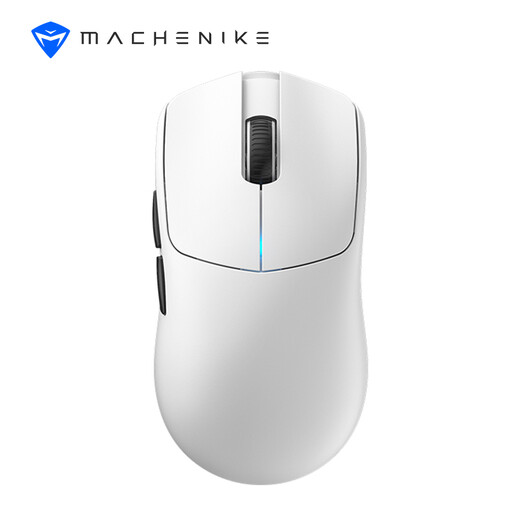 No image available
This is another model to examine if you frequently reposition the mouse in a restricted area. Its title states 49 g and wired, 2.4G and Bluetooth modes; check its shape, button count and configuration features before relying on it for your co-op bindings.
Choose wireless if a cable would cross the area you use to aim or catch on desk items; choose wired if you can keep its cable clear and would rather avoid managing a wireless mouse’s power. In either case, check that the shell fits your grip and that you have room to move it.
Start with the actions you want to bind, such as ping or push-to-talk, rather than a target button count. A conventional layout with two side buttons may cover a few frequent actions, but check their reach and remapping support on the exact model.
No particular weight is required for a small desk. A lighter mouse may appeal if you lift and reset it often, but shape, hand size and button placement still determine whether it suits the way you play.
Confirm that the exact mouse supports the assignments you want and that its configuration software works with your operating system. If you need different bindings between games, check how that model handles profiles; Logitech G says G HUB customises supported Logitech G equipment, but features can differ by model.
Use an appropriate electrical-waste collection route rather than treating an old mouse as ordinary household rubbish. Check the retailer’s take-back method or local recycling arrangements; GOV.UK sets out guidance on retailers’ electrical-waste take-back responsibilities.