Precision-first tactical players
Players who favour a light mouse and a simple layout for repeated swipes and small aim corrections.


Choose a mouse whose shape and button layout let you make controlled aim adjustments; a large screen alone does not call for a particular DPI or polling-rate setting. If you play wirelessly, use a dedicated 2.4 GHz receiver rather than Bluetooth where the mouse offers both. Consider higher polling only after checking hand fit, desk space and a sensitivity you can use consistently.
Players who favour a light mouse and a simple layout for repeated swipes and small aim corrections.
Players considering a shaped right-handed shell because a symmetrical mouse does not feel comfortable through longer sessions.
Players who want accessible bindings for communication, utility or other commands without disrupting their aiming grip.
For tactical games on a large screen, settle on a shape you can control before deciding how many mouse-bound commands or wireless features you need.
| Concern | What to check | Who this matters to |
|---|---|---|
| Controlled aim and weight | Check the stated weight of the exact variant and whether its shell stays stable in your normal grip. | If I make frequent swipes and small corrections, I want the mouse to move easily without losing control. Roughly 31% of consumers would put controlled aim and low moving mass first. |
| Hand fit | Check handedness and shell dimensions against a mouse you already find comfortable, where possible. | During long sessions, I need a shape that fits my hand and grip rather than a specification that looks impressive on paper. Around 31% of consumers would make hand fit their primary concern. |
| Accessible commands | List the commands you would bind and check whether you can reach the side buttons without shifting your grip. | When I use several communication or utility commands, I want them within reach but not where I might press them accidentally. Roughly 19% of consumers would prioritise command access. |
| Wireless use | Check for a 2.4 GHz receiver and compare battery claims at the polling and lighting settings you intend to use. | If I play without a cable, I want a suitable gaming connection and fewer interruptions to charge. Around 19% of consumers would put connection choice and endurance first. |
A maximum DPI figure does not tell you whether the shell fits your hand or which sensitivity will feel controllable in your game.
Choose a stable grip first, then adjust sensitivity to your desk space and keep it consistent while assessing the mouse.
Bluetooth may be convenient for another device, but connection modes differ. SteelSeries Support states a default Bluetooth polling rate of 125 Hz for the products it discusses.
For tactical matches, use the mouse’s dedicated 2.4 GHz receiver where available and check the connection options for the exact model.
Extra controls help only if you can identify and press them without changing your aiming grip or triggering an unintended command.
Write down the bindings you would actually use, then assess the side-button positions against your thumb reach.
Wireless mice are electrical products and may contain batteries. UK government guidance warns that damaged lithium-ion batteries can present a fire risk.
Use an appropriate electrical-recycling collection point and follow local instructions for a battery that cannot be removed.
The Viper V3 Pro is a symmetrical wireless option for players considering a light, straightforward competitive layout.
The PRO X SUPERLIGHT range includes a symmetrical PRO X SUPERLIGHT 2 and a right-handed asymmetrical PRO X SUPERLIGHT 2 DEX.
The Aerox 5 Wireless offers a multi-button route for players who want more commands on the mouse.
These Joybuy choices cover lightweight wireless mice, a shaped wired option and a wireless model with more programmable buttons. Compare their shape and controls against your own grip and bindings before focusing on headline sensor figures.
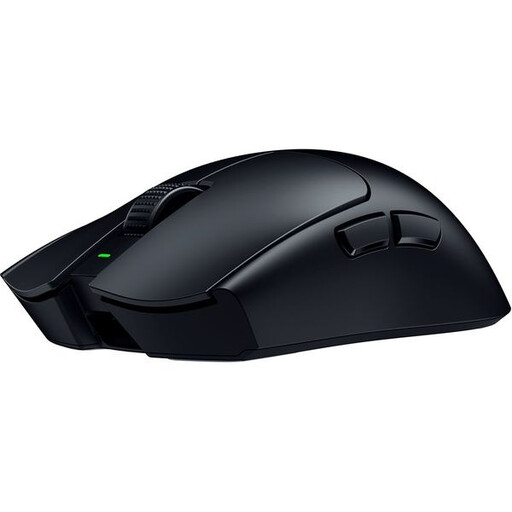 No image available
Consider this model if a light mouse with a simple competitive layout suits your aiming grip.
The product name specifies 54 g, a Focus Pro 35K Sensor Gen-2 and HyperPolling 8 kHz. Check that the shell feels stable in your hand; its maximum sensor setting is not a target DPI for a large screen.
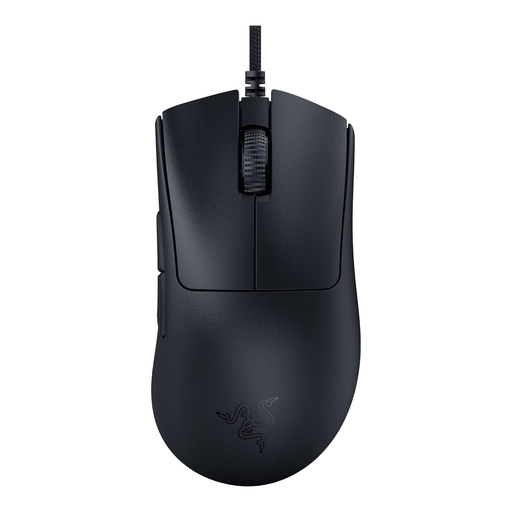 No image available
This shaped right-hand option is worth considering if you prefer a wired setup to a symmetrical wireless mouse.
Check that the cable and USB-A connection suit your desk and that the right-handed contour fits your grip.
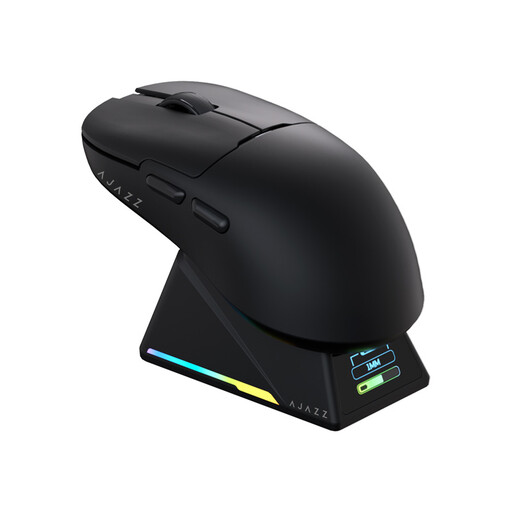 No image available
Consider this model if you want a light mouse for aim adjustments and would use its wireless or wired connection options.
The product name states 56 g, a PAW3950 sensor, 8 kHz polling and a magnetic charging base. Check the shell against your grip, and confirm the exact variant’s maximum DPI if that specification matters to you.
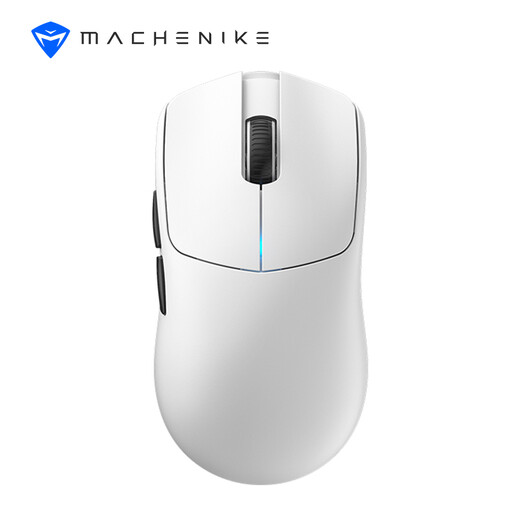 No image available
This is an option for players seeking a light mouse that can also switch between connection modes.
The product name states 49 g, a PAW3395 sensor and wired, 2.4 GHz and Bluetooth modes. Check the shell dimensions against your grip and battery runtime at the settings you intend to use.
 No image available
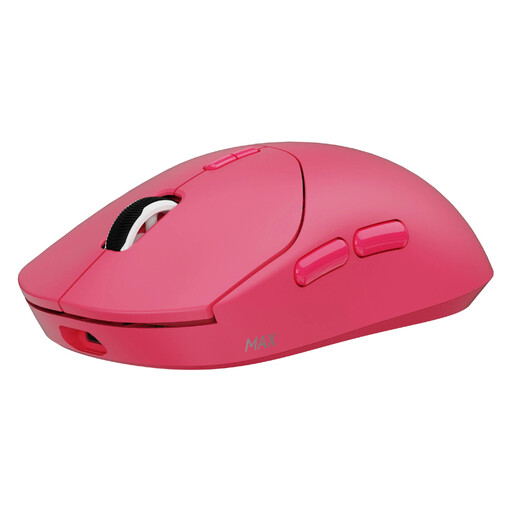
Consider this model if you have several commands to bind and still want a mouse with a low stated weight.
The product name states 53 g, 10 programmable buttons and up to 8 kHz wireless polling. Confirm the shape and handedness before choosing it, and check battery runtime at your intended polling setting.
No fixed DPI setting follows from screen size alone. Choose a sensitivity you can control with your available desk space and game settings, rather than selecting a mouse by its maximum DPI figure.
Use the dedicated 2.4 GHz receiver for competitive play when your mouse offers one. SteelSeries specifies 2.4 GHz as the gaming connection for the Aerox 5 Wireless; check the modes available on any other model you are considering.
No. Razer explains that higher polling sends mouse data more frequently, but a comfortable shape and a stable game setup remain important. Consider whether your PC and monitor make the higher setting worth trying before prioritising it over fit.
Take an electrical mouse marked with the crossed-out wheelie-bin symbol to an appropriate recycling collection point rather than putting it in household rubbish. UK government guidance also describes household waste recycling centres and retailer take-back when replacing an electrical item; follow local instructions for handling a battery that cannot be removed.