Small-desk tactical players
If a keyboard, laptop or other items leave little room to move a mouse, its footprint and cable path matter alongside its gaming controls.


Choose a compact wireless gaming mouse if a cable or crowded mouse area is your main obstacle. Consider more programmable buttons when you have recurring tactics-game actions to map and can reach the controls comfortably; a wired mouse remains an option if its cable has a clear path. Whichever format you choose, check that its shape fits your hand and lets you keep the mouse within easy reach.
If a keyboard, laptop or other items leave little room to move a mouse, its footprint and cable path matter alongside its gaming controls.
Players who repeatedly open menus or use camera and action commands may value programmable buttons, provided each control is easy to distinguish and reach.
For extended sessions, hand fit and a position that does not require overstretching deserve attention. University Hospitals Sussex NHS Foundation Trust advises keeping the mouse within easy reach.
Start with the space available beside your keyboard, then decide how many actions you would actually map to mouse buttons. Check hand fit and connection requirements before settling on a model.
| Concern | Buying checks | Who this matters to |
|---|---|---|
| Mouse space and cable path | Compare the mouse dimensions with your clear desk area. For wired use, check the cable route; for wireless use, locate a suitable receiver port. | When my keyboard leaves little room for the mouse, I want to move it without a cable crossing that space. Around 40% of consumers would put a clear mouse area first. |
| Reachable shortcuts | Count the actions you use repeatedly, then check the programmable-button layout and whether remapping works with your setup. | If I regularly select actions or open menus, I want those commands within comfortable reach rather than simply having more buttons. Reachable shortcuts would be the main concern for around 30% of consumers. |
| Hand fit and reach | Check shape, dimensions and intended grip; position the mouse close enough to use without overstretching. | During a long session, I need a shape I can hold comfortably without reaching across a crowded desk. For around 20% of consumers, hand fit and reach would come first. |
| Power and device switching | Check the power method, connection modes and receiver arrangement for each device you intend to use. | If I move between a gaming PC and another device, I want both connections and power upkeep to suit that routine. Around 10% of consumers would prioritise that convenience. |
A dense button layout helps only if you can assign useful actions and reach the controls without unwanted presses. Razer specifies 10+1 programmable buttons for the Basilisk V3 and 21 programmable controls for the Naga V2 HyperSpeed; neither count establishes which layout will suit your hand.
List the actions you use repeatedly, then consider whether a side-button pair and keyboard shortcuts already cover them.
A wired mouse needs a cable path that does not pull across its movement area. A receiver-based wireless mouse needs a suitable port in your setup.
Measure the clear mouse area and check the cable route or receiver position before choosing a connection type.
Weight and stated grip style can help narrow a choice, but neither establishes individual fit. University Hospitals Sussex NHS Foundation Trust advises placing the mouse within easy reach without overstretching.
Compare dimensions and grip orientation, and check the applicable retailer return terms if you cannot try the shape beforehand.
Wireless models differ in how they are powered, while custom button assignments may depend on software that works with your device.
Check the power method, what comes with the mouse and whether its remapping software supports your operating system.
A model powered by replaceable batteries requires replacements; an optional charging mat is another item to accommodate on the desk.
Razer offers contrasting control layouts in the compact wireless Orochi V2, wired Basilisk V3 and wireless Naga V2 HyperSpeed.
The G309 is relevant when one mouse needs to serve a gaming receiver connection and a Bluetooth-capable device.
The Rival 3 range gives buyers a wired option and a separate wireless option to consider.
These wireless gaming mice are options to consider when cable clearance matters on a small desk. Their controls, shape information and power arrangements vary, so match those details to your own setup rather than treating wireless operation as a complete answer.
 No image available
Consider this wireless model if you want to keep a cable out of the mouse area and map recurring tactics commands.
The product name specifies 53 g and 10 programmable buttons. Its stated battery life of up to 750 hours depends on low-power mode and an updated driver.
Check its dimensions and hand fit before buying, particularly if your available mouse area is narrow.
 No image available
Consider this model if you want wireless desk clearance and connection options for more than one device.
Its product name specifies Bluetooth, 2.4G and USB-C modes, as well as a charging dock. Check that the mouse dimensions suit your grip and that the receiver and power arrangement meet your needs.
Confirm the exact SKU weight before relying on it for a shape or handling decision.
 No image available
This model offers a cable-free mouse area when used in its stated 2.4G wireless mode.
The product name specifies 56 g, a magnetic charging base and 2.4G or wired operation. If switching to a Bluetooth device matters, confirm whether this exact variant supports Bluetooth before buying.
Check its dimensions and button layout if hand fit or remapped shortcuts are central to your choice.
 No image available
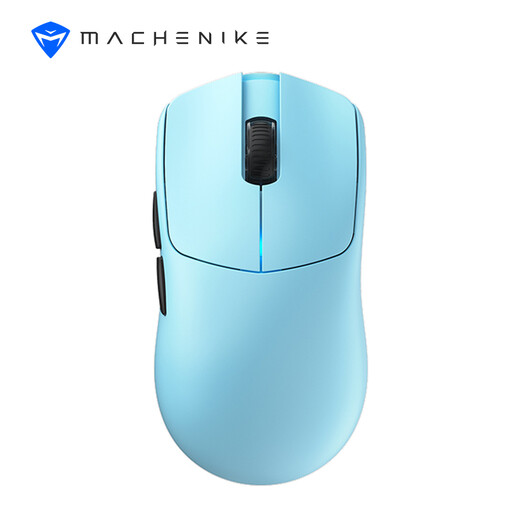
Consider this wireless mouse if removing a cable from the mouse area is the priority.
Check its full dimensions against your desk space and hand position. If you want tactics-game shortcuts on the mouse, confirm the button layout and remapping options before choosing it.
 No image available
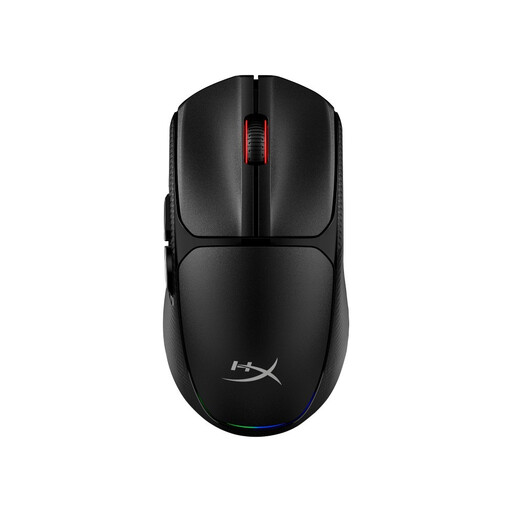
This wireless model is worth considering if a mouse cable would obstruct your limited desk area.
Check its dimensions and hand fit, then confirm that its button layout and customisation options cover the commands you want to assign.
Only if you have recurring commands you want on the mouse and can reach those controls comfortably. Razer specifies 10+1 programmable buttons for the Basilisk V3 and 21 for the Naga V2 HyperSpeed, but a higher count is not a requirement for every player.
Wireless removes the mouse cable from the working area, which can help when that cable would cross a narrow mouse space. Check the receiver position and power method; if you also use a Bluetooth-capable device, confirm that your chosen model offers that connection. Logitech G specifies LIGHTSPEED and Bluetooth for the G309.
Keep it within easy reach without overstretching, as University Hospitals Sussex NHS Foundation Trust advises in its workstation guidance. Move items you rarely use out of the mouse area if they prevent you from positioning it close to your keyboard.
No single specification establishes personal fit. Compare the mouse dimensions and intended grip with your hand and desk layout, and check the applicable retailer return terms if you cannot try the shape before buying.