
24/7 全天候客户支持

免费退货

当日/次日达

品质保障

开启新人专享福利: 全场免邮 | 低至 2 折 | 免费试用 30 天 JoyPlus 会员
下载 Joybuy
Is your Nintendo Switch or Steam Deck constantly flashing "insufficient storage" warnings? Are you tired of long loading screens interrupting your gameplay? A high-performance gaming microSD card is the simplest and most effective way to expand your device's capacity and get you back in the game faster.
Choosing the right card, however, can feel like navigating a minefield of technical jargon. This guide cuts through the jargon, offering practical advice to help you select a memory card that meets your needs for gaming, 4K video and more. We will look at key features and highlight a few standout options to consider.
Before you buy, a little knowledge goes a long way. Keep these three points in mind to ensure you get the right storage expansion for your Switch, Steam Deck or camera.
The small symbols on a microSD card are not just for decoration; they indicate its performance. For gaming, the most important one is the Application Performance Class.
The right capacity depends entirely on your digital library. Modern games can be huge, with titles like The Legend of Zelda: Tears of the Kingdom taking up over 18GB and others easily exceeding 50GB.
While most modern devices use the microSDXC standard, it is always wise to double-check. Ensure the card you choose is compatible with your specific device, whether it is a Nintendo Switch memory card, a card for the Steam Deck, a drone or a camera. Official licensing, like that seen on some Nintendo-specific cards, offers an extra layer of assurance that the card meets the console's performance and reliability standards.
Here are a few recommendations that balance performance, capacity and reliability for different types of users.
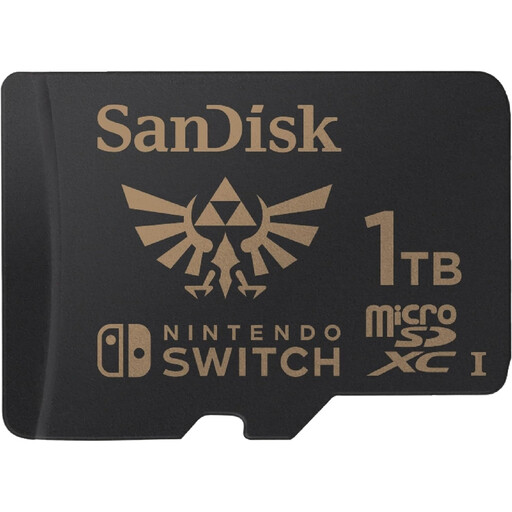
Why It Stands Out: This card's main advantage is its official Nintendo license. This means it has been tested and approved by Nintendo to work seamlessly with the Switch, Switch OLED and Switch Lite, guaranteeing compatibility and reliable performance.
With 1TB of storage, it provides a massive amount of space for even the most extensive game libraries. The read and write speeds of up to 100MB/s and 90MB/s respectively are optimised for the Switch architecture, helping to reduce initial load times and keep gameplay smooth.
Pros:
Who is it for? This is the go-to choice for dedicated Nintendo Switch owners who want the maximum possible storage and the peace of mind that comes with an officially endorsed product.
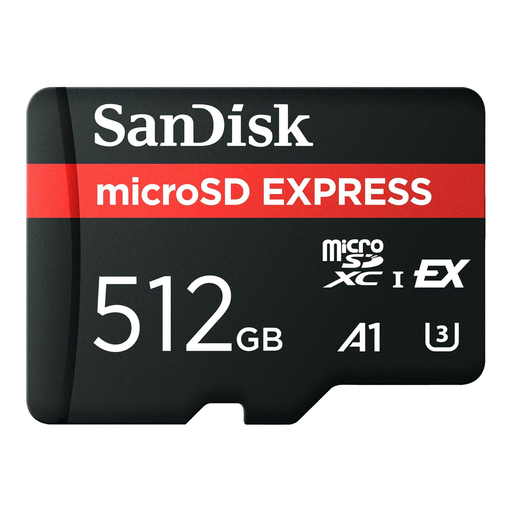
Why It Stands Out: The SanDisk Express card is built for the future. It features a PCIe NVMe interface, delivering SSD-like speeds that are up to 4.4 times faster than traditional UHS-I cards when used with a compatible reader. While it is fully backward-compatible with current devices like the Steam Deck and Switch (at UHS-I speeds), its true potential is unlocked in next-generation hardware.
Its advanced ThermAdapt technology helps manage heat during intense operations, making it a reliable option for sustained 4K/8K video recording or heavy gaming sessions.
Pros:
Who is it for? This card is ideal for tech enthusiasts, professional content creators and gamers using high-performance devices like the Steam Deck. It is a forward-thinking investment for those who want a card that will serve them today and be ready for the next generation of consoles and cameras.
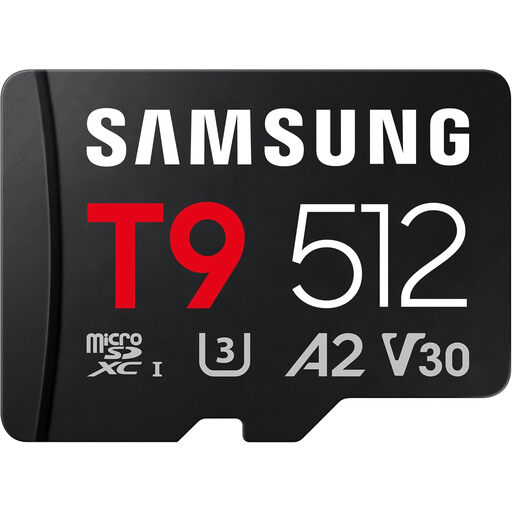
Why It Stands Out: The Samsung T9 is a versatile workhorse that excels in almost any scenario. It combines a high speed memory card performance with exceptional durability. With read/write speeds up to 200MB/s and 130MB/s, a V30 rating for 4K video and an A2 rating for fast app performance, it is equipped for any task.
What truly sets it apart is its 6-proof protection, which safeguards your data against water, extreme temperatures, drops, magnets and x-rays. This makes it an incredibly reliable choice for use in action cameras and drones where conditions can be unpredictable.
Pros:
Who is it for? This card is for the user who does it all. If you need a single, robust card that can move seamlessly between your gaming console, drone and laptop without compromising on speed or reliability, the Samsung T9 is a strong contender.
If these specific models do not quite match what you are looking for, or if you are interested in different capacities or features, there are many other choices available.
Explore our full range of SDHC MicroSD Card options to find the perfect fit for your device and budget.
The Application Performance Class (A1 or A2) measures a card's ability to handle random read and write operations, which is crucial for running apps and games. An A2 rated micro sd card offers significantly higher random performance than an A1 card. This translates to faster loading times for games and a smoother experience when navigating menus on devices like the Steam Deck or Nintendo Switch.
Whether a 1TB micro sd card is worth it depends on your gaming habits. If you primarily buy physical games, a smaller card (like 256GB or 512GB) may be sufficient. However, if you have a large digital library, frequently download new titles from the eShop and want to avoid deleting games to make space, a 1TB card is a worthwhile investment for long-term convenience.
Yes, in most cases. Many high-performance gaming cards also carry a Video Speed Class rating, such as V30. A V30 rating guarantees a minimum write speed of 30MB/s, which is the standard requirement for recording smooth, high-quality 4K video. Always check for the V30 symbol if 4K recording is a priority for you.