Detail-first adventure players
If much of your session involves reading dialogue and examining scene art, maps or inventories, compare native resolution before treating an extreme refresh rate as essential.


For long point-and-click adventure sessions, choose the resolution and screen position you want before prioritising an unusually high refresh rate. A 4K IPS monitor suits detail-led play if your device supports its intended mode; QHD IPS is another route, while QHD OLED is worth considering if you value its panel characteristics and are comfortable following the selected model’s guidance for static content.
If much of your session involves reading dialogue and examining scene art, maps or inventories, compare native resolution before treating an extreme refresh rate as essential.
If the same screen serves long gaming sessions and desktop work, consider whether its stand lets you position it appropriately at your desk. The Health and Safety Executive’s screen-placement guidance is relevant to arranging a work setup.
If you are considering QHD OLED and also leave game interfaces or desktop windows visible for long periods, examine the exact model’s panel-care instructions and warranty alongside its display specifications.
For a long adventure-game session, decide whether 4K detail or a QHD panel better fits your use, then check screen positioning and the modes your device can actually supply.
Consider it: when scene and interface detail take priority and your device can supply the intended 4K mode.
Trade-off: a dual-resolution model’s faster FHD mode is a separate choice, not a faster 4K mode.
Consider it: when you prefer the QHD OLED route and its stated response specifications.
Trade-off: check the selected model’s care guidance and warranty if static interfaces are part of your routine.
Consider it: when QHD meets your detail needs and you prefer an IPS display for mixed use.
Trade-off: it does not provide the 4K mode of a 4K IPS model or the stated OLED response specification.
| Concern | What to check | Who this matters to |
|---|---|---|
| Scene and text detail | Compare native 4K and QHD resolution, then confirm the mode available through your device and connection. | If I spend most of a session reading dialogue and examining maps or scene art, detail is my main priority; around 42% of consumers put that need first. |
| Long-session positioning | Check stand height adjustment and whether the screen can be positioned appropriately at your desk; check mounting options if needed. | When I use one desk for gaming and work, I need to place the screen comfortably for both; workable positioning comes first for around 33% of consumers. |
| Panel and static content | Compare IPS and OLED, and read the selected OLED model’s panel-care guidance and warranty terms. | If menus or desktop windows may stay visible for long stretches, I want to understand the panel-care commitment before choosing OLED; around 25% of consumers make that their primary concern. |
A dual-resolution monitor can offer different refresh rates at 4K and FHD. A higher number in one mode does not mean it applies to the other.
Decide which resolution you will use most, then check that your device and cable can supply that specific mode.
The Health and Safety Executive advises placing a work screen with its top around eye level and the screen about an arm’s length away. Panel or eye-comfort features do not position it for you.
Measure your desk and seated eye height, then check the stand’s adjustments or compatible mounting options.
A separate monitor arm may be needed if the supplied stand cannot reach a suitable position.
Panel-care measures are described as reducing risk, not eliminating considerations around prolonged static game interfaces or desktop content.
Read the exact model’s care instructions and warranty. If its static-content requirements do not suit your routine, consider an IPS route.
Dell UK lists distinct IPS and QD-OLED gaming monitors relevant to the 4K-versus-QHD choice.
The BenQ MOBIUZ EX2710Q offers a QHD IPS route for readers considering a matte gaming display.
The ASUS ROG Swift OLED PG27AQDP is a specialist QHD OLED option for readers who also play fast-paced games.
These options cover 4K IPS, QHD OLED and QHD IPS monitors for the adventure-game setup discussed above. Compare each model’s stated mode and positioning options against your own desk and device.
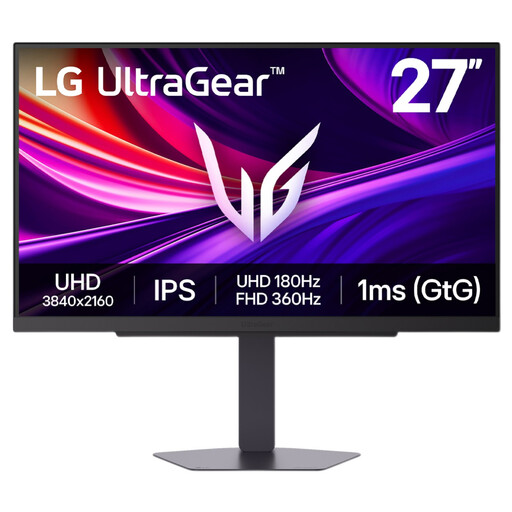 No image available
Consider this model if 4K detail is your priority and you also want a separate faster mode. Its title specifies a 27-inch IPS display and Dual Mode with a maximum of 360Hz; the 360Hz mode is FHD rather than 4K. Check your device and cable for the mode you intend to use.
 No image available
Consider this 4K option for detailed scenes if its available modes suit your other gaming uses too. The product name specifies 240Hz and 480Hz dual modes; the 480Hz mode is at 1080p, not 4K. Check device and cable compatibility, along with the stand’s adjustment range for your desk.
 No image available
Consider this model if you prefer QHD OLED to the 4K IPS route. Its product name specifies 2560 × 1440, 240Hz and a 0.03ms response specification. For extended use with static interfaces or desktop content, check the exact panel-care instructions and warranty terms.
 No image available
Consider this QHD IPS model if that resolution meets your needs and you do not require a 4K mode. Its product name specifies 2560 × 1440 and 220Hz. Check whether the stand or a compatible mount can achieve your intended screen position, and whether its stated glossy finish suits your room lighting.
Aim to place the screen directly in front of you, with its top around eye level and the screen about an arm’s length away, following Health and Safety Executive work-screen guidance. Before buying, check whether the stand or a compatible mount lets you achieve that position at your desk.
No particular gaming-monitor panel, size or refresh rate follows from the work rules described by the Health and Safety Executive. Its display screen equipment guidance concerns workers using screens daily for continuous periods of an hour or more; its positioning advice can still help you arrange a gaming desk.
Build regular changes of activity into the session rather than relying on a monitor feature to address prolonged use. The Health and Safety Executive says its work-screen guidance sets no legally fixed break duration or frequency; leisure gaming is not governed by that work-break advice.
Not for that use alone. ASUS presents its 480Hz QHD PG27AQDP as an esports- and action-focused model; for slower adventures, decide first which resolution, screen position and device output mode suit you.
No. ASUS describes its OLED Care+ measures as intended to reduce burn-in risk, not eliminate it. If you regularly leave menus or desktop windows on screen, read the selected model’s care instructions and warranty before choosing an OLED monitor.