Who this choice affects

Bright-room support-role player

Daylight or a lamp may face your screen while you practise. RTINGS.com explains that room lighting, display brightness and reflection handling all affect how clearly you see the image, so screen placement deserves attention alongside the specifications.

Competitive motion-first player

Fast-moving action matters more to you than QHD desktop space. ZOWIE UK positions its XL2566X+ Fast TN monitor around high-refresh, FPS-focused play; that route is worth considering only if your game and PC can make use of it.

One-monitor PC gamer

You use the same display for practice and everyday desktop tasks. QHD resolution, an adjustable stand and the refresh rate available through your chosen input all matter when comparing models such as the ASUS ROG Strix XG27ACS-W.

What matters when choosing

27-inch QHD Fast IPS

Consider it when: You want QHD space for game interfaces and desktop use alongside a high-refresh gaming setup.

Allow for: An anti-glare surface still cannot remove a direct reflection; check the refresh rate available through your intended input.

FHD high-refresh TN

Consider it when: Fast motion takes priority over QHD workspace in your competitive practice.

Allow for: The lower native resolution, and check whether your PC and game can deliver the frame rates you seek.

27-inch QHD OLED

Consider it when: OLED image characteristics and high-refresh gaming matter to you, and you can control light facing the screen.

Allow for: A low-reflection treatment alone does not establish how visible the screen will be at your bright-room desk.

Dual-resolution IPS

Consider it when: You want to switch between a higher-resolution desktop mode and a higher-refresh FHD gaming mode.

Allow for: The modes are alternatives, not the maximum resolution and refresh rate at once.

Concern What to check Who this matters to
Reflections and visibility Screen finish, typical SDR brightness and whether a window or lamp will face the panel. If daylight crosses my screen during practice, I need to see the game interface without a distracting reflection. Roughly 31% of consumers put bright-room visibility first.
QHD space and everyday use Native resolution, stand adjustment and whether your PC can run games acceptably at QHD. I use one screen for practice and desktop tasks, so I want room for maps, interfaces and other windows. For around 31% of consumers, QHD usability is the primary concern.
Fast motion Refresh rate at your chosen resolution and input, plus adaptive-sync compatibility. When action moves quickly, I care more about motion handling than extra desktop space. That is the leading need for roughly 23% of consumers.
Connections and positioning Port-specific refresh limits, the cable and device output, and the stand or mount adjustment you need. My monitor must connect to my existing setup and sit where light will not face it. Around 15% of consumers put that setup fit first.

Buying pitfalls

  • Assuming an HDR figure settles daytime visibility

    A direct window or lamp reflection can interfere with the image regardless of a monitor’s HDR claim. RTINGS.com identifies both room lighting and reflection handling as factors in how the screen appears.

    Look at the intended desk position, screen finish and typical SDR brightness before treating an HDR figure as decisive.

  • Choosing by the highest refresh-rate number alone

    The rate you can use may depend on the input, cable, graphics output and selected resolution. LG UK, for example, specifies DisplayPort 1.4 support and a DisplayPort 1.4 cable for the 200 Hz overclocked mode of its 27GS85Q-B.

    Check the resolution and refresh rate together on the connection your PC or console will actually use.

  • Assuming OLED glare treatment removes lighting trade-offs

    A treated screen can still be affected by direct light. For a bright-room desk, the relevant question is how the particular OLED appears under lighting comparable to yours, not whether its description says anti-glare.

    Check screen placement, typical SDR brightness and any brightness-management settings before deciding.

    LG states that switching off Smart Energy Saving on its cited 27GS95QE-B may increase power consumption.

Relevant brands for reference

ASUS ROG

The ROG Strix XG27ACS-W is a reference point for a 27-inch QHD Fast IPS monitor with an anti-glare surface.

  • ASUS ROG UK specifies a 2560 × 1440 Fast IPS panel, 350 cd/m² typical brightness and a maximum 180 Hz refresh rate for this model.
  • Check the refresh rate supported by the particular input you intend to use; the headline maximum should not be assumed for every connection.

LG UltraGear

Its cited models illustrate distinct QHD Nano IPS and QHD OLED routes rather than one interchangeable set of specifications.

  • LG UK specifies 180 Hz for the Nano IPS 27GS85Q-B, with a 200 Hz overclocked mode requiring DisplayPort 1.4 support and cable. Its OLED 27GS95QE-B is specified at 240 Hz.
  • Assess each model’s screen treatment and brightness for your lighting; the Nano IPS overclocking requirement does not apply to every input or model.

ZOWIE

The XL2566X+ represents an esports-oriented FHD route for players who put fast motion ahead of QHD workspace.

  • ZOWIE UK specifies a 400 Hz Fast TN panel and DyAc 2 for this model.
  • Its FHD format is a trade-off if you also want QHD space for desktop tasks; check whether your game and PC can use such a high refresh rate.

Alienware

The AW2725QF offers a dual-resolution IPS route for switching between different desktop and gaming priorities.

  • Dell UK specifies 4K at 180 Hz or FHD at 360 Hz for the AW2725QF.
  • You choose one mode at a time; check your graphics hardware and the monitor’s placement under direct room lighting.

Joybuy product choices

These monitors offer different QHD gaming and desktop-use options for a bright-room setup. Compare their screen surfaces, positioning and connection requirements against your desk before choosing by refresh rate.

Samsung Odyssey G6 S27DG612 monitor

Samsung Odyssey G6 S27DG612 27-inch QHD OLED, 240 Hz

Consider this QHD OLED model if high-refresh gaming matters and you can assess its visibility in your intended lighting.

The product name specifies a 27-inch display, 240 Hz refresh rate and 0.03 ms response time. Its stated glare treatment does not remove the need to check direct reflections; confirm the refresh rate available through your chosen input.

View on Joybuy
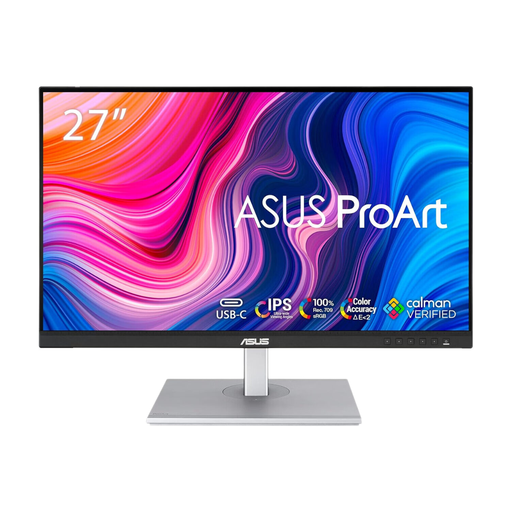
ASUS ProArt PA278CFRV monitor

ASUS ProArt PA278CFRV QHD IPS, 100 Hz

Consider this QHD IPS option if one screen must serve desktop tasks and gaming, and very high refresh is not your priority.

The product name specifies 100 Hz. Its creator-focused positioning is worth bearing in mind; check gaming adaptive-sync support and the refresh rate available through your intended input if either matters to you.

View on Joybuy
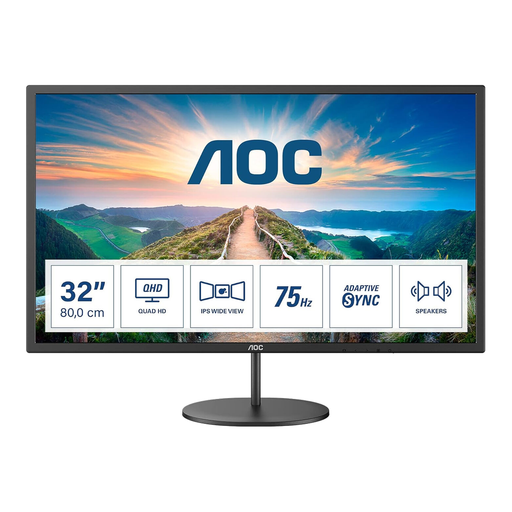
AOC Q32V4 monitor

AOC Q32V4 31.5-inch IPS monitor with Adaptive Sync

Consider this larger display if screen size matters more to your setup than high-refresh competitive play.

The product name states a 31.5-inch IPS panel, Adaptive Sync and built-in speakers. Check its refresh rate against your gaming needs and confirm whether the included stand can position the screen away from light.

View on Joybuy

HKC G27H2DPro monitor

HKC G27H2DPro 27-inch QHD Fast IPS, 220 Hz

Consider this model if QHD gaming at a high stated refresh rate is a priority and you can manage light facing the display.

The product name specifies 2560 × 1440 and 220 Hz. Its listed glossy finish makes the direction of windows and lamps particularly relevant; confirm the refresh rate supported by your intended input.

View on Joybuy

Acer Predator X27U W3 monitor

Acer Predator X27U W3 26.5-inch QHD QD-OLED, 240 Hz

Consider this QD-OLED gaming option if its high stated refresh rate suits your PC and you can check how the screen looks in your room.

The product name specifies 2560 × 1440, 240 Hz, FreeSync Premium Pro and G-SYNC Compatible support. Check the screen finish, typical SDR brightness and stand adjustment for your bright-room placement.

View on Joybuy

Common questions

Should I check reflections or HDR brightness first?

Check reflections first if a window or lamp may face your gaming monitor. RTINGS.com notes that lighting, brightness and reflection handling affect the visible image together; compare the screen finish and typical SDR brightness in the context of your desk rather than relying on an HDR figure alone.

Do I need a 360 Hz or 400 Hz monitor for support-role practice?

Not unless very fast motion is a leading priority and your PC and game can make use of the rate. An FHD esports monitor also gives up QHD workspace, so consider how often you use the screen for maps, other interfaces and desktop tasks.

Why does the monitor input matter?

The maximum refresh rate can depend on the input and cable rather than applying to every connection. LG UK specifies that the 200 Hz overclocked mode of its 27GS85Q-B requires DisplayPort 1.4 support and a DisplayPort 1.4 cable; check the equivalent requirements for the exact monitor and device you plan to connect.

Can adaptive sync help when my game’s frame rate varies?

It can help on a compatible setup by matching display refresh to changing frame rates. AMD describes FreeSync as intended to reduce tearing and stuttering with compatible Radeon graphics; check the particular monitor, graphics hardware, connection and enabled settings before relying on it.

What if an online monitor order is unsuitable or arrives faulty?

For a UK online order you wish to cancel, GOV.UK says to tell the seller within 14 days of receiving it. A fault or misdescription is a separate issue from a change-of-mind cancellation: contact the seller about the applicable remedy and keep your order details while you inspect the panel and connections.