For building and exploring a sandbox world in a dark room, start with contrast, then decide how much you value fine detail and fast motion. OLED suits dark scenes with bright highlights, but persistent hotbars and other fixed elements call for panel-care habits; choose between 4K and high-refresh QHD according to your games and source device, or consider LCD if prolonged static use matters more.
Who this choice is for
Dark-world explorers and builders
If caves, night landscapes and atmospheric builds occupy most of your play, black levels and the separation of bright objects from dark surroundings deserve close attention. RTINGS.com identifies contrast as particularly relevant to deeper blacks in dark rooms.
Detail-focused creators
If you spend long sessions placing precise blocks, inspecting inventories or viewing detailed landscapes, compare resolution alongside screen size. ASUS ROG and Dell offer 27-inch 4K OLED examples, but the output mode also needs to work with your source device.
Sandbox players who also compete
If building is only part of your play and fast action matters too, refresh rate and source-device support become more important. LG’s 27GX790A-B illustrates a QHD OLED route specified at 480Hz.
What matters when buying
Choose the panel route around your dark-room use and the time you spend with fixed interface elements on screen; then compare resolution and refresh modes your device can actually supply.
4K OLED at 240Hz
Consider it when: Fine terrain, building detail and dark-scene contrast matter more to you than the highest available refresh rate.
Trade-off: 4K asks more of the graphics system than QHD at comparable settings, while fixed interfaces still require OLED care.
QHD OLED at 480Hz
Consider it when: You mix sandbox play with fast competitive or action games and prioritise refresh-rate headroom over 4K detail.
Trade-off: At the same screen size, QHD shows fewer pixels than 4K; OLED static-content care remains relevant.
IPS or VA LCD
Consider it when: Fixed maps, dashboards or desktop windows will remain on screen for extended periods and avoiding OLED burn-in risk is a priority.
Trade-off: Dark-room contrast and motion handling vary by LCD model; check the particular display rather than assuming it matches OLED black levels.
| Concern |
What to check |
Who this matters to |
| Dark-scene contrast |
Compare the exact panel’s contrast or OLED black-level performance; do not use peak brightness alone to judge a dark scene. |
When exploring caves or night builds, I want bright objects to remain distinct against deep blacks. Around 36% of consumers put dark-scene contrast first. |
| Fixed-interface use |
For OLED, check model-specific panel-care instructions and warranty terms; compare LCD if static content dominates your use. |
If my hotbar, map or desktop tools stay in place for hours, I care most about the practical demands of that use. For around 29% of consumers, fixed-interface practicality is the primary need. |
| Building detail |
Compare native resolution and screen size, then confirm that your PC or console supports the intended output mode. |
When placing fine details and reading dense menus, I would prioritise the clarity available from a higher-resolution display. Around 21% of consumers chiefly value that detail. |
| Fast movement |
Check refresh rate at your chosen resolution, the quoted response-time metric and variable-refresh compatibility with your setup. |
If I switch from building to fast action, smooth movement becomes my deciding factor. That is the primary concern for around 14% of consumers. |
Buying pitfalls
-
Choosing by peak brightness alone
A brightness figure does not tell you how deeply a monitor renders blacks beside torches, stars or other bright objects. RTINGS.com identifies contrast as an important part of dark-room black levels.
Assess contrast for the exact model and judge its brightness in the context of your room, rather than treating one peak figure as a complete picture-quality measure.
-
Ignoring a fixed OLED hotbar or map
LG warns that leaving the same image on an OLED monitor for a long time may cause faint marks. A stationary hotbar, map or paused menu makes that warning relevant to sandbox play.
Follow the maker’s panel-care instructions, avoid leaving static screens displayed indefinitely and weigh an LCD against OLED if fixed content dominates your use.
Panel-care and image-cleaning routines also take time to use.
-
Assuming the panel’s refresh rate is your game’s frame rate
A 480Hz specification describes a supported display mode, not a promise of 480 frames per second from a game. LG specifies QHD at 480Hz for the 27GX790A-B; ASUS ROG and Dell specify 4K at 240Hz for the PG27UCDM and AW2725Q.
Check the resolution-and-refresh combination supported by your game, source device and intended connection before choosing between those modes.
Brands to consider
These product lines illustrate different OLED choices; their specifications apply to the named models, not every monitor from each brand.
ASUS ROG
The ROG Swift OLED PG27UCDM is a 27-inch 4K QD-OLED option for buyers balancing fine detail with a 240Hz refresh ceiling.
- ASUS ROG lists HDMI 2.1, DisplayPort 2.1a and OLED Care Pro with a proximity sensor for this model.
- OLED care still matters when game interfaces remain fixed on screen.
LG UltraGear
The 27GX790A-B illustrates a 27-inch QHD OLED choice for players who give fast motion greater priority than 4K pixel density.
- LG specifies a 480Hz refresh rate, DisplayPort 2.1 and two HDMI 2.1 inputs for the 27GX790A-B.
- LG advises OLED owners to attend to static images and provides Image Cleaning guidance.
Alienware
Dell’s AW2725Q is another 27-inch 4K QD-OLED option specified at 240Hz for detail-led gaming.
- Dell lists height adjustment, pivot and VESA DisplayHDR True Black 400 for this model.
- Confirm the desired output mode with your source device and account for OLED static-content use.
Joybuy product choices
These monitors cover OLED choices for dark-room play and an IPS LCD option for buyers who also expect prolonged fixed-interface use. Compare each model’s screen format and supported modes with your desk, games and source device.
 No image available
Acer X Predator X49X 49-inch QD-OLED
Consider this format if you want a particularly wide view for sandbox play and have room for it on your desk.
The title specifies a curved 32:9 display, 1800R curve, Double Quad HD resolution and 240Hz refresh rate. Check whether your game and source device support the display mode you want, and follow model-specific OLED care guidance for persistent interfaces.
View on Joybuy
 No image available
Samsung Odyssey G6 S27DG612 27-inch QHD OLED
This is a 27-inch OLED option if dark-scene contrast and high-refresh play matter more to you than 4K resolution.
The title specifies QHD and 240Hz. Check that QHD provides the building detail you want, confirm your source device’s intended refresh mode and follow the model’s OLED care instructions for fixed HUDs.
View on Joybuy
 No image available
Acer X Predator X27U W3 26.5-inch QD-OLED
Consider this size if you want an OLED screen for dark scenes without moving to an ultra-wide format.
The title specifies 2560 × 1440 resolution, 240Hz and HDR10. Compare QHD with your need for fine building detail, check your source device’s output mode and consult the maker’s care guidance if game interfaces stay fixed for long periods.
View on Joybuy
 No image available
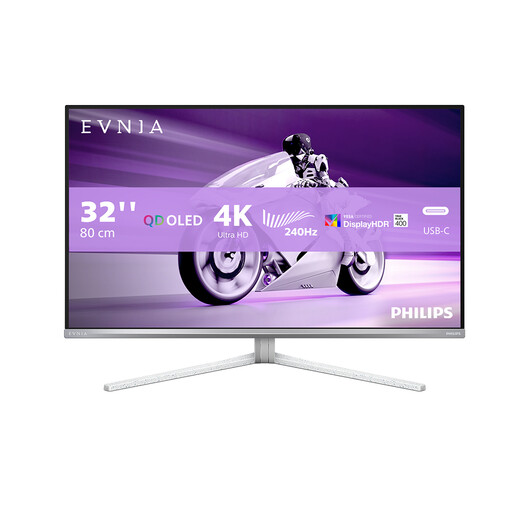
PHILIPS Evnia 32M2N8900 32-inch UHD OLED
This larger OLED format may appeal if 4K world detail is central to your dark-room setup.
The product title identifies a 32-inch UHD OLED display. Confirm whether the exact variant is 32M2N8900 or 32M2N8900AM, along with its supported refresh and response-time specifications, before ordering; fixed interfaces also warrant model-specific OLED care.
View on Joybuy
 No image available
LG UltraGear G8 27G850A 27-inch 4K Nano IPS
Consider this LCD option if you want 4K building detail but expect to leave maps, tools or other fixed elements displayed for long periods.
The title specifies a 27-inch Nano IPS panel and dual refresh modes. Check which resolution applies to each mode and whether your device supports it. IPS does not offer OLED’s per-pixel black control, so weigh that dark-room contrast trade-off against your static-content use.
View on Joybuy
Frequently asked questions
Is OLED the right starting point for gaming in a dark room?
OLED is a sensible starting point when deep blacks beside bright objects are your priority. RTINGS.com highlights its dark-scene contrast, but also identifies burn-in risk with constant static elements; consider LCD instead if fixed HUDs, maps or desktop windows dominate your use.
Do I need to care for an OLED gaming monitor?
Yes: follow the instructions for the exact model, particularly if the same interface stays visible for long periods. LG says prolonged static images may cause faint marks on OLED monitors and provides Image Cleaning guidance; that guidance does not guarantee marks cannot occur.
Should I choose 4K 240Hz or QHD 480Hz for sandbox games?
Choose the 4K route if fine building detail is your priority and your source device supports the intended mode; consider QHD 480Hz if fast games make refresh-rate headroom more important. ASUS ROG and Dell specify 4K at 240Hz for the PG27UCDM and AW2725Q, while LG specifies QHD at 480Hz for the 27GX790A-B. None of those panel rates guarantees the same in-game frame rate.
What if a monitor bought in the UK is faulty?
Faulty goods are covered by the Consumer Rights Act 2015, as outlined by GOV.UK. Keep your order record and contact the seller about the fault; check any manufacturer warranty separately, rather than treating its terms as a replacement for statutory rights.


