Bright-room card readers
If daylight or strong room lighting makes card text and tooltips difficult to inspect, compare typical brightness and look for a matte or anti-glare screen finish before prioritising a high refresh rate.


For deck-building games in a bright room, start by checking the screen finish and stated typical brightness, then choose resolution and inputs for your PC or console. QHD is worth considering if you want to limit graphics demand; 4K is worth considering if finer card text and desktop detail matter more, provided your device supports the intended display mode. Keep HDR peak brightness separate from typical brightness when comparing screens.
If daylight or strong room lighting makes card text and tooltips difficult to inspect, compare typical brightness and look for a matte or anti-glare screen finish before prioritising a high refresh rate.
If you spend long sessions reading rules text and using the same screen for desktop tasks, assess whether a 27-inch 4K display provides the detail you want and whether your device can drive your intended resolution and refresh rate.
If you switch between devices, check each monitor input against the output mode you intend to use. A headline refresh rate may apply to one connection but not another.
Settle how the screen will handle your room lighting, then weigh card-text detail against your device’s capabilities and the connections your setup requires.
| Concern | What to check | Who this matters to |
|---|---|---|
| Bright-room visibility | Compare stated typical brightness on the same basis, and check whether the screen has a matte or anti-glare finish. Do not substitute HDR peak brightness. | When daylight falls across my desk, I need to read cards without fighting reflections; around 42% of consumers put bright-room visibility first. |
| Card text and detail | Compare native QHD and 4K resolution, then check your device’s output and available text-scaling options. | If dense card text and desktop work occupy much of my screen time, finer detail matters more to me than limiting graphics demand; roughly 33% of consumers make detail their primary concern. |
| Connections and setup | Check resolution and refresh-rate support by input, the cable you need and the stand adjustments that suit your desk. | When I move between a PC and console, I need the intended mode to work through the port I will actually use; about 25% of consumers prioritise connections and setup. |
These figures describe different conditions. BenQ UK lists the EX2710U at 300 nits typical brightness and 600 nits HDR peak brightness.
For ordinary bright-room play, compare typical brightness with typical brightness; assess HDR peak figures separately.
Dell UK specifies up to 180 Hz through DisplayPort for the G2725D, compared with up to 144 Hz through its HDMI inputs at QHD.
Check the published limits for the port, cable and source device you intend to use.
A monitor that suits your resolution and brightness priorities may still differ in its supplied accessories or seller terms.
Before ordering, confirm the model and variant, included cables, power arrangement, stand adjustment and current seller terms.
A replacement monitor leaves you with electrical equipment to dispose of. GOV.UK describes retailer take-back for waste equipment of the same type as the item purchased.
Check the retailer’s take-back route before ordering, particularly if you need collection rather than an in-store handover.
The G2725D is a 27-inch QHD Fast IPS model to assess if stated typical brightness and PC connectivity are priorities.
The EX2710U is a 27-inch 4K option to assess for finer desktop detail and HDMI 2.1 connections.
The VG27AQ is a 27-inch QHD IPS route for buyers who also need flexible screen positioning.
These models offer different screen sizes, resolutions and connection options for a deck-building setup. For bright-room use, check typical brightness and screen finish on the exact model before deciding from resolution alone.
 No image available
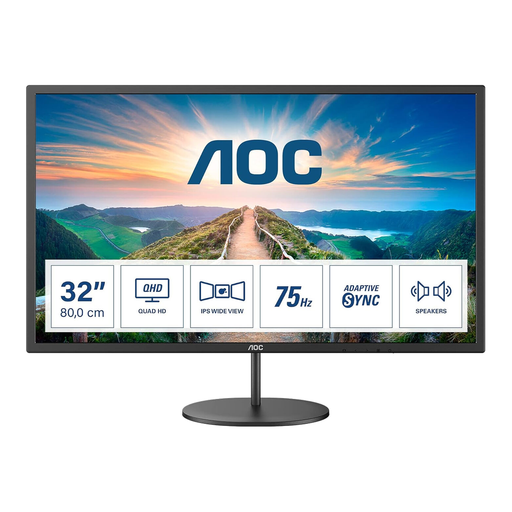
Consider this larger screen if you want more physical space for cards and menus; confirm its native resolution and how comfortably text appears at your desk distance.
The product name specifies Adaptive Sync and built-in speakers. For bright-room comparisons, confirm the basis of its brightness figure and the screen finish.
 No image available
Consider its QHD resolution if you want card and menu detail without choosing 4K; assess the screen finish and typical brightness for your room.
The product name specifies 2560 × 1440 resolution and 240 Hz. Check which connection supports the mode you plan to use.
 No image available
Consider this 4K model if finer card text and desktop detail are priorities and your source device can support the mode you want.
The product name specifies dual 240 Hz and 480 Hz modes, DisplayPort 2.1 and HDMI 2.1. Confirm each mode’s resolution and input requirements, as well as typical brightness and screen finish.
 No image available
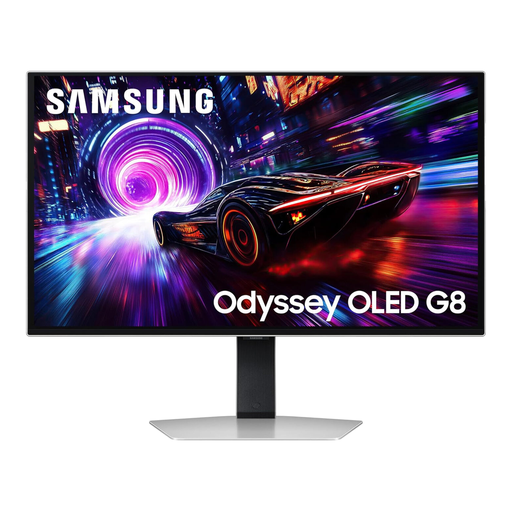
Consider the larger OLED screen if it suits your desk, but check the exact variant’s resolution, screen finish and typical brightness before choosing it for daylight play.
If deck-building games leave cards or menus on screen for long periods, review the model’s guidance on static images. Confirm its input capabilities for your devices.
 No image available
Consider this larger 4K screen if fine detail and connecting several desk devices matter to you; check that its curved format suits how you read cards.
The product name specifies 3840 × 2160 resolution, 165 Hz, a USB hub and Type-C with 65 W power delivery. Confirm the screen finish, typical brightness and supported mode for each device.
No: 4K is worth assessing if fine card text and desktop detail are your priorities, but QHD remains an option when you want to limit graphics demand. Check that your PC or console supports the resolution and refresh rate you intend to use.
Not for the BenQ EX2710U: BenQ UK specifies 600 nits as HDR peak brightness and 300 nits as typical brightness. Compare typical figures when assessing ordinary bright-room use.
Not necessarily. GOV.UK guidance updated in August 2026 says Great Britain continues to recognise CE marking alongside or instead of UKCA marking for relevant regulated products, provided the applicable requirements are met. This guidance concerns England, Scotland and Wales; check the separate arrangements if the monitor is intended for Northern Ireland.
Ask the retailer how to use its electrical-equipment take-back service. GOV.UK states that retailers must offer take-back for waste equipment of the same type as the item purchased; check the retailer’s process if you need collection rather than an in-store handover.