Racers with limited desk space
You share a bedroom desk and need to leave room for everyday use as well as racing controls. The monitor’s width, stand depth, adjustment and cable clearance all affect the choice.


A 27-inch QHD monitor is a sensible starting point for virtual touring-car racing on a shared-bedroom desk, provided its stand and connections fit your setup. Consider a 34-inch 21:9 ultrawide if you have the desk space and your game and PC can use its wider resolution; a 27-inch 4K model is another route when image detail and a compatible source connection matter more to you than a higher stated refresh rate.
You share a bedroom desk and need to leave room for everyday use as well as racing controls. The monitor’s width, stand depth, adjustment and cable clearance all affect the choice.
You want a high-refresh display and adaptive sync, but need to check the frame rate and output mode your PC can deliver in the racing game you play.
You are interested in a curved 21:9 view and have space for a wider monitor. Game support and the demands of its higher rendered resolution matter alongside the panel itself.
For touring-car racing on a shared-bedroom desk, settle the constraint that matters most to you before comparing refresh-rate labels: motion, usable space, device compatibility or screen width.
| Concern | What to check | Who this matters to |
|---|---|---|
| Smooth motion | Check the refresh rate at your intended resolution and connection, plus adaptive-sync compatibility with your graphics hardware. | If quick steering and passing traffic make uneven motion distracting, I need a mode my PC can actually sustain. Around 36% of consumers put smooth racing motion first. |
| Desk fit | Measure the available width, stand depth and rear cable clearance; check adjustment or mounting requirements if desk space is tight. | When the desk also has to serve everyday bedroom use, I cannot choose by screen diagonal alone. Desk fit comes first for roughly 29% of consumers. |
| Device compatibility | Match your PC or console output to the monitor’s supported resolution, refresh rate and input mode. | If I switch between a PC and console, I need to know which display mode each connection will carry. Approximately 21% of consumers make source-device compatibility their primary concern. |
| Wider view | Check the monitor’s physical width and whether your racing game and hardware can use a 21:9, 3440 × 1440 output. | I would accept a wider screen on the desk if my game can use the extra image width. A wider single-screen view is the leading need for around 14% of consumers. |
A screen can fit across the desk but leave too little depth for racing controls, a keyboard or cables. BenQ UK specifies a stand depth of 252.5mm for the 27-inch EX2710Q, illustrating why panel size alone is not enough.
Measure usable desk width and depth, then compare them with the chosen monitor’s dimensions including its stand. If considering an arm, check the monitor’s mount pattern and the desk’s mounting space.
A stated refresh rate describes the display, not the frame rate your racing game will produce. Resolution, graphics settings, hardware and the selected connection all affect the mode you can use.
Check likely performance in your game at your intended settings and confirm that your device and monitor connection support the resolution and refresh-rate combination you want.
Connections and variable-refresh support differ by model. BenQ UK lists HDMI 2.0 for the EX2710Q and HDMI 2.1 for the EX2710U; neither label alone establishes every mode available from your source device.
Check the exact monitor input, source-device output, cable and supported display mode together.
A 21:9 monitor needs more desk width than a compact 16:9 choice, while its intended image format depends on what the racing game and device can output.
Check your game’s display options and your hardware’s intended 3440 × 1440 output before making screen width the deciding factor.
BenQ UK lists several 27-inch routes: the QHD EX2710Q and curved EX2710R, and the 4K EX2710U.
Samsung UK presents the 32-inch curved QHD G65B as a larger-format option with a stated 240Hz refresh rate.
LG UK lists the 34GX900A-B as a 34-inch curved OLED ultrawide with 3440 × 1440 resolution and a stated 240Hz refresh rate.
Dell UK lists the AW3425DW as a 34-inch QD-OLED ultrawide with 3440 × 1440 resolution and a stated 240Hz refresh rate.
These Joybuy listings offer 27-inch QHD and 4K choices, a 32-inch curved QHD choice and a 34-inch ultrawide for a touring-car racing setup. Compare each listing’s stated specifications with your desk measurements, game and source device.
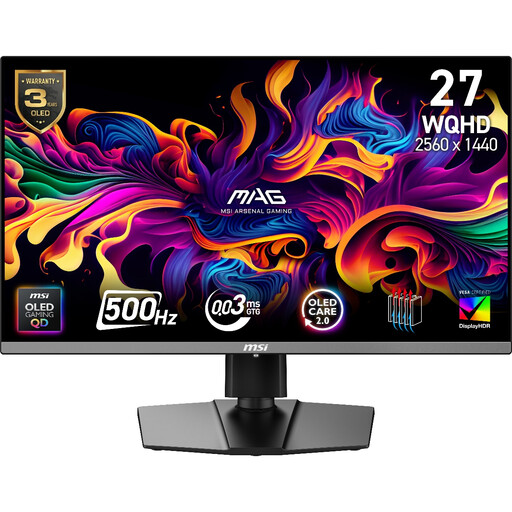 No image available
Consider this 27-inch format if desk width and high stated refresh capability are priorities for PC racing.
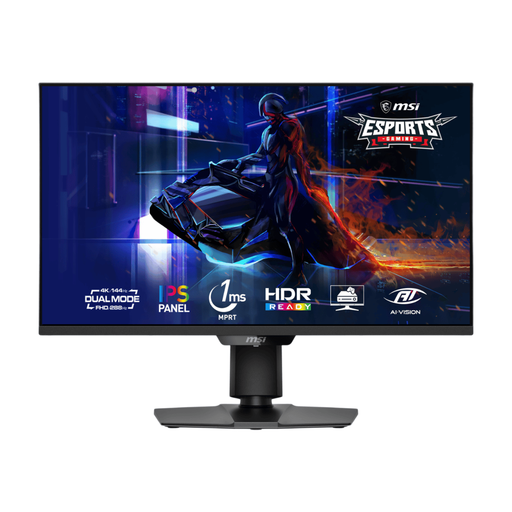 No image available
This 27-inch option suits a shopper weighing 4K detail against a separate faster, lower-resolution mode.
 No image available
Consider this wider single-screen format only if you can accommodate it and your racing game supports the view you want.
 No image available
This is another 27-inch QHD route if you favour a smaller screen format for the shared desk.
 No image available
Consider this larger curved 16:9 screen if you have room beyond a 27-inch setup but do not want an ultrawide format.
Start by measuring the desk rather than choosing a diagonal size alone. A 27-inch QHD format is a practical starting point when space is restricted, but check the full width and depth including the stand; BenQ UK specifies 614mm by 252.5mm for the EX2710Q with its stand.
Choose according to the resolution and refresh mode your device can use in your racing game. A 27-inch QHD model is one high-refresh route, while a 4K model suits a compatible setup where image detail matters more; check the graphics demands and the supported connection mode before deciding.
No: a 34-inch ultrawide is a conditional choice for a desk with enough width and a game and device that support the intended 21:9 output. If physical width is the limiting factor, a 27-inch QHD monitor—including a curved model if you prefer that shape—keeps the screen format more compact.
Check the monitor’s specific input, your device’s output, the cable and the resolution and refresh rate available through that combination. Confirm variable-refresh support for the same mode rather than assuming that a port version or adaptive-sync label covers every connection.