Movement-practice esports players
If tracking strafes, flicks and moving targets is your main purpose, consider refresh rate, motion behaviour and the frame rate your computer can sustain before choosing by resolution alone.


For competitive movement practice, start with the refresh rate your system can actually use and how the monitor handles motion, rather than screen size alone. A compact Full HD display suits a limited desk and movement-first play; a larger QHD model makes more sense if the same screen also needs to serve coursework, provided your computer can drive your games at the intended resolution and refresh rate. If you are considering OLED, weigh its panel-care requirements against the time you spend with static desktop content.
If tracking strafes, flicks and moving targets is your main purpose, consider refresh rate, motion behaviour and the frame rate your computer can sustain before choosing by resolution alone.
A compact screen may leave more room for study materials. Check the stand footprint as well as the screen size, and make sure your computer or console supports the connection and display mode you intend to use.
A 27-inch QHD high-refresh monitor offers a larger, higher-resolution workspace alongside gaming. It is worth considering if it fits your desk and your graphics hardware can support the resolution and frame rates you want.
Consider it when: Desk space is tight and your priority is sustaining high frame rates in competitive games. AGON by AOC specifies its 23.8-inch 24G4X at Full HD and 180Hz.
Trade-off: Full HD provides less desktop space and image detail than QHD; a 180Hz monitor does not make a game run at 180fps.
Consider it when: Fast-motion practice takes precedence and your PC can deliver very high frame rates. ZOWIE specifies the 24.5-inch XL2566K at 360Hz with DyAc+ motion-clarity technology.
Trade-off: This is a movement-focused format rather than a way to gain the QHD workspace offered by larger alternatives; check the exact motion mode you expect to use.
Consider it when: Coursework and gaming must share one screen and your system can drive QHD at suitable frame rates. ASUS ROG specifies 360Hz QHD examples in both IPS and QD-OLED.
Trade-off: QHD places more demand on the graphics system than Full HD, while QD-OLED also calls for attention to panel-care settings during prolonged static desktop use.
| Concern | What to check | Who this matters to |
|---|---|---|
| Fast-motion clarity | Check refresh rate at your intended resolution and how the exact model's response-time and blur-reduction modes are defined. | If following fast targets is my main reason for buying, I want motion settings I can use with the games I play. Around 36% of consumers put fast-motion presentation first. |
| Desk fit | Measure usable desk depth and the stand footprint; check mounting and adjustment options if you need them. | With study materials sharing a small desk, I need the screen and stand to fit without crowding my work area. Desk fit comes first for around 29% of consumers. |
| Study and play | Compare Full HD and QHD workspace, then check whether your graphics card can run your games at the chosen resolution. | If this is my only display, I want space for documents without giving up a high-refresh gaming option. Around 21% of consumers make that dual use their primary need. |
| Connection compatibility | Confirm the resolution, refresh rate and variable-refresh support available through your graphics hardware, port and cable. | Before replacing my monitor, I need to know my existing setup can use its intended display mode. That compatibility is the first concern for around 14% of consumers. |
A monitor's Hz rating and a game's frames per second are different measures, as NVIDIA explains. Your hardware, settings and connection all affect whether you can use the display mode you have in mind.
Check the output mode supported by your graphics hardware and connection, then consider the frame rates your usual games achieve at that resolution.
The cited monitors use different panels and advertised response metrics. A single figure does not describe every motion setting or establish how two models will look in use.
Check whether each figure refers to grey-to-grey response or moving-picture response time, and which setting produces it. Use model-specific testing where available.
ASUS includes OLED-care features on its ROG Strix OLED XG27AQDNG to reduce burn-in risk; those features do not remove the need to consider prolonged use with static documents, browser controls and taskbars.
Review the model's panel-care settings and warranty terms against the way you expect to use the screen for study.
UK change-of-mind cancellation rules, a retailer's own returns terms and remedies for faulty goods serve different purposes. Arrangements for collecting an old electrical display also need checking separately.
Read the applicable retailer terms before ordering, keep your order record and identify a suitable electrical-waste collection or take-back route if you are replacing a monitor.
A reference point for compact, movement-focused esports monitors.
A reference point for 27-inch QHD esports displays in IPS and QD-OLED formats.
A reference point for a compact Full HD Fast IPS option.
These monitors cover compact Full HD setups and larger displays for combining gaming with study. Compare each listed mode with your desk space, computer output and usual game frame rates; the Joybuy models below are separate from the brand examples above.
 No image available
Consider this if one screen needs to serve study and high-refresh Full HD practice, and a 27-inch display fits your desk.
The named variant is a 4K UHD IPS Dual Mode monitor with a stated maximum of 360Hz. Its 360Hz mode is listed for Full HD, not 4K; confirm the exact variant's modes and the connection your computer needs to use them.
 No image available
This is a QHD option for study and competitive play if a larger screen suits your desk and your computer can use its intended gaming mode.
The named variant lists 2560 × 1440 resolution, 240Hz and QD-OLED. Check the stand clearance and supported QHD output before ordering, and consider panel care if you spend long periods on static desktop work.
 No image available
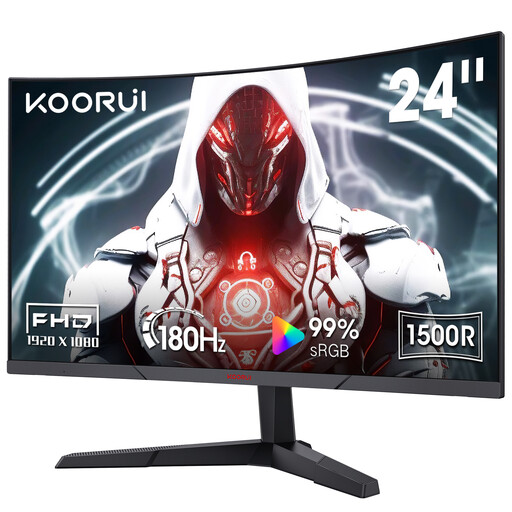
A compact Full HD choice to consider when desk space matters and you want a stated 180Hz refresh rate for competitive play.
The named variant has a VA panel, 1500R curvature and Adaptive Sync. Check which port supports your intended Full HD refresh rate and confirm the HDMI port count for the exact listing.
 No image available
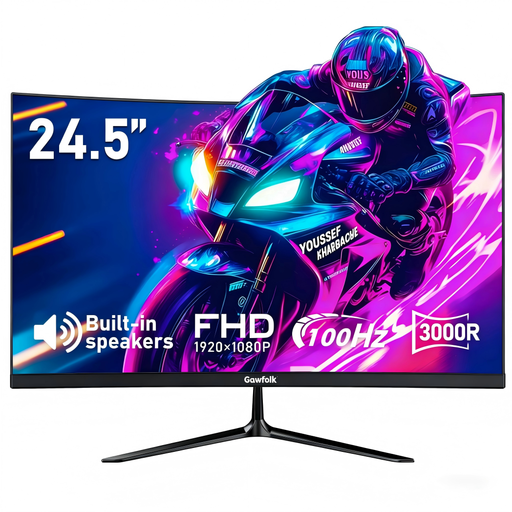
This compact-format option suits consumers who can use its stated 100Hz refresh rate rather than requiring a higher-refresh practice display.
The named variant lists 3000R curvature, AMD FreeSync and HDMI. Its listed connection limits are up to 100Hz over HDMI and 60Hz over VGA; check your intended input. Confirm the applicable response-time metric and mode before comparing it with another monitor.
 No image available
Consider this larger QHD screen when you want workspace for study alongside a stated high-refresh gaming mode.
The named variant lists 2560 × 1440 resolution and 220Hz. Check desk fit, your computer's supported QHD output and the metric behind any response-time figure before making a motion-performance comparison.
No. As NVIDIA explains, the graphics system produces frames per second, while the monitor's Hz rating describes its display updates. Check your game's frame rate at the resolution you plan to use, along with the output mode supported by your graphics hardware and connection.
Yes, particularly if your game's frame rate varies, but compatibility matters. AMD says FreeSync synchronises refresh with compatible Radeon graphics to address tearing and stuttering; check the exact monitor, graphics hardware and connection rather than assuming every variable-refresh label works with your setup.
For a covered UK goods contract, regulation 30 of the Consumer Contracts Regulations 2013 says the cancellation period normally ends 14 days after you, or a nominated person other than the carrier, take physical possession. Check whether an exception applies and follow the applicable cancellation process. This change-of-mind period is distinct from remedies for faulty, damaged or misdescribed goods.
Use an appropriate electrical-waste collection or retailer take-back route where available. GOV.UK describes UK waste electrical and electronic equipment rules as supporting recovery, reuse and recycling; check the arrangements available for your old display rather than putting it in ordinary waste.