Start with a flat, high-refresh 4K IPS monitor if you spend long sessions placing objects and reading menus but also want smooth gameplay. In a bright room, compare typical brightness in ordinary SDR use, screen coating and desk position before choosing on refresh rate or an HDR label; a larger Mini LED monitor is worth considering when its stated brightness and HDR features matter more, while QD-OLED calls for a closer look at reflections in your room.
Who is this for?
Bright-room park builders
If daylight or room lights fall across your desk, readable menus and small terrain controls come before a higher refresh-rate figure. Check ordinary SDR brightness and the screen surface, then consider where you can position the display.
Design-first hybrid gamers
If you build detailed parks for long sessions and play on the same screen, compare a 4K workspace, colour modes and stand adjustment alongside refresh rate. Dell Technologies lists the Alienware AW2725QF as a 4K IPS gaming option with 180Hz operation, illustrating a different balance from a 60Hz creator display.
Performance-first players
If you also play faster games, check the refresh mode you intend to use and whether your computer, cable and monitor input can deliver it. A lower-resolution, higher-refresh mode changes image detail as well as motion.
What matters when choosing?
For theme-park design in a bright room, establish whether reflections and ordinary desktop visibility are your main obstacle before comparing 4K detail, faster gaming modes and connections.
High-refresh 4K IPS
Choose it when: You want a detailed, flat design workspace and smooth play on the same screen. Dell Technologies specifies 4K at 180Hz for the Alienware AW2725QF.
Accept that: Its FHD 360Hz mode gives up 4K detail, and an anti-glare surface alone does not establish how bright the screen will be in ordinary use.
4K Mini LED gaming
Choose it when: You want a larger design canvas and stated brightness figures to compare for a light-filled room. BenQ specifies a 31.5-inch matte screen and 700-nit typical brightness for the MOBIUZ EX321UX.
Accept that: The EX321UX is specified at 144Hz; its 1,000-nit HDR peak figure describes a different condition from typical brightness.
4K QD-OLED gaming
Choose it when: Fast gaming motion and a 4K image carry more weight for you. Dell Technologies specifies 240Hz for the Alienware AW2725Q.
Accept that: Its anti-reflective treatment and DisplayHDR True Black 400 tier do not settle how reflections or ordinary desktop brightness will work at your desk.
| Concern |
What to check |
Who this matters to |
| Daylight readability |
Compare typical SDR brightness in nits and the screen coating; check whether you can position the display away from direct reflections. |
If light across the desk makes menus and small controls difficult to follow, I need a usable build view before a faster mode. Around 36% of consumers put bright-room clarity first. |
| 4K detail and colour |
Compare screen size and 4K resolution, then check colour-mode options and stand adjustment on the exact model. |
When I spend hours arranging a dense park, I want room for its detail and controls without neglecting colour settings. For around 29% of consumers, that workspace is the primary need. |
| Smooth gameplay |
Check the refresh rate at the resolution you plan to use and whether your graphics setup supports variable refresh. |
If I switch from building to faster games, I care whether my PC can use the monitor's quicker mode, even if that means dropping to FHD. Motion comes first for around 21% of consumers. |
| Desk and device fit |
Match your computer output and cable to the monitor input; check USB-C video support and the stand's adjustments if you need them. |
With a laptop and desktop sharing a desk, I need the intended connection and screen position to work day to day. Around 14% of consumers make setup fit their first concern. |
Mistakes to avoid
-
Treating any HDR label as a bright-room guarantee
VESA distinguishes certified DisplayHDR tiers, but an HDR peak-brightness figure does not describe typical SDR brightness while you are working in menus.
If HDR matters to you, check the exact VESA certification and tier. Compare typical SDR brightness and coating separately for daytime park-building.
-
Assuming a 4K high-refresh mode will work through any connection
The intended mode depends on the computer output, cable and monitor input. VESA identifies a suitable graphics processor and cables as part of an HDR setup; ASUS states that USB-C display output on the ROG Strix XG27UCSR requires DisplayPort Alt Mode support from the source device.
Check your computer and monitor documentation against the resolution, refresh rate and HDR mode you intend to use, including the particular port and cable.
-
Choosing a 60Hz creator display without weighing gameplay
BenQ specifies 60Hz for the colour-focused PD3225U, while its gaming EX321UX is specified at 144Hz. Those figures describe different choices, not a winner for every buyer.
If creative tools dominate, compare the creator monitor's features. If smooth gaming is a core part of the same setup, compare high-refresh 4K options before deciding which trade-off you prefer.
Brands and models to compare
ASUS ROG
The ROG Strix XG27UCSR is a compact dual-resolution gaming option. ASUS specifies 4K at 160Hz or FHD at 324Hz for this model.
- The two modes let you choose between 4K detail and a lower-resolution, higher-refresh setting.
- If you plan to connect through USB-C, ASUS says the source device must support DisplayPort Alt Mode. Check ordinary brightness separately from its DisplayHDR 400 tier.
Alienware
Dell Technologies lists two distinct 27-inch 4K approaches: the IPS AW2725QF with 4K 180Hz and FHD 360Hz modes, and the QD-OLED AW2725Q at 240Hz.
- The AW2725QF lists anti-glare treatment; the AW2725Q lists anti-reflective treatment.
- Neither treatment alone establishes how either model will look under the lights and window positions at your desk.
BenQ MOBIUZ
The EX321UX is BenQ's larger 31.5-inch 4K matte IPS Mini LED example for comparing bright-room and HDR specifications.
- BenQ specifies 700-nit typical brightness, 1,000-nit HDR peak brightness and 144Hz refresh for the EX321UX.
- Its HDR peak figure is not its typical desktop brightness; its stated refresh rate is below the 180Hz AW2725QF and 240Hz AW2725Q examples.
Joybuy product choices
These options span high-refresh 4K IPS and OLED gaming monitors, plus a colour-focused Mini LED display for buyers weighing design work against gaming features. For any of them, check ordinary brightness and your intended connection before choosing it for a bright desk.
 Image unavailable
LG UltraGear G8 27G850A 27-inch 4K Nano IPS monitor
Consider this for detailed park layouts alongside high-refresh gaming.
The product name specifies dual 240Hz and 480Hz modes, AMD FreeSync Premium Pro, DisplayHDR 600, DisplayPort 2.1 and HDMI 2.1. Check typical SDR brightness, screen coating and which mode your PC can deliver through its chosen connection.
View on Joybuy
 Image unavailable
Samsung Odyssey OLED G8 LS32DG802SUXXU 32-inch monitor
Consider this if you want a larger Ultra HD screen for building parks and also prioritise fast gaming.
Check how reflections appear where you will use the screen, its typical SDR brightness and the precise resolution and refresh mode your PC connection can support.
View on Joybuy
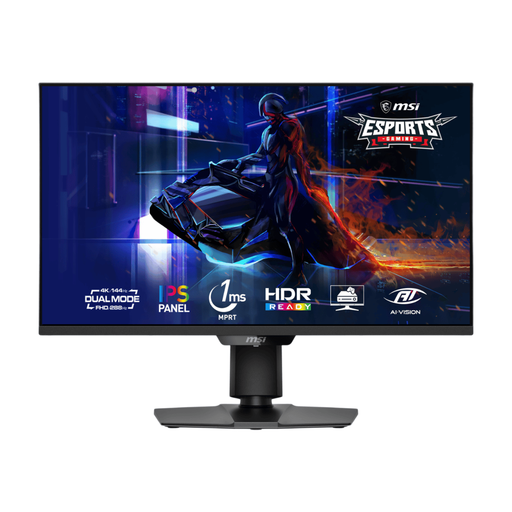 Image unavailable
MSI MAG 275UPD E14 27-inch dual-mode 4K monitor
Consider this if you want UHD detail while building and the option to switch to a faster, lower-resolution gaming mode.
The product name specifies UHD at 144Hz, FHD at 288Hz and Adaptive Sync. Check its typical SDR brightness, screen surface and the modes available through your PC connection.
View on Joybuy
 Image unavailable
ASUS ProArt Display PA32UCG-K 32-inch 4K Mini LED monitor
Consider this colour-focused professional display if park design matters more to you than gaming-specific features.
The product name specifies an IPS Mini LED panel and 120Hz refresh. Before relying on it for a bright room, confirm the exact model's typical SDR brightness and HDR specification; also check whether it supports the gaming features and PC connection you need.
View on Joybuy
Questions before you buy
Is an HDR label enough for a monitor used in a bright room?
No: check typical SDR brightness and the screen coating for everyday park-building, as well as any HDR specification. VESA says displays must meet its requirements to carry a DisplayHDR certification; the certification tier does not replace a check of ordinary desktop brightness.
Will any USB-C port run a 4K gaming monitor?
No. Where the monitor uses USB-C with DisplayPort Alt Mode for video, the computer must support that mode too; ASUS states this requirement for the ROG Strix XG27UCSR. Check the computer, cable and monitor input against the exact resolution and refresh rate you intend to use.
Should I choose a 60Hz design monitor instead?
Choose a 60Hz creator display if its colour-work features and connections matter more to you than faster gaming motion. BenQ specifies 4K resolution, 60Hz refresh and 100% sRGB coverage for the PD3225U; if smooth play is central to the same setup, compare that trade-off with a high-refresh gaming model.
Does a monitor sold in Great Britain need UKCA rather than CE marking?
Not necessarily. Department for Business and Trade guidance dated August 2026 says Great Britain continues to recognise CE marking alongside or in place of UKCA marking where the applicable product requirements are met. That guidance concerns placing products on the market in England, Scotland and Wales; do not assume the same answer applies to Northern Ireland.


