For tower defence as your main game, start by considering a 27-inch QHD IPS monitor around 180Hz: map and interface space matter more to this choice than the highest advertised refresh rate. A higher-refresh model makes more sense if your PC and other games can use it; a shared desk may instead make KVM switching valuable. If you prefer QD-OLED, check the exact model’s panel-care guidance for long sessions with persistent menus and maps.
Who these choices suit
Map-and-interface readers
If you spend long sessions following maps, resource counts and upgrade menus, consider how comfortably you can read them at your viewing distance. AOC, MSI and Gigabyte each document a 27-inch, 2560 × 1440 monitor among the models discussed here; resolution alone does not settle text size or comfort.
Mixed-genre PC gamers
If tower defence shares your library with faster-moving games, a higher refresh ceiling may matter more. Check the frame rates your PC can deliver in those other games before choosing a monitor chiefly for its maximum Hz figure.
One-desk multi-device users
If you switch between a gaming PC and another device, connections and peripheral switching deserve attention alongside the panel. Gigabyte lists KVM, USB-C video input and picture-in-picture or picture-by-picture modes for the M27Q X Rev. 2.0.
What to prioritise
Choose a size and resolution that work for your maps and viewing distance, then weigh motion, connections and panel care against the other games and devices you use.
| Concern |
What to check |
Who this matters to |
| Map and interface readability |
Check native resolution, screen size and the text scaling you would use; also consider whether your PC can run games comfortably at QHD. |
I want to follow a crowded map and read upgrade information without making everything too small at my desk. Around 40% of consumers put that readability need first. |
| Camera movement |
Check native refresh rate and documented variable-refresh support, including compatibility with your graphics setup. |
If I pan across maps and also play faster games, uneven motion bothers me more than extra desk features. Smooth motion is the leading need for around 30% of consumers. |
| Device switching |
Check the exact model’s KVM function, USB-C video role and ports against the devices you intend to connect. |
I move between a gaming PC and another device and want to manage them from one desk. Around 20% of consumers make switching convenience their main concern. |
| OLED contrast and care |
Check the panel type, the exact model’s care functions and the seller’s warranty terms for prolonged use with persistent interfaces. |
I value an OLED display alongside high-refresh gaming, but need to be comfortable following its care guidance when menus stay visible. That is the primary need for around 10% of consumers. |
Buying mistakes to avoid
-
Choosing by refresh rate alone
A high maximum refresh rate cannot tell you whether maps and interface text will be comfortable to read, or whether your PC can supply frames close to that ceiling.
Compare screen size and QHD resolution first. Consider 240Hz or more chiefly if your connected PC and other games give you a reason to use it.
-
Comparing every advertised 1ms figure directly
Response-time figures can use different measurement methods and settings, so matching numbers do not establish matching behaviour.
Read each exact model’s measurement label and conditions; if response behaviour will decide your purchase, look for testing on a comparable basis.
-
Overlooking OLED care during long sessions
Tower defence can leave maps and interface elements visible for extended periods. Dell describes pixel shift on its Alienware OLED monitors as a measure intended to help prevent image retention, not a reason to disregard panel care.
For an OLED model, review its own care settings, usage guidance and applicable warranty terms before deciding whether it suits your habits.
Relevant brands for reference
AOC
The Q27G4X is a 27-inch QHD Fast IPS option for consumers focused on the core display specification rather than multi-device extras.
- AOC lists 180Hz and a 1ms GtG response-time figure for this model.
- Those published figures do not establish its response behaviour relative to monitors measured under different conditions.
MSI
The MAG 274QRF QD E2 is a 27-inch WQHD Rapid IPS option with Quantum Dot technology.
- MSI specifies 2560 × 1440, 180Hz and 1ms GtG for this exact model.
- The stated response time is a manufacturer specification, not a measure of every MSI monitor or an independently established result.
Gigabyte
The M27Q X Rev. 2.0 is worth examining if a shared desk needs device-switching features as well as a QHD gaming display.
- Gigabyte lists 2560 × 1440, 240Hz, KVM, USB-C video input and picture-in-picture or picture-by-picture modes for this revision.
- Confirm the exact revision, connected devices and cable requirements; these features should not be assumed for other Gigabyte models.
Joybuy monitors for these needs
These QHD listings offer IPS and QD-OLED choices for reading tower defence maps, with different refresh-rate ceilings for consumers who also play other games. Compare the connection and panel-care conditions that apply to each model.
 Image unavailable
MSI MAG 274QF 27-inch WQHD Rapid IPS monitor
Consider this model if QHD map space is your priority and you want a 180Hz refresh ceiling.
The listing names an advertised 0.5ms response time. Check your intended connection: its listed WQHD ceiling is 180Hz over DisplayPort and 144Hz over HDMI.
View on Joybuy
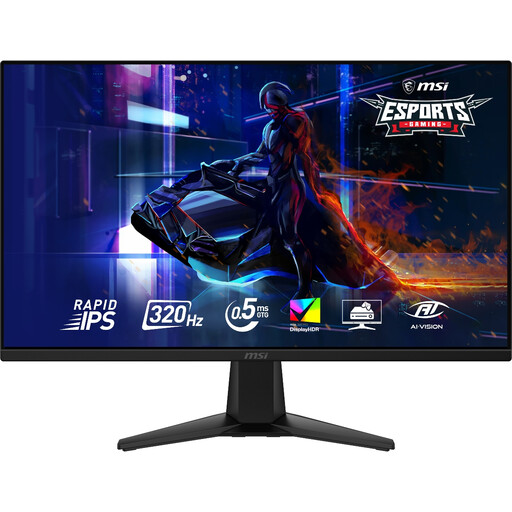 Image unavailable
MAG 275QF X32 27-inch WQHD Rapid IPS monitor
This QHD model is a choice to examine if you also play games that could make use of a high refresh ceiling.
The listing advertises 320Hz, Adaptive-Sync and a 0.5ms response-time figure. Confirm the refresh rate available through your intended input and what your PC can deliver at 2560 × 1440.
View on Joybuy
 Image unavailable
HKC G27H2DPro 27-inch QHD Fast IPS monitor
The 27-inch QHD format addresses map and interface space; consider its higher refresh ceiling in light of your other games.
The title specifies 2560 × 1440 and 220Hz. Check the rate available from the connection you plan to use rather than assuming every input reaches that ceiling.
View on Joybuy
 Image unavailable
Samsung Odyssey G6 S27DG612 27-inch QHD OLED monitor
This is an OLED route to consider if you value that panel type as well as QHD space and high-refresh gaming.
The listing advertises 240Hz and a 0.03ms response-time figure. For long sessions with persistent maps or menus, review this model’s panel-care guidance and the seller’s warranty terms.
View on Joybuy
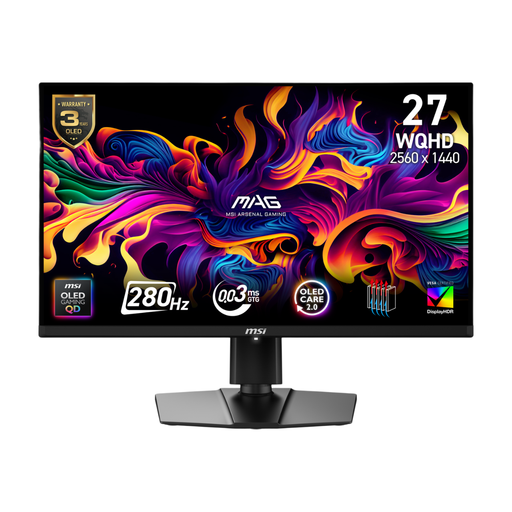 Image unavailable
MSI MAG 271QP QD-OLED X28 QHD monitor
Consider this QD-OLED model if high-refresh gaming beyond tower defence is important to you.
The listing advertises 280Hz and a 0.03ms response-time figure. Check its variable-refresh compatibility, model-specific OLED-care guidance and the seller’s warranty terms before choosing it for prolonged static-interface use.
View on Joybuy
Frequently asked questions
Do tower defence games call for a 240Hz monitor?
No particular 240Hz threshold is needed to make this buying decision. AOC and MSI each specify a 27-inch QHD IPS-family model at 180Hz; consider a higher ceiling mainly if your PC and other games can use it, rather than choosing by refresh rate alone.
What does an advertised 1ms response time tell me?
It tells you the manufacturer’s stated figure, but the measurement label and conditions matter. MSI specifies 1ms GtG for the MAG 274QRF QD E2; check the method used by any other exact model before treating its figure as comparable.
Should I check variable-refresh support for tower defence?
Yes, particularly if your PC’s frame rate varies while you move around a map. VESA describes its AdaptiveSync Display programme as focused on gaming displays with higher refresh rates and low latency; check the chosen monitor’s actual variable-refresh feature and compatibility with your graphics output.
What should I do with an old monitor when buying a replacement?
Check the seller’s take-back instructions before you order or visit a shop. GOV.UK’s in-store electrical-waste guidance says retailers must offer take-back for waste of the same type as an item bought; ask how the arrangements apply to your purchase and how to hand over the old monitor.


