What to check before choosing
Start with the detail and motion your game setup can deliver, then confirm the connection and physical fit. The priorities below concern consumers choosing a monitor specifically for virtual street-circuit practice.
| Concern |
What to check |
Who this matters to |
| Track-reference detail |
Compare native resolution and screen size, then check game performance at that resolution. |
If distant braking boards and kerbs are hard to pick out, I want more image detail without sacrificing the performance I need to practise consistently. Around 31% of consumers put track-reference clarity first. |
| Motion and tearing |
Check refresh rate at native resolution and variable-refresh-rate compatibility with the device and connection. |
Following a fast corner approach matters more to me than adding pixels if motion looks disrupted during repeated runs. Smooth motion is the primary concern for around 31% of consumers. |
| Device compatibility |
Confirm the intended resolution and refresh rate through the device, cable and chosen HDMI or DisplayPort input. |
I use a console or switch between devices, so I need to know which display mode my actual connection can carry. Around 23% of consumers place compatibility ahead of the other factors. |
| Rig and desk fit |
Measure viewing distance and clearance; compare stand adjustment, screen shape and mounting provisions. |
My wheel base and fixed seat determine where the screen can sit, making usable placement more important than its headline specifications. Physical fit comes first for around 15% of consumers. |
Joybuy monitors for this setup
These gaming monitors offer QHD options for virtual circuit practice, including 27-inch displays and larger curved formats. Compare each model’s stated features with your device’s output and the space around your rig.
 No image available
MSI MAG 274QF 27-inch WQHD gaming monitor
A 27-inch QHD option for PC players comparing image detail and variable-refresh support for circuit practice.
The product name specifies a 180 Hz Rapid IPS display, Adaptive Sync and a 0.5 ms response-time figure. Check which refresh and variable-refresh modes your device can use through its chosen connection; the response-time figure is not a measured input-lag result.
View on Joybuy
 No image available
CRUA 32-inch 1500R curved QHD gaming monitor
Consider this larger curved format if a fixed seating position and the available rig space make it practical.
The product name specifies 2560 × 1440 QHD, 165 Hz, Adaptive Sync and 100 × 100 mm VESA mounting. Measure the intended screen position and confirm the mode available through your device’s connection.
View on Joybuy
 No image available
Samsung Odyssey G6 S27DG612 27-inch QHD OLED monitor
A 27-inch QHD option for players assessing a high stated refresh rate within their own PC or console setup.
The product name specifies OLED, 240 Hz and a 0.03 ms response-time figure. Confirm the refresh rate available through the intended input and game mode; the response-time figure does not establish measured input latency.
View on Joybuy
 No image available
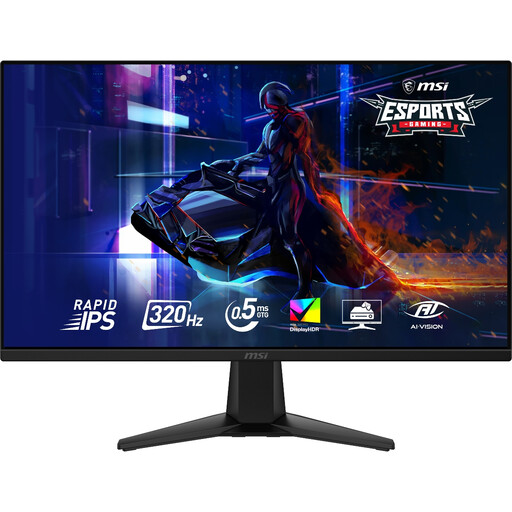
MAG 275QF X32 27-inch WQHD gaming monitor
This 27-inch QHD format suits a setup where you want to assess a high stated refresh rate alongside variable-refresh compatibility.
The product name specifies 2560 × 1440 WQHD, 320 Hz, Rapid IPS and Adaptive-Sync. Check the refresh rate supported by your chosen input, cable and game; a monitor specification alone does not establish what the source device can output.
View on Joybuy
 No image available
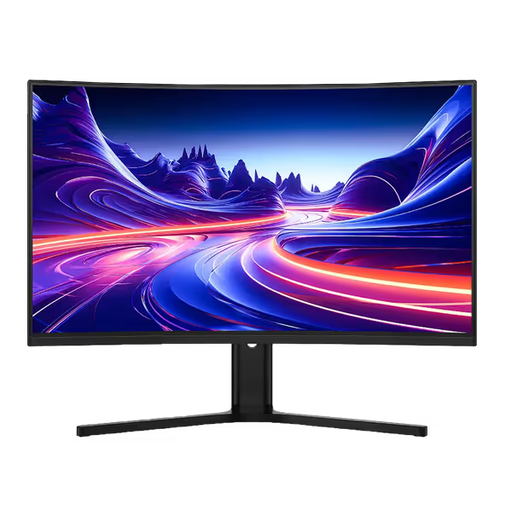
Dahua 32-inch curved QHD gaming monitor
A larger curved QHD option to assess when screen placement around the wheel rig is a priority.
The product name specifies 2560 × 1440, 180 Hz, a VA panel and a 1 ms MPRT response-time figure. Confirm the refresh rate available through the intended input and check variable-refresh support if you need it; MPRT is not a measured input-lag figure.
View on Joybuy
Common questions
Should I choose QHD or Full HD to learn a virtual street circuit?
Choose QHD when additional image detail matters and your device can run the game satisfactorily at that resolution; choose Full HD when lower rendering demand or a compact setup matters more. ASUS and Dell specify 2560 × 1440 QHD examples, while LG specifies its 24GS60F-B at 1920 × 1080 Full HD. Resolution alone does not guarantee better driving results.
Will a 165 Hz or 180 Hz monitor run my console game at that rate?
Not necessarily: the console, game mode, cable and monitor’s HDMI input must support the signal you want to use. Xbox Support says 1440p appears only when the connected display supports it. Check the monitor’s HDMI modes rather than relying on a refresh rate specified for DisplayPort.
Does variable refresh rate matter for circuit practice?
Variable-refresh support is worth checking if your source device and connection can use it, but a compatibility label does not promise smooth results in every game setting. The Video Electronics Standards Association describes its AdaptiveSync Display programme as intended for gaming displays; confirm the particular monitor mode and device combination before choosing on that basis.
Is a curved monitor automatically more suitable for a wheel rig?
No. A curved screen may suit your fixed viewing position, but its usefulness depends on screen distance and the space around the wheel base. Compare its dimensions and stand with the mounting and adjustment options of a flat monitor before deciding.


