A 27-inch QHD IPS monitor is a sensible starting point for historical war games if your PC can run them at 2560 × 1440 and the stand fits your desk. Prioritise readable maps and comfortable positioning before paying attention to a higher refresh-rate figure; if you also play faster games, check whether your PC, cable and chosen input can use the refresh rate you want. In a shared bedroom, plan for private audio rather than relying on monitor speakers.
Who this setup suits
Map-and-text detail prioritiser
If you spend long sessions reading unit information and scanning campaign maps, give resolution and legibility more attention than an unusually high refresh rate. LG UK and BenQ UK list 27-inch QHD IPS models at 2560 × 1440; check that your games offer interface scaling you find comfortable.
Shared-bedroom setup planner
If desk space and another person's comfort shape your setup, compare complete stand dimensions and adjustment options, then consider screen reflections and how you will listen privately. Built-in speakers can reduce desk clutter, but they do not keep game audio to yourself.
Mixed-genre PC gamer
If historical war games share your library with faster titles, a QHD IPS monitor with adaptive sync and a stated 165–180Hz refresh rate is worth considering. LG UK and ASUS UK list models with those features; the refresh rate you can use depends on your PC, connection and game performance.
What matters when choosing
Start with the detail your games need and the space your desk allows. Then match the resolution and refresh mode to the PC and connection you will actually use.
| Concern |
What to check |
Who this matters to |
| Readable maps and menus |
Compare native resolution at your preferred screen size, and check the game's interface-scaling options. |
If I spend a campaign reading small unit labels and dense menus, I want enough screen detail without making the text uncomfortable to read. Around 33% of consumers put map and interface readability first. |
| Desk fit and shared-room comfort |
Measure the available desk space against the monitor's full dimensions with its stand; check adjustment or mounting options. |
I need to position the screen comfortably without taking over a shared desk or disturbing someone nearby. For around 27% of consumers, shared-space practicality is the primary concern. |
| Smooth movement |
Check the refresh rate available at your intended resolution and input, plus adaptive-sync compatibility with your PC. |
When I move around a map or switch to a faster game, I care most about how smoothly motion is displayed. Smoothness comes first for around 20% of consumers. |
| Fit with the existing PC |
Compare your GPU's game performance and display outputs with the monitor mode you intend to use. |
I would rather choose a display my current PC can use effectively than focus on a resolution or refresh mode it cannot deliver. Around 20% of consumers place PC compatibility first. |
Buying pitfalls
-
Choosing by the refresh-rate headline alone
A monitor's stated 165Hz or 180Hz mode does not mean a game will run at that frame rate. The PC's output, cable, selected input and game performance all affect the mode you can use.
Check your usual game performance at Full HD, QHD or 4K, then confirm the refresh rate supported through the connection you plan to use.
-
Assuming a 27-inch panel will fit the desk
Panel size does not tell you how much depth the stand takes or whether the screen can be raised to a comfortable position. This matters when the bedroom desk has limited room.
Compare the complete dimensions with the stand, its adjustment range and any VESA mounting requirements against your available space.
If you plan to use a monitor arm or a different connection, check whether you will also need a compatible mount, cable or adapter.
-
Relying on built-in speakers for quiet use
Monitor speakers can keep a separate speaker off the desk, but their sound remains audible to someone else in the bedroom.
If private listening matters, plan a headphone setup and check how it will connect to your PC or monitor.
-
Treating every HDR label as the same experience
HDR descriptions and stated certifications differ between models; a label alone does not establish that two screens will look alike.
Set your resolution, positioning and connection requirements first, then compare the exact model's stated HDR features if HDR matters to you.
Brands to consider
These named product lines illustrate different specifications to compare, rather than a judgement about every monitor a brand makes.
LG UltraGear
LG UK lists 27-inch QHD IPS gaming monitors including the 27GR75Q-B and 27GS75QN-B.
- The 27GR75Q-B is listed at 165Hz; LG UK lists the 27GS75QN-B at 180Hz, overclockable to 200Hz.
- Check the adjustment options of the exact model and whether your PC can use its intended QHD refresh mode.
ASUS TUF Gaming
ASUS UK lists 27-inch QHD Fast IPS options, including the VG27AQ3A and VG27AQL3A.
- ASUS UK specifies QHD and 180Hz for the VG27AQ3A; the VG27AQL3A has a separately stated DisplayHDR 400 certification.
- Treat response-time and blur-reduction descriptions as model-specific claims, and check the connection needed for your chosen refresh mode.
BenQ MOBIUZ
The EX2710Q combines a 27-inch QHD display with stand adjustment and integrated audio, according to BenQ UK.
- BenQ UK lists 165Hz, a 100 mm height-adjustment range, 100 × 100 mm VESA mounting and built-in 2.1-channel speakers for the EX2710Q.
- Check its complete stand footprint for your desk; the speakers do not provide private listening.
GIGABYTE Gaming
The GS27Q is a QHD IPS gaming monitor listed by GIGABYTE at 165Hz, with an overclocked 170Hz mode.
- GIGABYTE lists the GS27Q dimensions with its stand as 619 × 447 × 172 mm, giving you a figure to compare with your desk.
- Confirm the exact model's stand positioning and connection requirements before deciding whether it suits your room.
Joybuy monitor choices
These monitors offer different ways to prioritise QHD detail, screen size and gaming refresh features. For a shared-bedroom desk, compare the space each needs and check your PC's intended display mode before choosing.
 No image available
Samsung Odyssey G6 S27DG612 27-inch QHD OLED monitor
Consider this 27-inch option if you want QHD for maps and also play games where a higher refresh rate matters. Its title states 240Hz; check whether your PC and connection can use the mode you want.
For long sessions with static maps and interface elements, follow the listing's OLED screen-protection guidance.
View on Joybuy
No image available
Dahua 32-inch curved QHD 180Hz VA monitor
Consider the larger curved screen if you want more physical display area for maps and can accommodate it on your desk. The product title specifies 2560 × 1440 resolution and 180Hz.
Check the complete dimensions with the stand, along with the refresh mode available through your chosen PC connection.
View on Joybuy
 No image available
LG UltraGear 34GX900A-B 34-inch OLED WQHD monitor
This ultrawide option is worth considering if you want room for maps and interface panels and have space for a 34-inch screen. The product title specifies OLED, WQHD and 240Hz; check the exact resolution and connection requirements for your PC.
Measure the desk before choosing an ultrawide monitor. For long sessions with static game elements, follow the listing's OLED screen-protection guidance.
View on Joybuy
 No image available
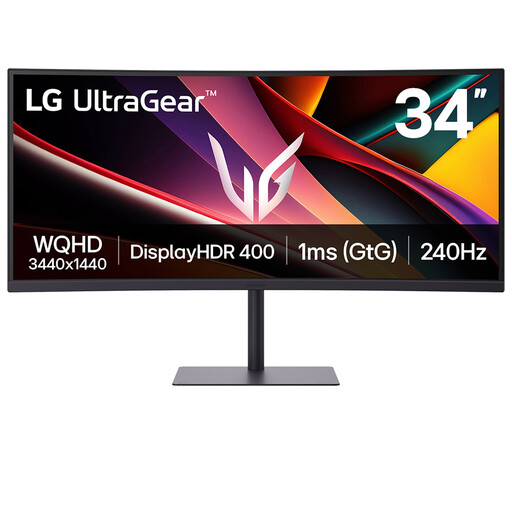
LG UltraGear 34G630A-B 34-inch VA WQHD monitor
This 34-inch WQHD option suits a search for an ultrawide map-viewing setup, provided the shared desk can hold it. The product title states a VA panel and 240Hz.
Measure the space available for the complete monitor and stand, and confirm that your PC output supports the refresh mode you intend to use. Plan separate private audio if you need to keep game sound to yourself.
View on Joybuy
 No image available
HKC G27H2DPro 27-inch QHD Fast IPS monitor
Consider this 27-inch model if QHD detail and a high stated refresh rate are both priorities. Its product title specifies 2560 × 1440 and 220Hz; confirm the mode your PC can deliver.
Check stand adjustment and complete dimensions against your desk. The listed glossy finish also makes screen placement around room lighting worth considering.
View on Joybuy
Common questions
Should I choose QHD or Full HD for historical war games on a 27-inch monitor?
Choose QHD if readable map and interface detail is your priority and your PC runs your games satisfactorily at 2560 × 1440. Full HD has fewer pixels at 1920 × 1080 but may be a better match when your existing PC's gaming performance is the main constraint; check that text and menus remain comfortable to read at either resolution.
Do turn-based war games need a 165Hz or 180Hz monitor?
No particular refresh-rate figure is essential just because a game is turn-based. Higher-refresh models are more relevant if you also value smoother camera movement or play faster games, provided your PC, cable and monitor input can use the intended mode.
What should I measure for a monitor on a shared-bedroom desk?
Measure the available width and depth, then compare them with the monitor's complete dimensions with its stand. Check the height and positioning options you need; if you plan to use a VESA arm, confirm the mounting pattern, arm compatibility and a safe place to install it.
How can I manage glare during a long gaming session?
Position the screen and room lighting so reflections do not obscure maps and text, and adjust your setup as the lighting changes. The Health and Safety Executive's workplace display-screen guidance also recommends breaks or changes of activity; its workplace scope should not be confused with a requirement specific to personal gaming.


