What to check before choosing
Settle bright-room visibility first, then choose the screen format and a refresh-rate mode your hardware can actually use.
| Concern | What to check | Who this matters to |
|---|
| Daytime visibility |
Check exact-model SDR brightness and direct-reflection results; consider where windows and lamps face the screen. |
If daylight falls across my desk, I need to read cockpit text without losing dark scenes in reflections. Around 31% of consumers put clear daytime visibility first. |
| Detail and field of view |
Compare QHD with 4K, or 16:9 with 21:9; check game support, desk fit and graphics demands. |
I want sharper maps and instruments, or a wider view while exploring, without choosing a screen my setup cannot accommodate. For around 25% of consumers, that sense of detail or breadth is the main priority. |
| Hardware and connections |
Match your intended resolution, refresh rate and variable refresh rate to the monitor input, source device and cable. |
If I care most about smooth flight and combat, I need my PC or console to output the mode I intend to use. Around 25% of consumers make that compatibility their primary concern. |
| Dark-scene contrast |
Consider panel type and the exact model’s HDR features alongside its SDR visibility in your room. |
I care most about the contrast between black space scenes and bright highlights, but I still play with the lights on. That dark-scene presentation comes first for around 19% of consumers. |
Relevant brands to consider
These model examples illustrate different screen choices; a brand name alone does not establish how a particular monitor will handle your room’s lighting.
Alienware
The AW2725DM and AW2725Q provide QHD Fast IPS and 4K QD-OLED points of comparison within Alienware’s range.
- Dell UK lists the 27-inch AW2725DM at 2560 × 1440 and 180Hz; the AW2725Q is a 27-inch 4K QD-OLED model at 240Hz.
- Neither model’s panel type or refresh rate substitutes for checking its bright-room reflections and SDR brightness.
LG UltraGear
LG UltraGear includes an anti-glare OLED option and a larger 21:9 OLED option for different desk and viewing preferences.
- LG UK lists anti-glare and low-reflection treatment for the 27GX790A-B, while the 39GX900A-B offers a 39-inch 3440 × 1440 ultrawide format.
- Check reflections on the exact OLED model; the larger format also calls for enough desk space, game support and graphics capability.
ASUS ROG
ASUS ROG offers OLED and Fast IPS routes rather than a single screen finish or format across its range.
- ASUS lists the ROG Strix XG27ACS as a 27-inch 2560 × 1440 Fast IPS monitor at 180Hz, alongside OLED models.
- A glossy OLED variant needs particular attention to direct light; check the finish and reflection behaviour of the model you choose.
Joybuy monitor choices
These monitors offer QHD and 4K desk-screen choices alongside a much wider 32:9 format. For this bright-room setup, compare each screen’s finish and visibility as well as whether its resolution and refresh mode suit your games and hardware.
 No image available
Samsung Odyssey G6 S27DG612 27-inch QHD OLED monitor
Consider this 27-inch option if QHD gaming and an OLED screen appeal without moving to a larger format.
The product name specifies a 240Hz refresh rate. Check reflection and SDR-brightness results for the exact model, and confirm the mode available through your chosen connection.
View on Joybuy
 No image available
LG UltraGear 32GX850A-B 32-inch 4K OLED monitor
The larger 4K screen suits a desk setup where fine game detail matters and there is room for the display.
Its product name specifies a dual mode with a maximum of 330Hz. Confirm which resolution and connection allow the mode you want, and assess SDR visibility and reflections separately from HDR claims.
View on Joybuy
 No image available
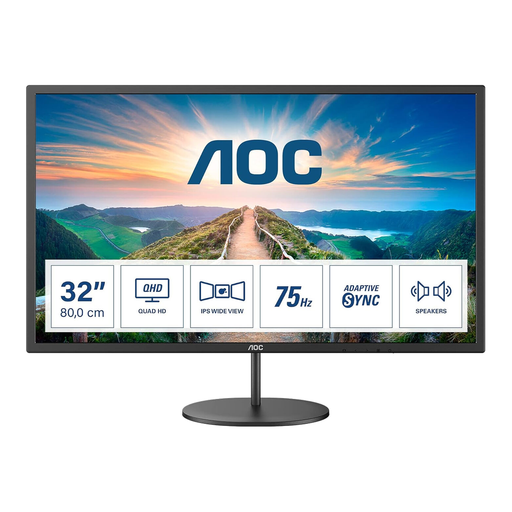
AOC Q32V4 31.5-inch 2K IPS monitor
This larger IPS screen is worth considering if Adaptive Sync matters more to you than the highest advertised gaming refresh rates.
The product name specifies a 4ms response time and built-in speakers. Check its refresh rate and exact-model reflection results against your intended bright-room use.
View on Joybuy
 No image available
CRUA 49-inch 5120 × 1440 curved ultrawide monitor
Consider the 32:9 format only if your space-exploration games handle that wide a view and your desk can accommodate a 49-inch screen.
The product name specifies a 1500R VA panel, 165Hz and AMD FreeSync. Check graphics capability at 5120 × 1440, as well as the screen’s finish and reflection behaviour in your room.
View on Joybuy
 No image available
LG UltraGear G8 27G850A 27-inch 4K Nano IPS monitor
This 27-inch option suits a desk where 4K detail is a priority but a larger screen is not.
The product name specifies dual 240Hz and 480Hz modes, DisplayPort 2.1 and HDMI 2.1. Confirm the resolution and source requirements of the mode you want, and check its finish and bright-room reflection results.
View on Joybuy
Common questions
What should I check first if my gaming room has windows or bright lamps?
Check the exact monitor’s SDR brightness and reflection handling first. RTINGS explains that brightness can help combat glare, while direct reflections also depend on your lighting and the screen; moving a lamp or repositioning the monitor may help.
Should I choose QHD or 4K for space-exploration games?
Choose QHD if reaching your preferred frame rate matters more than finer pixel detail; consider 4K if detail in cockpit instruments, maps and scenery is the priority. Check whether your system can sustain the resolution and refresh rate you intend to use.
How can I use a monitor’s advertised maximum refresh rate?
Match the exact monitor’s supported resolution and refresh rate on a specific input to your graphics card or console and cable. Do not assume its HDMI and DisplayPort inputs offer the same modes.
Does a monitor warranty replace my rights if it arrives faulty?
No. Citizens Advice explains that warranties add to legal rights rather than replacing them, and that faulty or misdescribed goods may give rise to remedies. Keep your proof of purchase; check change-of-mind return terms separately from rights relating to a fault.
Which conformity marking should I check for a monitor sold in Great Britain?
Check the applicable marking and manufacturer documentation for the particular monitor. GOV.UK explains that CE marking continues to be recognised alongside or instead of UKCA in relevant areas for products placed on the Great Britain market; Northern Ireland has a distinct market-access route.


