What to check before buying
Choose the screen position and light conditions first, then weigh dark-scene presentation, motion and the resolution your equipment can drive. RTINGS notes that lighting, brightness and reflections all affect the image you see.
Mini-LED Fast IPS
Consider it when: daylight is hard to avoid and you want a 4K high-refresh option; ASUS specifies 160Hz and 576 local-dimming zones for its 32-inch PG32UQXR.
Trade-off: allow space for a 32-inch screen. Its ASUS-specified 1,000-nit HDR peak does not establish sustained brightness or how it handles a reflected window.
Matte 4K IPS
Consider it when: you want 4K detail on a 27-inch desk setup and can reasonably control the light facing the screen. BenQ specifies a matte surface and 144Hz for the MOBIUZ EX2710U.
Trade-off: BenQ’s 300-nit typical and 600-nit HDR peak figures describe different conditions; neither makes direct sunlight on the panel a safe assumption.
Fast OLED
Consider it when: dark scenes and fast camera movement take priority and you can limit direct reflections. LG specifies QHD OLED, low-reflection treatment and 240Hz for its 27GS93QE-B.
Trade-off: the OLED route still needs careful light placement; a peak HDR figure cannot be substituted for typical brightness or a reflection test.
| Concern |
Buying checks |
Who this matters to |
| Bright-room readability |
Check what will reflect in the screen, its surface treatment and stated typical brightness; look for independent reflection testing of the model. |
If a window or lamp makes dark areas hard to follow, I need the scene to remain readable before extra speed matters. Around 36% of consumers would put reflection control and usable brightness first. |
| Dark-scene presentation |
Compare panel type and surface treatment, distinguishing typical brightness from HDR peak brightness. |
When I explore caves or night scenes, I care about their dark detail and can adjust the light facing my screen. Around 29% of consumers would make that presentation their primary concern. |
| Motion smoothness |
Check achievable game frame rates at the chosen resolution and the refresh and variable-refresh modes available through your connection. |
Fast turns and combat make smooth movement important to me, provided my PC can make use of the display’s refresh rate. Roughly 21% of consumers would prioritise motion. |
| Detail and compatibility |
Check desk fit, native resolution, graphics-card or console output, monitor input and the cable required for your intended mode. |
I want to see maps and distant terrain clearly without choosing a 4K high-refresh mode my setup cannot deliver. About 14% of consumers would put detail and connection fit first. |
Joybuy monitors to consider
These Joybuy choices include larger OLED gaming monitors for players considering 4K detail and a 27-inch dual-mode gaming monitor. For any of them, assess the light facing the screen before treating its gaming specifications as a bright-room recommendation.
 No image available
LG UltraGear 32GS95UV-B OLED gaming monitor
Consider this model if you want 4K detail and selectable high-refresh modes, but check how its screen handles light in your room.
32-inch UHD 4K; dual modes of 4K at 240Hz and Full HD at 480Hz; specified 0.03ms response time.
Confirm that your device and connection support the mode you want, and take account of the listing’s warning about prolonged static images on the OLED panel.
View on Joybuy
 No image available
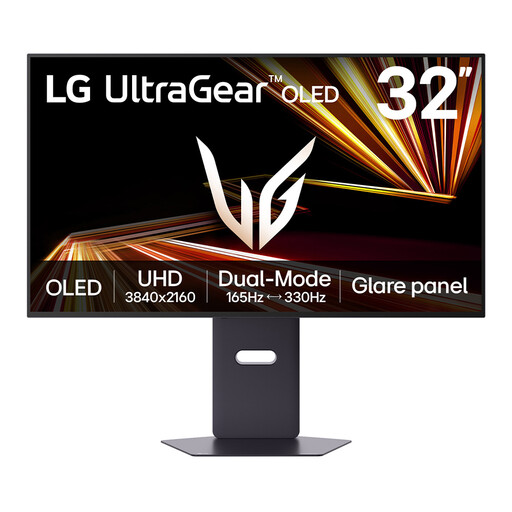
LG UltraGear 32GX850A-B 32-inch OLED gaming monitor
This is another 4K OLED option for players considering a larger screen; compare its screen treatment with the light sources in your room.
32-inch 4K UHD display with a dual mode specified at up to 330Hz.
Check the resolution and connection conditions for the refresh mode you intend to use, and heed the listing’s warning about prolonged static images.
View on Joybuy
 No image available
Samsung Odyssey OLED G8 LS32DG802SUXXU 32-inch gaming monitor
Consider this larger OLED model if environmental detail matters, while checking whether its screen suits the position of your windows and lamps.
32-inch Ultra HD smart gaming monitor.
Assess the product description’s Glare Free claim against the lighting you expect at your desk rather than treating it as an independent reflection measurement.
View on Joybuy
 No image available
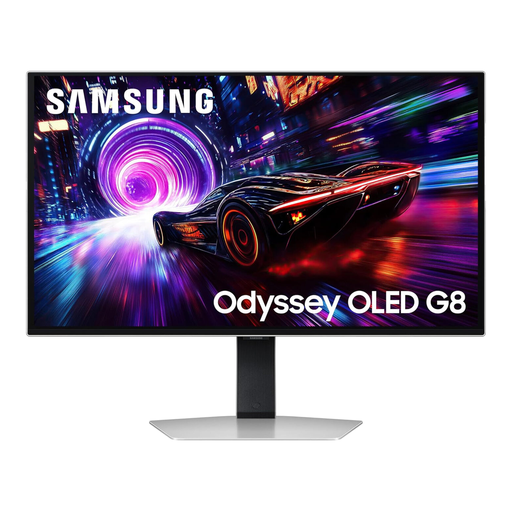
Samsung Odyssey OLED LS32FG810SUXXU 32-inch gaming monitor
This larger OLED option warrants a closer look if you can position the display away from direct light.
32-inch OLED gaming monitor.
Treat the product description’s anti-glare claim as a feature to assess in your room, and confirm the ports needed for your intended display mode.
View on Joybuy
 No image available
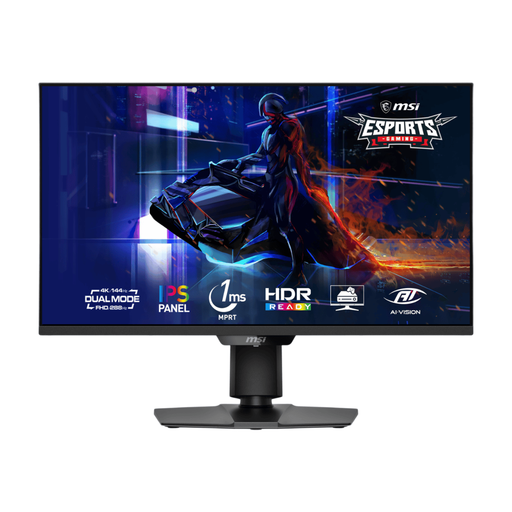
MSI MAG 275UPD E14 27-inch gaming monitor
Consider this smaller dual-mode option if you want to choose between 4K detail and a higher-refresh Full HD mode; check its suitability for your room lighting.
27-inch display with UHD at 144Hz and Full HD at 288Hz; Adaptive Sync.
Confirm that your graphics card, monitor port and cable support the mode you plan to use.
View on Joybuy
Frequently asked questions
Will a high HDR peak-brightness figure make a monitor easy to see in daylight?
No: it does not establish how the monitor handles a reflected window or lamp. RTINGS identifies room lighting, brightness and reflection handling as separate influences on the visible image, so check the screen treatment and typical brightness and plan its position before buying.
Can any HDMI connection run a 4K monitor at 144Hz?
No; the monitor, source device and connection must support the intended mode. For the LG 27GR93U-B specifically, LG says enabling 144Hz requires a graphics card supporting DisplayPort 1.4 with DSC or HDMI 2.1. Check the requirements for your exact monitor and cable.
Should I choose 4K at 144Hz or QHD at 240Hz or 360Hz for survival games?
Choose by the detail and motion you value, and by the frame rates your PC can deliver: 4K at 144Hz fits a preference for environmental detail, while QHD at a higher refresh rate fits a preference for fast movement. Neither specification establishes how readable the screen will be under direct room light.
What if my monitor arrives faulty or differs from its description?
Keep the order record and listing, document the problem and contact the retailer. Citizens Advice says goods that are broken or damaged, not fit for purpose or different from the seller’s description may give rise to legal rights; follow its guidance for the UK nation where you live.


