Start with reflections, readable detail and the video output your PC can deliver, rather than the highest refresh-rate figure. Consider QHD IPS for detail and variable refresh rate, or a glare-treated QHD OLED if dark-scene presentation matters to you and you can manage direct reflections. Choose 4K IPS when fine habitat and interface detail takes priority, provided your PC runs the game satisfactorily at your chosen settings; no resolution or screen treatment guarantees visibility beside a window.
Who is this for?
Bright-room zoo builders
If you play near windows or under strong lighting, check reflections and everyday screen brightness before paying attention to headline refresh rates. RTINGS.com notes that brightness helps a monitor combat glare in a well-lit room.
Detail-first builders
If you spend long sessions placing habitats and reading management panels, consider how much detail you want on screen and what resolution your PC can run comfortably. Dell lists both QHD and 4K gaming-monitor models, with different operating modes.
HDR and colour-focused players
If dark-night scenes and HDR presentation matter to you, look at the screen treatment as well as the panel type. LG and Samsung list QHD OLED models with low-reflection or Glare Free features, but those descriptions do not tell you how every reflection will look at your desk.
What matters when choosing?
For zoo-building in a bright room, assess the screen position and reflections first, then choose a resolution your PC can handle. Check refresh-rate and connection modes after those decisions.
| Concern |
What to check |
Who this matters to |
| Reflections and brightness |
Check the positions of windows and lamps, the stated screen treatment and standard brightness rather than relying on an HDR peak figure. |
If daylight falls across my desk, I need to read dark menus without a window reflection obscuring them. Around 42% of consumers put reflection control first. |
| Habitat and interface detail |
Compare native resolution with the performance your PC can sustain; check whether text remains comfortable to read at your desk distance. |
When I arrange small objects and scan dense management panels, clear detail matters more to me than a faster display mode. Roughly 33% of consumers prioritise detail and interface clarity. |
| Smooth camera movement |
Check the refresh rate at the resolution you intend to use, the required connector and compatible variable refresh rate support. |
As I pan around a large zoo, I want movement to remain smooth when the game frame rate varies. Around 25% of consumers make motion their primary concern. |
Buying pitfalls
-
Taking an HDR peak as a daylight-visibility guarantee
An HDR peak and standard brightness describe different conditions. LG lists 275 nits typical standard brightness for the 27GS95QE-B alongside an up-to-1,000-nit peak; neither figure alone describes a reflection from your window. RTINGS.com identifies brightness as relevant to combating glare in well-lit rooms.
Compare standard brightness and the stated reflection treatment, then check whether strong light would reflect directly into the planned screen position.
-
Choosing a refresh rate without checking the connection
For the Alienware AW2725DM, Dell lists up to QHD 180Hz over DisplayPort 1.4 but up to QHD 144Hz over HDMI. The headline refresh rate is not the mode available through every port.
Match the mode you want against your graphics card output, monitor input and intended cable before ordering.
An unsuitable connection can leave you unable to use the refresh mode you chose the monitor for.
-
Expecting a glare-treatment label to solve every reflection
Samsung describes the Odyssey OLED G6 G61SH Glare Free film as 54% less glossy than conventional anti-reflection film in its own comparison. That comparison does not establish how a particular window or lamp will appear on your screen.
Consider the treatment when shortlisting monitors, but also assess your desk orientation and the seller’s applicable return terms.
Relevant brands to consider
Alienware
Dell’s Alienware range includes distinct QHD Fast IPS and 4K IPS models relevant to this choice.
- Dell lists a QHD Fast IPS panel, variable refresh rate support and up to 180Hz over DisplayPort for the AW2725DM.
- The AW2725QF’s 4K 180Hz and FHD 360Hz settings are separate modes; its faster mode does not run at 4K.
LG UltraGear
LG’s 27GS95QE-B is a QHD OLED option with a stated Anti-Glare / Low Reflection treatment.
- LG lists a 240Hz refresh rate and DCI-P3 98.5% typical coverage for this model.
- LG’s 275-nit typical standard brightness and up-to-1,000-nit peak apply under different conditions; compare the standard figure when assessing daytime use.
Samsung Odyssey
Samsung’s Odyssey OLED G6 G61SH offers a QHD QD-OLED route with its Glare Free screen treatment.
- Samsung lists QHD resolution and a 240Hz refresh rate for the G61SH.
- Samsung’s film-gloss comparison is its own test, not a prediction of reflection visibility in every room.
Joybuy product choices
These OLED and IPS monitors offer different ways to prioritise zoo-building detail, motion and screen visibility. Check the particular screen position and your PC’s output before choosing.
 No image available
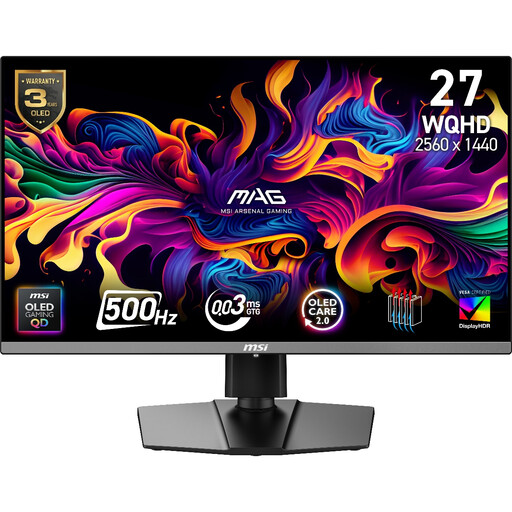
MAG 272QP QD-OLED X50 27-inch QHD 500Hz monitor
Consider this QD-OLED model if you want QHD detail for habitats and menus alongside a high-refresh option.
Its name specifies 2560 × 1440 resolution, 500Hz, 0.03ms and AMD FreeSync. The 500Hz mode requires a suitable signal from your PC, game and connection; assess direct reflections at your desk rather than assuming the screen treatment will eliminate them.
View on Joybuy
 No image available
MAG 274QP QD-OLED X24 27-inch QHD 240Hz monitor
This QD-OLED model suits a look at QHD habitat detail and variable-rate gameplay.
Its name specifies 2560 × 1440 resolution, 240Hz, 0.03ms and Adaptive-Sync. Check whether its stated SDR brightness and the position of windows or lamps suit your desk; anti-reflection treatment cannot make direct reflections disappear.
View on Joybuy
 No image available
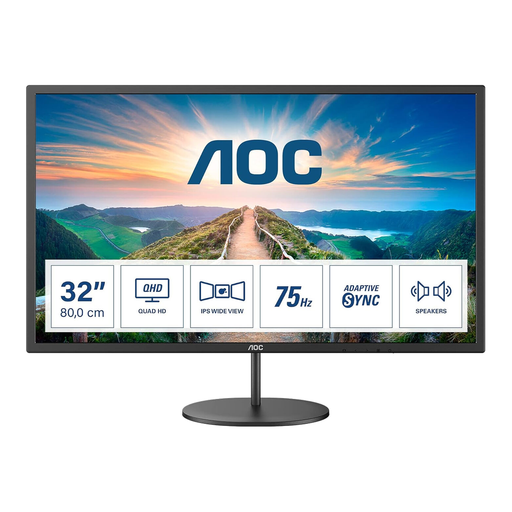
AOC Q32V4 31.5-inch IPS monitor
Consider the larger screen if you want more physical space for viewing a zoo and its management panels.
The name identifies an IPS display with Adaptive Sync and built-in speakers. If faster camera movement matters most, check whether its listed 75Hz refresh rate meets your needs; also assess reflections at your planned screen position.
View on Joybuy
 No image available
HKC G27H2DPro 27-inch QHD Fast IPS 220Hz monitor
This model offers a QHD Fast IPS route if detail and a high-refresh setting are priorities.
Its name specifies 2560 × 1440 resolution and 220Hz. The listed glossy finish deserves particular attention if windows or lamps face the screen; a brightness figure alone cannot establish how distracting those reflections will be.
View on Joybuy
 No image available
LG UltraGear G8 27G850A 27-inch 4K Nano IPS monitor
Consider this 4K model if fine habitat and interface detail is your priority and your PC can run the game at your preferred settings.
Its name lists dual-mode 240Hz/480Hz operation, DisplayPort 2.1 and HDMI 2.1. The 480Hz setting is a separate 1080p mode, not a 4K refresh rate; check the screen finish and typical brightness for your room before buying.
View on Joybuy
Frequently asked questions
Should refresh rate come first for a virtual-zoo game?
No: for this bright-room setup, establish visibility and a suitable resolution before choosing a refresh mode your PC can use. RTINGS.com notes that variable refresh rate can reduce tearing when frame rates fluctuate; Dell’s AW2725DM also shows why the connector matters, with QHD 180Hz listed over DisplayPort 1.4 and QHD 144Hz over HDMI.
Will a glare-reduced OLED solve reflections from windows?
Not necessarily. LG lists Anti-Glare / Low Reflection treatment for the 27GS95QE-B, while Samsung describes a Glare Free film on the Odyssey OLED G6 G61SH. Check where windows and lamps would reflect from your actual screen position rather than treating either feature name as a guarantee.
Why check standard brightness separately from HDR peak brightness?
They refer to different operating conditions, so an HDR peak does not describe ordinary full-screen daytime use. For the 27GS95QE-B, LG lists 275 nits typical standard brightness and a separate up-to-1,000-nit peak under stated conditions.
What should I check about returns and eventual disposal?
Check the seller’s change-of-mind terms separately from remedies for a faulty or misdescribed monitor; GOV.UK describes refund obligations for goods that are faulty, not as described or not working as they should. When the monitor reaches end of life, check an appropriate collection or recycling route: GOV.UK’s waste electrical and electronic equipment guidance covers electrical equipment.


