Who each setup suits

Bright-room footage reviewers

If you spend more time pausing and inspecting footage than playing, prioritise 4K detail, screen treatment and brightness information. BenQ UK specifies a matte screen for its EX2710U, but placement still matters when daylight or overhead lights reach the panel.

Review-and-compete players

A dual-mode IPS monitor lets you use 4K for clip review and switch to a faster FHD mode for competitive play. Dell UK, ASUS ROG UK and LG UK each specify models with distinct resolution-and-refresh combinations; check that your source device can output the one you intend to use.

Colour-and-motion-focused mixed users

If high-refresh 4K gaming and colour specifications are important alongside footage review, a QD-OLED model may fit. ASUS ROG UK lists these features for the PG27UCDM; consider direct reflections and long periods with static editing controls on screen before choosing OLED.

What matters when choosing

Matte 4K IPS

Choose when: Footage inspection under room lighting takes precedence over an especially fast competitive mode. BenQ UK specifies a matte 4K IPS panel for the EX2710U.

Trade-off: Its specified 144Hz refresh rate differs from the faster FHD settings on the dual-mode examples; its 600-nit HDR peak figure does not predict reflections in your room.

4K/FHD dual-mode IPS

Choose when: You need 4K for detailed review and a separate higher-refresh setting for competitive play.

Trade-off: The fastest settings on the cited Dell, ASUS and LG models use FHD rather than 4K, so switch back to 4K when inspecting fine detail.

4K QD-OLED

Choose when: High-refresh 4K motion and colour features matter to you, and you can position the screen away from direct reflections.

Trade-off: Consider prolonged static interfaces and the maker’s OLED-care guidance. VESA DisplayHDR True Black 400 is not a direct bright-room comparison with LCD DisplayHDR 600.

Concern What to check Who this matters to
Readable footage in room light Check native 4K resolution, matte or anti-glare treatment, and typical brightness separately from HDR peak brightness. I need to pause footage while the room is bright without reflections obscuring what I am inspecting. Around 42% of consumers put readable detail and light management first.
Review and competitive play Check each resolution-and-refresh pair and whether your device and connection can output the selected mode. I want 4K detail for review but also a faster setting when I play competitively. For around 33% of consumers, switching between those uses is the primary need.
Colour and high-refresh motion Check the stated 4K refresh rate, colour mode, HDR certification family and OLED-care guidance. I value high-refresh 4K gaming and colour features enough to manage room light and static on-screen controls. That is the leading concern for around 25% of consumers.

Buying pitfalls

  • Assuming an HDR label settles bright-room suitability

    VESA DisplayHDR tiers specify criteria including luminance and colour, but a certification or HDR peak figure alone does not tell you where a window will reflect on the screen.

    Compare typical brightness, HDR peak brightness and screen treatment separately, then consider whether you can place the monitor away from direct reflections.

  • Expecting the fastest dual-mode setting to remain 4K

    The cited dual-mode monitors reach their highest refresh rates at FHD. Using that setting while inspecting footage gives up the detail of their 4K mode.

    Confirm the exact resolution-and-refresh pair you need and whether your computer or console and connection can output it.

  • Assuming any USB-C laptop port carries video

    ASUS ROG UK specifies that video over USB-C on the XG27UCSR requires DisplayPort Alt Mode from the source device.

    Check your laptop’s port specification and the monitor’s supported inputs before deciding how to connect them.

    A compatible cable, dock or adapter may be needed if your intended connection cannot carry the required video signal.

  • Waiting to test the monitor after delivery

    Reflections, input compatibility, panel faults and damage are easier to assess once the monitor is set up in its intended room. GOV.UK distinguishes cancellation of an online order from remedies when goods are faulty or misdescribed.

    Test the panel, connections and refresh modes promptly. Keep the packaging while you check the seller’s return process, without treating that process as a replacement for statutory rights.

Relevant brands to consider

BenQ MOBIUZ

The EX2710U illustrates a matte 4K IPS option for footage-led review.

  • BenQ UK specifies a 27-inch IPS panel, 144Hz, a matte coating, 600-nit HDR peak brightness and VESA DisplayHDR 600 for this model.
  • The HDR peak specification does not establish typical full-screen brightness or reflection handling in a particular room.

Alienware

Dell’s AW2725QF illustrates the dual-mode IPS route for review and competitive use.

  • Dell UK specifies 4K at 180Hz, FHD at 360Hz, anti-glare treatment and 95% DCI-P3 coverage for this model.
  • Its 360Hz setting is FHD, not 4K.

LG UltraGear

LG UK lists both fixed-resolution 4K IPS and dual-mode IPS gaming monitors.

  • LG UK specifies 4K at 144Hz for the 27GR93U-B and 4K at 180Hz or FHD at 360Hz for the 27G810A-B.
  • Those resolution and refresh specifications do not establish how either screen will handle reflections at your desk.

ASUS ROG

The XG27UCSR and PG27UCDM illustrate different routes: dual-mode Fast IPS and high-refresh 4K QD-OLED.

  • ASUS ROG UK specifies 4K at 160Hz or FHD at 324Hz for the XG27UCSR, and 4K at 240Hz for the PG27UCDM.
  • The XG27UCSR needs DisplayPort Alt Mode for USB-C video. For the PG27UCDM, follow ASUS’s OLED-care guidance if static controls will remain on screen for long periods.

Joybuy monitor choices

These monitors offer 4K options for footage review, including models with separate faster gaming modes and OLED choices. For use in a bright room, check each model’s screen treatment and brightness alongside where you can position it.

LG UltraGear 32GX850A-B OLED monitor

LG UltraGear 32GX850A-B 32-inch 4K OLED

Consider this 4K dual-mode model if you review footage and also want a separate faster gaming setting.

The product name states a maximum of 330Hz; the faster mode uses FHD rather than 4K. Check screen treatment and brightness for your room, and account for prolonged static images on the OLED panel.

View on Joybuy

LG UltraGear G8 27G850A Nano IPS monitor

LG UltraGear G8 27G850A 27-inch 4K Nano IPS

Consider this dual-mode IPS model if you want to alternate between 4K footage review and competitive play.

Its named modes reach 240Hz and 480Hz respectively; the 480Hz mode uses 1080p, not 4K. Confirm screen treatment, typical brightness and the mode your source device can output.

View on Joybuy
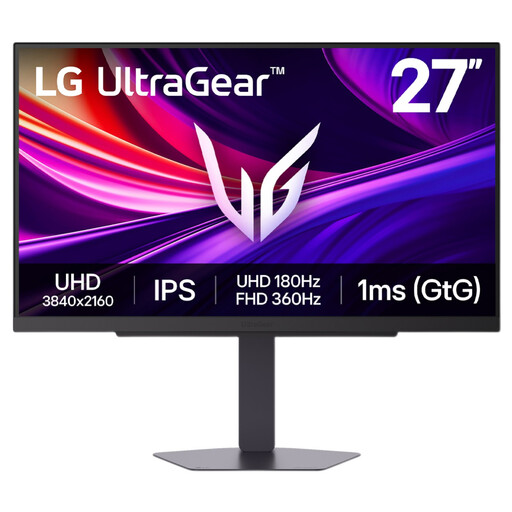
LG UltraGear 27G810A-B IPS monitor

LG UltraGear 27G810A-B 27-inch 4K IPS

This dual-mode option suits someone who reviews clips in 4K and switches to a faster mode for play.

LG UK specifies 4K at 180Hz and FHD at 360Hz for the 27G810A-B. Check its screen treatment and typical brightness for your room, as well as your device’s supported output.

View on Joybuy

Samsung Odyssey OLED G8 LS32DG802SUXXU monitor

Samsung Odyssey OLED G8 LS32DG802SUXXU 32-inch Ultra HD

Consider this OLED model if an Ultra HD screen is part of a mixed footage-review and gaming setup.

Check its typical brightness and reflection handling in relation to your room. If editing controls will stay visible for long periods, read the model’s OLED-care instructions before choosing it.

View on Joybuy
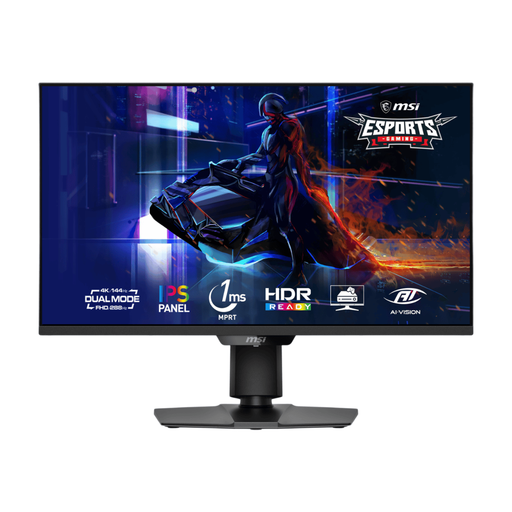
MSI MAG 275UPD E14 dual-mode monitor

MSI MAG 275UPD E14 27-inch 4K dual-mode monitor

This model suits a setup that needs UHD footage review and a separate faster FHD gaming mode.

The named modes are UHD at 144Hz and FHD at 288Hz. Check screen treatment and typical brightness for bright-room use; its HDR description does not state a VESA DisplayHDR tier.

View on Joybuy

Frequently asked questions

Should I prioritise 4K or refresh rate for tournament footage?

Start with 4K, screen treatment and brightness information if inspecting footage in a bright room is the main task. If you also play competitively, a dual-mode monitor can provide a faster setting, but the cited Dell, ASUS and LG examples use FHD for their fastest modes.

Will a VESA DisplayHDR logo tell me how the monitor looks in my room?

No: it provides a specification baseline, not a room-specific reflection test. VESA’s tiers cover criteria including luminance and colour; also check the monitor’s typical brightness, HDR peak brightness and screen treatment, then consider its position relative to windows and lights.

Can I connect a laptop through any USB-C port?

No: the laptop port must support the video connection the monitor requires. For example, ASUS ROG UK specifies DisplayPort Alt Mode from the source device for USB-C video on the XG27UCSR; check the laptop’s port documentation before relying on that connection.

What if an online monitor purchase needs to be cancelled or arrives faulty?

Cancellation and remedies for faulty or misdescribed goods are separate matters. GOV.UK states that distance-sale customers generally have 14 days from receiving an item to notify the seller that they wish to cancel; it also describes repair or replacement rights for faulty goods. Check the applicable process without assuming a retailer’s voluntary policy replaces statutory rights.

Is CE or UKCA marking relevant to a monitor sold in Great Britain?

Yes, where the relevant product requirements apply. GOV.UK’s Great Britain guidance says CE marking continues to be recognised alongside or in place of UKCA marking in applicable cases; it does not make this a single rule for Northern Ireland. Check the product and supplied documentation for the market in which you are buying.