What should you check?
Start with the space you want for maps and menus and the position the screen can occupy on your desk. Then check which refresh mode and connections your PC can actually use.
| Concern |
What to check |
Who this matters to |
| Screen positioning |
Compare stand adjustment or VESA mounting with your seated eye height and desk depth; check the room for reflections. The Health and Safety Executive advises placing the top of a workplace screen around eye level and the screen about an arm’s length away. |
I need the screen to sit at a usable height through a long session without awkward positioning. Around 33% of consumers put desk fit and screen positioning first. |
| Maps and interface detail |
Compare native resolution and screen size together, then check how your games and preferred interface scale look at your viewing distance. A move to 4K also changes what your graphics hardware must render. |
Dense maps and menus are central to how I play, so I want enough room to inspect them without losing track of the layout. For around 33% of consumers, that detail is the primary concern. |
| Motion and refresh |
Check native versus overclocked refresh rates, the required video port and variable-refresh compatibility. LG says the 27GS85Q-B’s 200Hz overclocked mode requires a DisplayPort 1.4-capable graphics card and cable. |
I pan across large maps and also play faster games, so smoother movement takes priority over extra desk features. Roughly 20% of consumers place motion first. |
| Desk connectivity |
Check the exact USB-C video and power-delivery specifications, KVM requirements and cables you need. BenQ lists 65W USB-C power delivery for the EX271Q, while GIGABYTE lists up to 18W for the M27Q X Rev. 2.0. |
I switch between devices and want the monitor’s connections to suit my existing desk setup. Connectivity is the leading need for around 14% of consumers. |
Relevant brands to compare
Compare exact models rather than assuming a feature applies across an entire brand’s monitor range.
BenQ MOBIUZ
The EX271Q is worth comparing if QHD gaming shares a desk with a USB-C laptop or a second computer.
- BenQ specifies a 27-inch QHD IPS panel, up to 180Hz via DisplayPort, 100mm height adjustment, 65W USB-C power delivery and a KVM for the EX271Q.
- Check the EX271Q’s connections and stand against your devices and desk; these features should not be assumed for other MOBIUZ models.
LG UltraGear
The 27GS85Q-B offers a QHD Nano IPS route for players considering a higher-refresh display.
- LG specifies a native 180Hz refresh rate and an optional 200Hz overclocked mode for the 27GS85Q-B.
- LG requires a DisplayPort 1.4-capable graphics card and cable for that model’s 200Hz mode.
GIGABYTE
The M27Q X Rev. 2.0 combines QHD gaming specifications with desk-switching features.
- GIGABYTE specifies 240Hz, a KVM, a USB hub and 130mm height adjustment for the M27Q X Rev. 2.0.
- Its stated USB-C power delivery is up to 18W; compare that figure with your laptop’s charging requirement.
Alienware
Dell’s AW2725DF provides a QHD QD-OLED alternative for players who place particular value on its display and motion specifications.
- Dell specifies a 26.7-inch QHD QD-OLED panel, 360Hz refresh rate and up to 110mm height adjustment for the AW2725DF.
- For long building-game sessions, consider how persistent interfaces fit the model’s panel-care guidance before choosing this route.
Joybuy products to consider
These choices include QHD monitors for different desk sizes and priorities: high-refresh gaming displays, an ultrawide OLED and a QHD IPS model with a more modest stated refresh rate. Compare each one with your screen-positioning needs and the connections available on your PC.
 No image available
Samsung Odyssey G6 S27DG612 27-inch QHD OLED
Consider this model if you want a 27-inch QHD OLED display and place value on its stated 240Hz refresh rate. The product name also specifies a 0.03ms response-time figure; it does not establish the frame rate your games will achieve.
For long sessions with persistent game menus, check the model-specific panel-care instructions and warranty terms before choosing it.
View on Joybuy
 No image available
CRUA 32-inch 1500R Curved QHD Gaming Monitor
Consider the larger curved format if it suits your desk and preferred viewing distance. The product name specifies 2560×1440 resolution, 165Hz, Adaptive Sync, HDMI and DisplayPort, plus a 100×100mm VESA mounting pattern.
Check whether the supplied stand reaches your preferred height and whether your graphics output and cable can use the stated QHD refresh mode.
View on Joybuy
 No image available
LG UltraGear 34GX900A-B 34-inch OLED WQHD
Consider this wider display if its format fits both the game interfaces you use and the space on your desk. The product name specifies a 34-inch OLED WQHD display and 240Hz; check which refresh mode your device and connection can use.
The product information warns that the OLED panel is susceptible to burn-in. Follow its screen-protection guidance and consider how long your game interfaces remain static.
View on Joybuy
 No image available
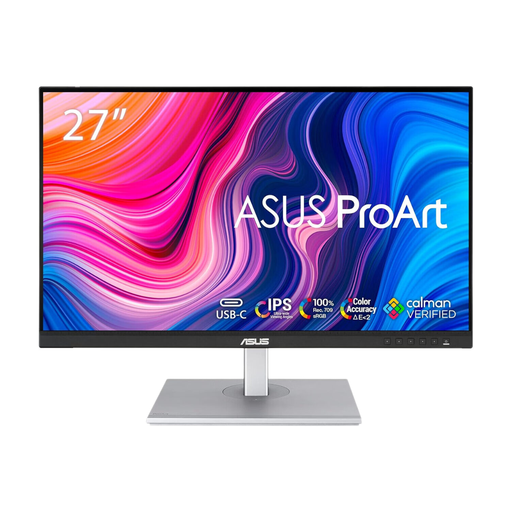
ASUS ProArt PA278CFRV IPS QHD 100Hz
Consider this QHD IPS model if map and menu space matter and its stated 100Hz refresh rate meets your gaming needs. Check its stand against your seated position and confirm adaptive-refresh compatibility if that feature matters to you.
View on Joybuy
 No image available
HKC G27H2DPro 27-inch QHD Fast IPS
Consider this model if you want a 27-inch QHD IPS gaming display with the stated 220Hz refresh rate. Its product name specifies 2560×1440 resolution.
Check how the screen’s listed glossy finish will work with your room lighting, and confirm whether its stand or a suitable mount can provide the position you need.
View on Joybuy
Frequently asked questions
Is a 27-inch QHD monitor a sensible starting point for building games?
Yes, if you want room for maps and menus while keeping your choice tied to the performance your PC can deliver. Compare the screen with your viewing distance, preferred interface scale and game settings before deciding whether QHD or 4K suits you.
Do I need a height-adjustable monitor stand for long sessions?
Not necessarily: a compatible monitor arm or suitable riser may provide the position you need. The Health and Safety Executive’s workplace guidance suggests placing the top of the screen around eye level and the display about an arm’s length away, so assess any fixed stand against your actual desk and chair.
Can workplace display-screen guidance help with a home gaming setup?
Yes, its practical advice on posture, glare and breaks can inform how you arrange a gaming desk. Health and Safety Executive display-screen guidance addresses workplace use; it should not be presented as establishing a legal duty for leisure gaming at home.
Will a monitor’s USB-C port replace all my laptop cables?
Only if the exact monitor supports the video connection and provides enough power for your laptop, with the other ports you need. BenQ specifies 65W USB-C power delivery for the EX271Q, while GIGABYTE specifies up to 18W for the M27Q X Rev. 2.0; compare the model’s connections with your laptop before relying on a single cable.


