Competitive PC players
If fast-paced games are your priority, match the monitor's refresh mode and variable refresh rate (VRR) support to the frame rates and connections your PC can use.


Choose a gaming monitor around the games and hardware you actually use, rather than its highest advertised resolution or refresh rate. Competitive PC play makes achievable frame rates and connections particularly important; cinematic play brings resolution, contrast and room lighting into the decision, while console players need to check the modes available through HDMI.
If fast-paced games are your priority, match the monitor's refresh mode and variable refresh rate (VRR) support to the frame rates and connections your PC can use.
If you favour detailed single-player games, consider resolution, contrast and HDR alongside your graphics hardware. An OLED choice also calls for attention to room reflections and panel-care guidance.
If you play on PS5 or Xbox Series X|S, check which resolution, 120 Hz and VRR modes work through the monitor's HDMI input with your console and games.
Start with the games and source device you use most. Then check the resolution and refresh mode available through the connection you intend to use; panel characteristics and desk fit can narrow the choice further.
| Concern | What to check | Who this matters to |
|---|---|---|
| Competitive motion | Check the refresh rate at your intended resolution, the GPU and cable connection, and frame rates in your main games. | I mainly play competitive games and would prioritise a refresh mode my PC can make use of. Around 29% of consumers put that need first. |
| PC detail and refresh | Compare the native 2560 × 1440 mode and its refresh rate with your PC's output and gaming frame rates. | For a mix of game genres, I want QHD detail without choosing a refresh target my system cannot use; roughly 29% of consumers prioritise that balance. |
| Cinematic presentation | Consider native resolution, HDR specifications, screen finish and your room lighting. For OLED, check the exact model's care guidance and warranty wording. | In visually detailed games, I care more about the image than an extreme refresh target. About 21% of consumers place that visual priority first. |
| Console modes | Check the monitor's HDMI modes against your console's supported resolution, 120 Hz and VRR settings; include the cable and game mode. | I want the display to use the modes available from my console, rather than rely on its PC specifications; that is the leading concern for around 21% of consumers. |
A monitor's 240 Hz or 480 Hz specification does not mean a PC will produce that many frames in a game. VRR also depends on compatible equipment and settings.
Check your GPU output, the monitor's mode for that input, the required cable and frame rates in the games you play most.
The console, game, cable and monitor input all affect the available mode. Xbox Support specifies an Xbox Series X, an Ultra High Speed HDMI cable and an HDMI 2.1 display for 4K gaming at 120 frames per second.
Read the monitor's supported HDMI modes, then check resolution, 120 Hz, HDR and VRR in your console's video settings after connecting it.
ASUS UK says prolonged static, high-contrast images can cause OLED image persistence or burn-in. Its published warranty terms differ between specified models, so brand name alone does not establish cover for another screen.
Check the exact model's warranty wording and panel-care instructions, including any applicable protection functions.
A headline figure on its own does not tell you how the screen finish and reflections will look at your desk.
Compare the chosen model's stated brightness conditions and screen finish with your desk position and window reflections.
These brands offer relevant models to compare, but specifications and OLED warranty terms need to be checked for the particular screen.
LG UK lists models covering both very high-refresh QHD play and a display with separate 4K and Full HD modes.
Dell UK lists QHD and 4K QD-OLED options for PC players considering a high refresh rate.
ASUS ROG is relevant if model-specific OLED protection features and burn-in warranty wording are central to your decision.
These options span dual-mode 4K monitors, a QHD high-refresh OLED and larger ultrawide OLED screens. Compare each one with your PC connection, games and desk space; check console HDMI modes separately if you plan to use a console.
 No image available
Consider this if you switch between detail-focused and faster-paced PC games, provided your connection and games can use the mode you choose.
The product name specifies a 4K UHD Nano IPS display, dual-mode 240 Hz/480 Hz operation, DisplayHDR 600, DisplayPort 2.1 and HDMI 2.1. Check the resolution and refresh rate available through your intended input.
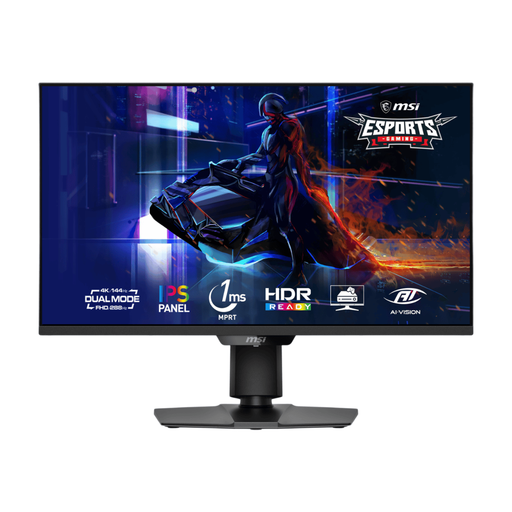 No image available
This is an option for choosing between a UHD mode and a faster Full HD mode, if your source device can use the one you want.
The product name specifies UHD at 144 Hz, Full HD at 288 Hz and Adaptive Sync. Confirm the modes available through your chosen connection, particularly for console use.
 No image available
Consider its QHD and high-refresh combination for PC gaming if your hardware can run your games at the frame rates you want.
The product name specifies OLED, QHD, 240 Hz and a stated 0.03 ms response time. Check this model's OLED care guidance and warranty terms before buying.
 No image available
The ultrawide format may appeal if you want more screen space for PC games; check desk fit and support for your preferred game display modes.
The product name specifies a 34-inch OLED WQHD screen at 240 Hz. Follow the exact model's OLED care instructions and check its warranty wording.
 No image available
Consider this large ultrawide format for PC gaming only after checking desk or mount suitability and your games' display-mode support.
The product name specifies a 32:9 QD-OLED display, an 1800R curve and 240 Hz. Check the exact model's OLED care and warranty terms, and do not assume console games will use the ultrawide format.
Match your GPU's output, cable and the monitor's input to the stated mode at your intended resolution, then consider frame rates in your games. A display's refresh specification does not establish your PC's gaming frame rate; AMD says FreeSync also needs compatible display and Radeon graphics hardware.
Check the monitor's HDMI modes and use the PS5 video settings to inspect or test the output you intend to use. PlayStation describes tests for supported 1440p SDR and HDR output at 60 Hz or 120 Hz, as well as VRR; the connected display and game affect which modes you can use.
Xbox Support specifies an Xbox Series X, an Ultra High Speed HDMI cable supporting HDMI 2.1 and an HDMI 2.1 display for 4K gaming at 120 frames per second. Check the monitor's relevant HDMI input and the game's available mode as well as the console settings.
No brand-wide assumption is safe: check the exact model's warranty terms. ASUS UK describes burn-in risk from prolonged static, high-contrast images and publishes differing warranty terms for specified OLED models; follow the care instructions applicable to the screen you choose.
For goods covered by the Consumer Rights Act 2015, government explanatory notes describe a consumer right to insist on repair or replacement of faulty goods at the trader's cost. A manufacturer's voluntary warranty does not replace applicable statutory rights; the appropriate remedy depends on the circumstances of the fault.