Motion-first replay reviewers
If you repeatedly examine fast exchanges at competitive settings, motion clarity and responsiveness matter more to you than extra space for static detail.


Prioritise a small, very-high-refresh esports monitor if your replay review centres on fast movement; choose a high-refresh 1440p screen if you also need room to inspect timelines and paused frames. A 4K screen shifts the emphasis towards fine detail, but whichever route you take, check the refresh mode your PC and connection can deliver, how you will connect your headphones, and whether your preferred motion settings can run together.
If you repeatedly examine fast exchanges at competitive settings, motion clarity and responsiveness matter more to you than extra space for static detail.
If the same screen handles matches, replay timelines, paused frames and desktop work, you need to weigh refresh rate against resolution and usable workspace.
If you spend more time examining small interface elements, maps and still frames, you may accept a lower refresh-rate ceiling in exchange for higher resolution.
Start with the part of replay review that matters most to you, then check whether your PC, display connection and headphone setup support the monitor you are considering.
Choose when: Rapid competitive movement is your main focus and a compact display suits your setup.
Trade-off: FHD leaves less pixel detail for paused-frame inspection than 1440p or 4K. ZOWIE by BenQ specifies its 24.1-inch XL2586X at 540Hz, but says DyAc 2 must be off to use VRR on that model.
Choose when: One display must serve both fast play and detailed replay review.
Trade-off: Check that your source and chosen input can deliver the intended mode. MSI specifies its MPG 271QR QD-OLED X50 at 2560 × 1440 and 500Hz, with a headphone-out.
Choose when: Inspecting fine details in paused footage matters more than reaching an esports-level refresh rate.
Trade-off: The specific 4K model still matters: MSI lists its MAG 272UP QD-OLED E16 at 3840 × 2160 and 165Hz, with a headphone-out.
| Concern | What to check | Who this matters to |
|---|---|---|
| Fast-motion clarity | Check refresh rate at native resolution alongside response-time and input-lag evidence; confirm the mode your PC and cable can deliver. | If fast exchanges are the frames I revisit most, I need movement to remain easy to follow rather than choosing on resolution alone. Around 29% of consumers put motion clarity first. |
| Replay detail | Compare native resolution with screen size and confirm the refresh rate available through your intended input. | When I pause footage to study small interface details or keep a timeline open, I need enough detail and workspace to inspect them. Roughly 29% of consumers prioritise replay detail. |
| Headphone connection | Confirm a headphone-out on the exact model and whether your headset needs a separate microphone, USB connection or audio device. | I want to plug headphones into the monitor without losing the headset features I use. Around 21% of consumers make connection convenience their primary concern. |
| Variable refresh rate | Check source and monitor VRR compatibility, the supported range and whether VRR conflicts with a blur-reduction mode. | If my frame rate varies during play, I want to know which display mode I can use without giving up a setting I rely on. Roughly 21% of consumers put variable-frame-rate handling first. |
A stated 500Hz or 540Hz mode does not establish response behaviour, input lag or the frame rate your system can supply. These affect how useful the mode is for fast play and review.
Check independent response and input-lag findings where available, then confirm the native-resolution mode supported by your GPU, input and cable.
ZOWIE by BenQ says DyAc, DyAc+ or DyAc 2 must be turned off to enable VRR on the cited models, including the XL2586X.
Check the operating rules for your exact monitor and decide which mode you would use when frame rates fluctuate.
A headphone-out establishes an audio connection, not support for a headset microphone, USB features or particular amplification needs.
Check your headset connector and required features; if necessary, plan to connect it to the PC, console or separate audio device instead.
The MSI MAG 272QP QD-OLED X50 and MSI MPG 271QR QD-OLED X50 have different model identifiers. A similar-looking listing should not be treated as the same monitor.
Match the full model name and variant, relevant specifications and warranty terms before choosing a listing.
The XL2586X is a compact esports-focused route for consumers prioritising fast motion.
The cited QD-OLED models offer distinct routes for high-refresh WQHD use and 4K replay inspection.
The ROG Swift OLED PG27AQWP-W is another high-refresh 1440p model to assess if motion is your priority.
These monitors offer different ways to balance fast play, replay detail and desk space. If you plan to connect headphones to the monitor, check the audio connection on the exact model rather than assuming every display provides one.
 No image available
A WQHD option for consumers who want fast play and room to examine replay detail on one screen.
The listing specifies a 26.5-inch 2560 × 1440 panel, 240Hz refresh rate, Adaptive-Sync and a headphone-out. Check whether your headset needs microphone or USB features and whether your chosen connection supports the mode you intend to use.
 No image available
Consider this larger 4K screen if examining fine detail in paused replays matters more to you than a specialist esports refresh tier.
The listing specifies a 31.5-inch 3840 × 2160 display at 165Hz and an audio-out. Confirm that the audio connector suits your headphones and that your source and chosen input can deliver the intended 4K mode.
 No image available
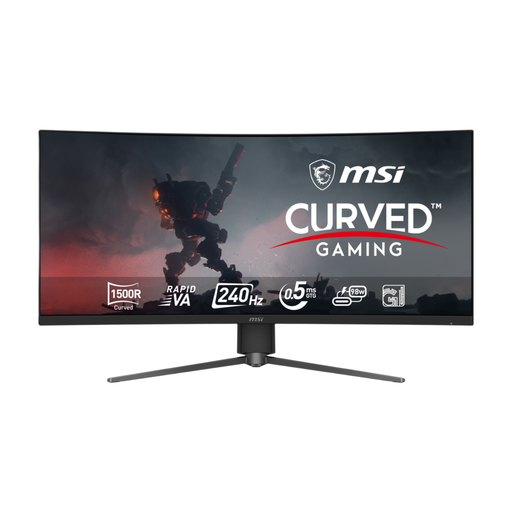
The ultrawide format is relevant if you want more horizontal room for replay review as well as a fast gaming display.
The listing specifies 3440 × 1440 at 240Hz, a curved Rapid VA panel and Adaptive Sync. Check desk space, your source’s supported mode and whether the exact monitor has a suitable headphone connection.
No image available
This is a detail-review option if a monitor-side headphone connection matters more to you than a very high refresh rate.
The listing specifies 2560 × 1440, 75Hz, an IPS panel and a headphone-out. Its stated refresh rate is lower than those of the higher-refresh models shown here; check any microphone or other headset requirements separately.
 No image available
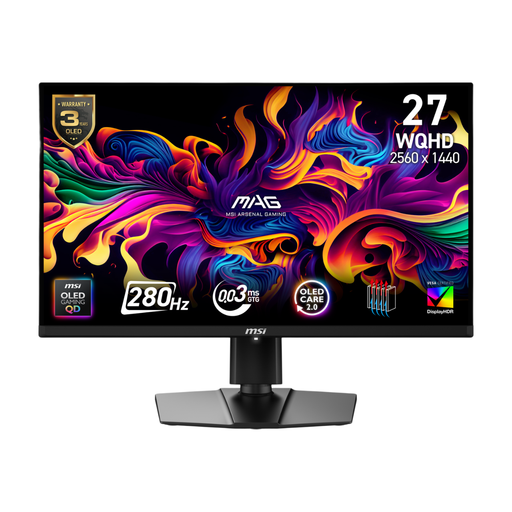
A high-refresh WQHD choice for playing competitively and inspecting replays on the same display.
The listing specifies a 26.5-inch 2560 × 1440 panel and 280Hz refresh rate. If you need monitor-side headphones or VRR, confirm those features on the exact model, along with the refresh mode supported by your source and chosen input.
No. Refresh rate is only one part of fast-motion performance; response behaviour and input lag also matter, as RTINGS notes in its high-refresh monitor guidance. If you often pause footage to inspect small details or timelines, weigh resolution and screen size alongside refresh rate.
No: ZOWIE by BenQ’s UK support guidance says to turn off DyAc, DyAc+ or DyAc 2 before enabling VRR on the XL2586X. Check your GPU support, then choose the monitor mode that fits how you play or review footage.
No, unless you specifically want to plug your headphones into the display. A listed headphone-out does not establish microphone or USB-headset support, so check your headset’s requirements and consider connecting it directly to your PC, console or audio device.
Use an appropriate electrical-equipment collection or recycling route rather than general waste. GOV.UK explains that the UK waste electrical and electronic equipment framework aims to reduce disposal through landfill or incineration; check which monitor collection or take-back options are available through your local authority or retailer.