Dark-scene immersion seekers
If city lights, tunnels and night cycles are central to your games, compare the exact HDR certification rather than a generic HDR label. VESA distinguishes its DisplayHDR True Black tiers from other DisplayHDR tiers.


For dark-room city-building, prioritise an exact VESA DisplayHDR True Black certification if dark scenes matter most; pair it with a 4K screen if fine map and interface detail is equally important. A 21:9 ultrawide offers a different workspace, while an LCD is worth considering if you prefer to avoid OLED-specific panel care. Whichever route you take, check desk fit and graphics-card compatibility, plus OLED care and warranty terms where relevant.
If city lights, tunnels and night cycles are central to your games, compare the exact HDR certification rather than a generic HDR label. VESA distinguishes its DisplayHDR True Black tiers from other DisplayHDR tiers.
If you spend long sessions reading dense maps, toolbars and overlays, consider whether a 4K 16:9 screen or a wider 21:9 workspace better suits your games and desk. Dell and ASUS each describe a 32-inch-class 4K model; screen shape remains a separate choice.
If you also play faster games, variable refresh rate (VRR) may matter alongside contrast and map detail. Check the monitor’s stated FreeSync or G-SYNC compatibility against your graphics card; AMD and NVIDIA specify different requirements.
Choose the screen shape and resolution around the maps you play, then compare the exact HDR tier for dark scenes and VRR support for your PC. These choices can coexist: a 4K screen, for example, may also have an OLED panel.
Consider it: When dark scenes and fine detail on a 16:9 map are both priorities.
Check: The exact DisplayHDR True Black certification, OLED-care functions and warranty terms for persistent game interfaces.
Consider it: When you prefer a wider horizontal workspace and your game’s interface works comfortably in that format.
Allow for: A different screen shape and resolution from 4K 16:9, as well as the space needed for a wider chassis.
Consider it: When you would rather avoid OLED-specific panel-care considerations.
Check: The exact DisplayHDR tier and local-dimming details before judging its dark-scene performance.
| Concern | What to check | Who this matters to |
|---|---|---|
| Dark-scene contrast | Check the exact VESA DisplayHDR or DisplayHDR True Black tier; do not treat generic HDR wording as certification. | If night lighting and shadowed terrain set the mood, I want credible contrast information rather than an HDR badge alone. Around 46% of consumers put dark-scene contrast first. |
| Map and interface space | Compare native resolution and aspect ratio, then check desk dimensions and interface scaling in the games you play. | When menus and building placement occupy much of my screen, I care most about choosing a map view I can read comfortably. Map and interface space comes first for around 36% of consumers. |
| GPU-compatible VRR | Match the stated FreeSync or G-SYNC support and its requirements to your graphics card. | If I switch between city builders and faster games, I want variable-frame-rate play to work with my PC. Around 18% of consumers make compatible VRR their primary concern. |
VESA applies distinct criteria to DisplayHDR and DisplayHDR True Black tiers. It warns that wording such as HDR-400 need not indicate its certification.
Check the exact tier for the model you are considering before comparing its HDR claims with another screen.
A refresh-rate figure does not establish whether VRR will work with your graphics card. AMD FreeSync and NVIDIA G-SYNC compatibility have their own requirements.
Identify your GPU and check the monitor’s exact compatibility status and applicable settings.
OLED-care features and warranty terms are model-specific. ASUS describes care and heat-management features for its PG32UCDM as reducing burn-in risk, not eliminating it.
Read the support and warranty documents for the exact variant you intend to buy, particularly if toolbars and overlays will remain on screen for long sessions.
Energy information provides another point of comparison for a monitor used through long gaming sessions. GOV.UK includes electronic displays in its energy-information guidance.
Review the energy label and product information sheet alongside the screen specifications.
Dell’s UK-listed Alienware AW3225QF is a 32-inch-class 4K QD-OLED option with a curved screen.
ASUS lists the ROG Swift OLED PG32UCDM as a 32-inch-class 4K QD-OLED model with USB-C power delivery.
LG’s 32GS95UE-B is a dual-mode OLED model for buyers interested in both 4K and a faster FHD mode.
These choices span a 21:9 OLED, a wider 32:9 QD-OLED, a 27-inch Nano IPS monitor and two other OLED screen sizes. Compare their formats with your game interface and desk space before focusing on refresh rate.
 No image available
Consider this 34-inch screen if a 21:9 workspace suits your city maps and desk better than a 16:9 view.
The product name specifies WQHD and 240 Hz. Check how your games scale their interface, plus the exact OLED-care functions and warranty terms for long sessions.
 No image available
The 32:9 format is an option if you want a particularly wide map workspace; check that your games handle it comfortably and that the monitor fits your desk.
The product name specifies 240 Hz, an 1800R curve, AMD FreeSync Premium and DisplayHDR 400 True Black. Confirm graphics-card compatibility and the exact OLED-care and warranty terms.
 No image available
Consider this non-OLED option if a 27-inch 4K screen suits your map-detail needs. Its stated DisplayHDR 600 tier is not a DisplayHDR True Black tier.
The product name specifies dual-mode 240 Hz/480 Hz operation and AMD FreeSync Premium Pro. Check local-dimming details before relying on it for dark scenes, and confirm the VRR requirements for your PC.
 No image available
This 27-inch QHD option suits a more compact setup if you do not need the 4K map-detail route.
The product name specifies OLED and 240 Hz. If certified HDR performance is important to your dark-room choice, check the exact VESA tier; also review the model’s OLED-care functions and warranty terms.
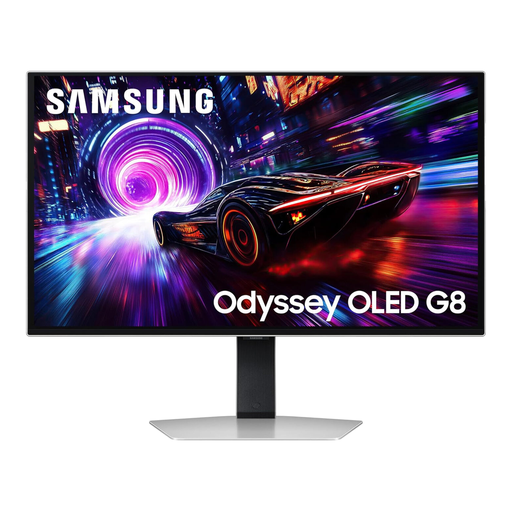 No image available
Consider this 32-inch OLED if you prefer that screen size for city maps. Before deciding whether it meets your detail and dark-scene priorities, confirm its native resolution and exact HDR certification.
Also check graphics-card compatibility, stand adjustment, OLED-care functions and the warranty terms for persistent game interfaces.
No: an HDR label alone does not establish a particular dark-scene performance tier. VESA distinguishes its certified DisplayHDR and DisplayHDR True Black tiers and warns that wording such as HDR-400 may not meet its certification requirements.
Not necessarily; choose first around your priorities for dark scenes, map detail and screen shape. A high refresh rate is more relevant if you also play faster games, and VRR still needs to match your graphics card.
Check the monitor’s exact FreeSync or G-SYNC status against your graphics card and the feature’s requirements. AMD publishes FreeSync tiers, while NVIDIA distinguishes G-SYNC from G-SYNC Compatible displays.
Check the exact model’s OLED-care functions and warranty wording against your normal use of toolbars and overlays. ASUS describes features on its PG32UCDM as reducing burn-in risk, not removing it for every usage pattern.
Look for the monitor’s energy label and product information sheet, then compare them alongside the screen specifications. GOV.UK includes electronic displays in its energy-information guidance.