What matters when choosing
For competitive replay review in a dark room, decide whether shadowed detail, fast-motion viewing or extended use with stationary controls will drive your choice. Panel type matters, but the resolution and refresh-rate mode must also suit your PC and your replays.
QHD OLED
Consider it when: Inspecting shadowed replay scenes is your priority, alongside a high refresh rate for competitive play.
Trade-off: Stationary timelines and HUDs make the exact model’s panel-care guidance and warranty important; protective features are not a guarantee against burn-in.
QHD IPS
Consider it when: You want QHD replay detail and a high-refresh, non-OLED panel.
Trade-off: If distinguishing near-black detail decides the purchase, assess the specific IPS model’s dark-scene presentation rather than assuming it matches OLED.
FHD Fast TN
Consider it when: Replay review mainly supports competitive FPS practice and you prefer a motion-focused esports display.
Trade-off: Native FHD provides less spatial detail for footage and desktop work than QHD.
| Concern |
What to check |
Who this matters to |
| Shadow detail and reflections |
Compare the exact model’s panel and black-level claims, then consider whether lamps or windows will reflect in the screen. |
If I repeatedly inspect opponents in dim scenes, I need to distinguish useful shadow detail without reflections getting in the way. Around 42% of consumers would put that dark-scene need first. |
| Fast-motion detail |
Check refresh rate at the intended resolution, the required connection and variable-refresh compatibility; treat quoted response times as model ratings. |
When I revisit quick turns or tracking sequences, following movement and timing matters more to me than a headline refresh figure alone. This would be the primary concern for around 33% of consumers. |
| Stationary interfaces |
Read the exact OLED model’s panel-care and warranty terms, or compare a QHD IPS option if you prefer not to manage OLED-specific care. |
If replay controls and desktop windows stay on screen for long sessions, I need a panel choice I am comfortable using that way. Around 25% of consumers would make long-session practicality their first consideration. |
Joybuy product choices
These monitors offer OLED and IPS options for reviewing dark competitive replays, with different approaches to resolution and high-refresh play. Compare each model’s actual display mode and panel-care requirements with the way you use your PC.
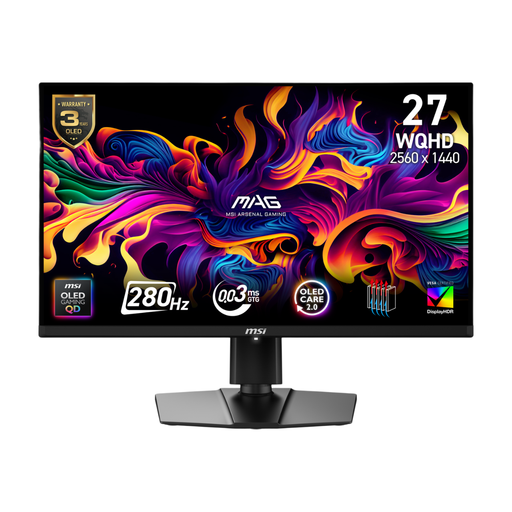 Image unavailable
MSI MAG 271QP QD-OLED X28 27-inch QHD monitor
Consider this QD-OLED model if dark replay scenes matter alongside fast competitive play. Its listed refresh rate is 280Hz, with a rated 0.03ms response time. Check the mode your PC and cable can deliver, and read the exact model’s OLED care and warranty terms if replay controls remain visible for long periods.
View on Joybuy
 Image unavailable
LG UltraGear OLED 32GS95UV-B 32-inch dual-mode monitor
Consider this model if you want a 4K OLED mode for detailed replay viewing and a separate FHD mode for higher-refresh play. The listed combinations are 4K at 240Hz and FHD at 480Hz, not 4K at 480Hz. Confirm that your setup supports the mode you prefer and review the model’s OLED care and warranty terms.
View on Joybuy
 Image unavailable
LG UltraGear G8 27G850A 27-inch 4K Nano IPS monitor
This non-OLED option is worth comparing if you want 4K replay detail as well as a faster-play mode. Its title lists dual-mode 240Hz and 480Hz operation; check which resolution applies to each mode and whether your PC supports it. Assess shadow detail in your viewing conditions rather than treating a dark-scene feature name as a measured result.
View on Joybuy
 Image unavailable
LG UltraGear 27G810A-B 27-inch 4K IPS monitor
Consider this IPS model if your replay review benefits from 4K detail but you also want a higher-refresh option for play. The title lists dual-mode operation with a maximum of 360Hz; check the resolution and connection required for the mode you intend to use. Compare dark-scene visibility in your room rather than assuming a named enhancement guarantees the detail you need.
View on Joybuy
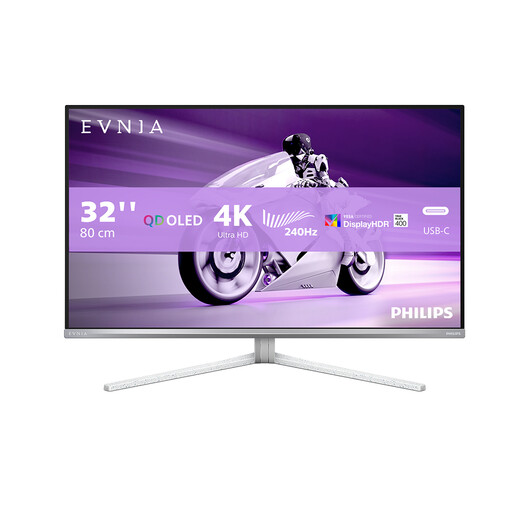 Image unavailable
PHILIPS Evnia 32M2N8900 32-inch UHD OLED monitor
This OLED option may interest you if UHD resolution and dark-scene replay viewing are priorities. Before choosing it for motion-focused play, confirm the exact model and its refresh-rate and response-time specifications, as the figures presented for this candidate conflict. Read its model-specific panel-care and warranty terms for prolonged use with stationary controls.
View on Joybuy
Common questions
Does reviewing replays in a dark room mean I should choose OLED?
No. OLED is worth considering when inspecting shadowed replay detail is your deciding need, but an IPS monitor may suit you better if you regularly leave timelines and desktop windows visible and prefer a non-OLED route. Compare specific models: LG UK lists OLED and DisplayHDR True Black 400 for the 27GX790A-B, while ASUS ROG UK lists a QHD high-refresh IPS alternative in the XG27AQNGV.
How can I tell whether my PC will run the advertised refresh rate?
Check the monitor’s resolution-and-refresh combination against its required input, your GPU output and your cable. LG UK specifies DisplayPort 2.1 for QHD at 480Hz on the 27GX790A-B, while ASUS ROG UK lists a different connection arrangement for its PG27AQDP OLED. Do not assume every port or source device offers the headline mode.
Can OLED care features prevent burn-in from replay controls?
They do not guarantee that burn-in cannot occur. ASUS ROG UK describes OLED Care+ as reducing risk on the PG27AQDP, and Samsung UK describes safeguards for its G60SD. Read the exact model’s care instructions and warranty if controls, HUDs or desktop windows remain on screen for long periods.
What should I do with an old monitor when replacing it?
Use an electrical-equipment recycling or retailer take-back route that accepts monitors, and check its local arrangements before taking the display there. GOV.UK identifies the Waste Electrical and Electronic Equipment Regulations 2013, as amended, as the underpinning UK legislation for electrical and electronic waste.


