Dark-map detail learners
If you repeatedly study shadowed routes and entrances, assess dark-scene rendering, screen finish and room reflections rather than choosing on refresh rate alone.


For fast multiplayer practice, start by checking whether your device can run a QHD monitor at the refresh rate you want; consider OLED or QD-OLED if dark-scene rendering is a main reason for upgrading. A 4K QD-OLED model makes more sense when fine map and desktop detail matter more to you than the highest stated QHD refresh rates, while a QHD Fast IPS model remains another high-refresh route. Panel type alone cannot guarantee clearer shadows in a particular game, and the monitor’s maximum mode depends on the source device, connection and settings.
If you repeatedly study shadowed routes and entrances, assess dark-scene rendering, screen finish and room reflections rather than choosing on refresh rate alone.
If learning a map also involves fast turns and encounters, check the stated refresh rate, response-time measure and adaptive-sync compatibility against the mode your device can deliver.
If you want QHD for multiplayer practice, decide whether OLED panel characteristics or a Fast IPS high-refresh route better match your priorities and source-device capability.
Choose the resolution and panel route that fits your main use, then confirm the refresh rate available through the connection you intend to use.
Consider it: When fast QHD multiplayer practice and OLED dark-scene characteristics are both priorities; LG Electronics UK specifies the 27GX790A-B at 480Hz.
Check: Using that LG mode requires a suitable PC, output, cable and game performance; its stated maximum is not a gameplay result.
Consider it: When QHD OLED or QD-OLED interests you but a 480Hz ceiling is not essential; Dell Technologies specifies its AW2725D at 280Hz.
Check: Screen finish and the operating mode available through your chosen input vary by model.
Consider it: When fine static map labels and desktop detail matter alongside play; Dell Technologies specifies the AW2725Q at 4K and 240Hz.
Check: Confirm that your hardware can deliver the frame rates you want at 4K.
Consider it: When QHD high-refresh play matters more to you than choosing an OLED panel; AOC specifies the Q27G42ZE at 240Hz native.
Check: Its stated 260Hz mode is overclocked, so do not compare that figure with another model’s native rate as though they were the same mode.
| Concern | What to check | Who this matters to |
|---|---|---|
| Dark-scene detail | Compare the exact model’s panel, screen finish and HDR features; adjust game brightness for the map you play. | I spend time learning shadowed entrances and need to judge whether I can distinguish them in my own game. Around 34% of consumers put dark-scene detail first. |
| Fast movement | Distinguish native from overclocked refresh rates, and check the stated response-time measure and adaptive-sync support. | Rapid turns and encounters are part of my map practice, so responsive motion matters throughout a session. For around 33% of consumers, it is the primary need. |
| Device and resolution fit | Confirm the resolution and refresh-rate mode supported by the source device, monitor input and cable. | I do not want to choose a monitor mode that my current setup cannot deliver. Matching the display to the device comes first for around 20% of consumers. |
| Session setup | Assess stand adjustment, room lighting and where the screen will sit for longer practice sessions. | If I practise for long stretches, I need a screen position and room setup I can use comfortably. Around 13% of consumers make session setup their first concern. |
A QHD monitor’s stated maximum is useful only if the PC, connection and game can support the intended mode. Someone studying fine static detail may instead prefer to assess a 4K option.
Choose the resolution for your use and device first, then compare refresh rate and adaptive-sync support within that route.
AOC specifies the Q27G42ZE at 240Hz native and 260Hz overclocked; those figures describe different operating modes.
Check which mode the exact monitor and your intended source connection can use.
The Health and Safety Executive’s display-screen work guidance associates long spells at a screen with temporary discomfort; monitor settings alone do not address lighting or screen position.
Set up suitable room lighting and screen positioning, and take regular breaks during long practice sessions.
Retailer take-back arrangements can affect how you hand over an old monitor, particularly if you need it collected rather than taking it to a location yourself.
Check the retailer’s current take-back and collection procedure before ordering.
Relevant if you are considering a 27-inch QHD OLED with a particularly high stated refresh-rate ceiling.
Relevant when choosing between a QHD QD-OLED refresh-rate route and a 4K QD-OLED route.
Relevant if you want to assess a glossy QHD OLED screen and an adjustable stand.
Relevant if you are considering QHD high-refresh play with a Fast IPS panel.
These QHD OLED and QD-OLED monitors offer different refresh-rate and screen-format choices for dark-room map practice. For the wider LG models, check how your game handles an ultrawide layout before deciding.
 No image available
Consider this QD-OLED model if QHD map practice and a 240Hz stated refresh rate fit your priorities.
The product name specifies 2560 × 1440, 240Hz, 0.03ms and Adaptive-Sync. Confirm that your source device and chosen connection can deliver the mode you intend to use.
 No image available
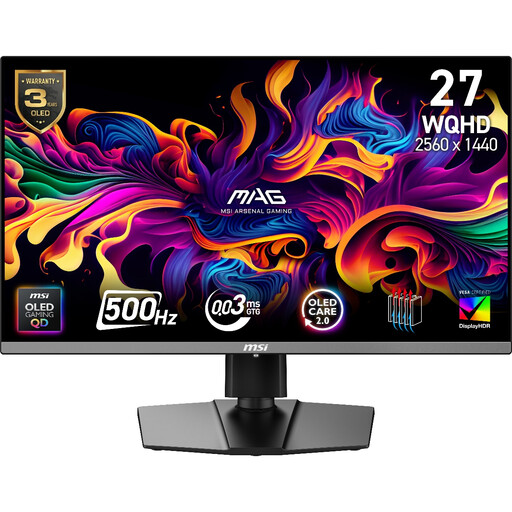
Consider this model if a very high stated QHD refresh rate is important to your multiplayer practice.
The product name specifies 2560 × 1440, 500Hz, 0.03ms and AMD FreeSync. Check the maximum mode for the particular monitor input, cable and source device you plan to use.
 No image available
This is a QHD OLED option for consumers weighing dark-scene presentation alongside 240Hz play.
The product name specifies 240Hz and 0.03ms. Confirm the resolution and refresh rate available through the input you will use; a glare-reduction claim does not establish how a particular game’s shadows will appear.
 No image available
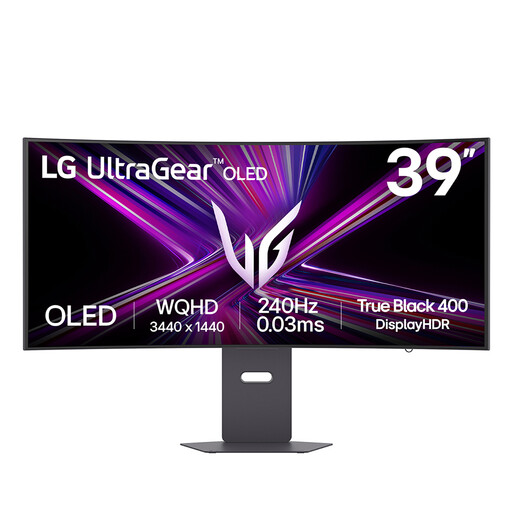
Consider this larger OLED screen if you want to assess a wider layout for map practice rather than assuming a conventional 16:9 view.
The product name specifies QHD and 240Hz. For its listed 21:9 format, check your game’s ultrawide behaviour, available desk space and the mode your source device can deliver.
 No image available
This is another OLED option if you are considering an ultrawide format for map learning and fast play.
The product name specifies WQHD and 240Hz. Check how your game presents its 21:9 layout, as well as your viewing distance and the source device’s supported mode.
No: OLED or QD-OLED is worth assessing when dark-scene rendering is your priority, but panel type alone cannot guarantee more visible detail in a particular game. Compare the exact screen finish and HDR options, adjust the game’s brightness settings and use suitable room lighting.
Only if the complete setup supports the intended resolution and refresh-rate mode. LG Electronics UK identifies DisplayPort 2.1 for QHD at 480Hz on the 27GX790A-B; check your graphics device, output, cable, monitor input and game settings rather than relying on the monitor specification alone.
No. The Health and Safety Executive’s guidance for display-screen work recommends suitable lighting, screen positioning and regular breaks; those practical setup considerations also matter when planning a long gaming session.
Check how the retailer handles take-back and whether you would need to bring the old monitor to a location or arrange collection. Confirm the procedure that applies to your order before relying on a particular disposal route.