Players focused on card-interface clarity
If you spend time reading rules text, tooltips and deck-management panels, assess resolution and screen size before paying particular attention to extreme refresh rates.


For deck-building games on PC, start by considering a 27-inch QHD monitor: its 2560 × 1440 resolution gives card text and crowded interfaces more screen space than Full HD. Choose 4K if fine detail is a higher priority and your setup can handle it; prioritise 240Hz or more chiefly if fast-paced games are also a major part of your library. Before buying, check the resolution and refresh rate available through the input you intend to use.
If you spend time reading rules text, tooltips and deck-management panels, assess resolution and screen size before paying particular attention to extreme refresh rates.
If you alternate between deck-builders and faster games, look for a readable interface alongside a refresh rate and variable refresh rate (VRR) support that suit your PC.
If both devices will use the monitor, check the resolution and refresh-rate combinations supported by its HDMI input. The highest PC refresh-rate specification alone does not establish the PS5 modes available.
For deck-building games, decide how much room you need for cards and interface panels before weighing faster games, device connections and image presentation.
| Concern | What to check | Who this matters to |
|---|---|---|
| Readable interfaces | Compare native resolution and screen size; check scaling in the deck-builders you play. | When I am comparing card rules with a crowded board, I want text and tooltips I can inspect comfortably; around 40% of consumers would put interface readability first. |
| Mixed-game performance | Match resolution and refresh rate to your PC, then check VRR compatibility with your graphics setup. | If I switch from turn-based cards to faster PC games, I want the same screen to serve both; roughly 30% of consumers would make that balance their primary concern. |
| PC and PS5 connections | Check the exact model’s supported HDMI resolution-and-refresh combinations, not just its DisplayPort maximum. | With a PC and PS5 sharing one screen, I need the intended mode to work through the console’s input; around 20% of consumers would prioritise connection compatibility. |
| Image presentation | Compare panel type and the exact HDR specification rather than relying on an HDR label alone. | For card art and other games, I may care most about contrast and image presentation; approximately 10% of consumers would put those qualities ahead of the other concerns here. |
A 240Hz or higher specification may matter in fast games, but it does not add space for card text or board information. Dell UK lists a Full HD 240Hz model, while ASUS United Kingdom and BenQ UK list QHD models at 165–180Hz.
Choose screen size and resolution for your deck-builder interface first, then decide what refresh rate the rest of your game library warrants.
A monitor’s DisplayPort maximum does not tell you which resolution-and-refresh combinations its HDMI input will accept from a PS5.
Check the exact model’s HDMI modes against the output you want. PlayStation UK states that PS5 4K/120Hz output requires a compatible display; the cable and game also need to support the intended mode.
BenQ UK and ASUS United Kingdom describe QHD IPS models with DisplayHDR 400, while Dell UK specifies DisplayHDR True Black 400 for the 4K QD-OLED Alienware AW2725Q. The labels belong to different models and do not make their displays interchangeable.
Compare the exact panel and HDR specification alongside the resolution and connections you need.
Monitors are electrical equipment covered by the UK waste electrical and electronic equipment framework described by GOV.UK.
Check whether the retailer offers take-back and what electrical-waste arrangements your local council provides.
ASUS United Kingdom lists 27-inch QHD Fast IPS models for players considering readable interfaces alongside high-refresh PC gaming.
BenQ UK lists the EX2710Q as a 27-inch QHD IPS option with features for a shared gaming and desk setup.
Acer Store UK lists WQHD Nitro models with different refresh-rate specifications.
Dell UK lists distinct QHD Fast IPS and 4K QD-OLED monitor options under these ranges.
These QHD monitors offer 27-inch or larger screens for deck-building interfaces, with different panel sizes and refresh rates for other games. Check the input modes you need before settling on a model.
 No image available
Consider this if you want a 27-inch QHD screen for card interfaces and also play games where a high refresh rate matters.
 No image available
This near-27-inch QHD option suits a setup where deck-building games share screen time with faster PC titles.
 No image available
Consider the larger screen if you prefer more physical room for boards and panels, while remembering that it retains QHD resolution.
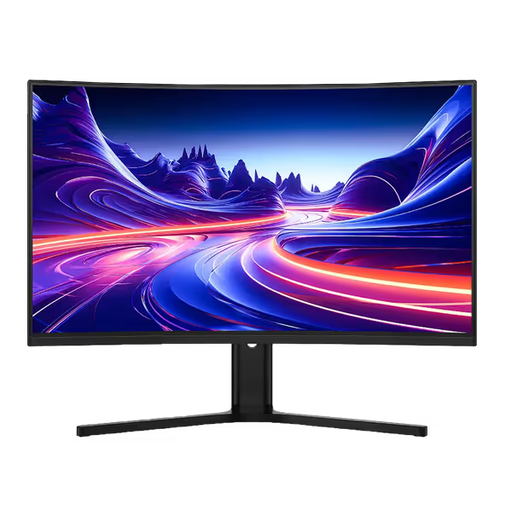 No image available
This is another larger-screen QHD option for boards and interface panels; choose it against the refresh rate available from the input you will use.
 No image available
This keeps the 27-inch QHD format in focus while offering a high stated refresh rate for other PC games.
Usually not for deck-building games alone: screen size, resolution and comfortable positioning deserve attention first when you regularly inspect card text and crowded boards. Consider 240Hz or more chiefly if fast-paced games are also a major priority and your PC can make use of the refresh rate.
It can if the monitor supports the required mode over HDMI. PlayStation UK states that PS5 1440p output requires a display supporting 1440p/60Hz, or both 1440p/60Hz and 120Hz; check the exact monitor and confirm its available output mode in the console settings after connection.
They indicate forms of variable refresh rate support, which you should check against your graphics card, connection and settings. NVIDIA describes its G-SYNC Compatible designation as validation for a basic VRR experience; a label alone does not establish how every PC configuration will behave.
Use an appropriate electrical-equipment take-back or recycling route rather than household rubbish. GOV.UK describes the UK waste electrical and electronic equipment framework, while local collection arrangements vary; check the retailer’s take-back options and your council’s instructions.