Choose a gaming monitor for bright-room detective games by checking reflection handling and ordinary SDR brightness before HDR ratings or refresh rate. RTINGS explains that both room lighting and reflections affect what you can see: extra brightness alone will not remove a window reflected across a clue or menu. Once visibility is addressed, choose a screen size and resolution that suit your desk, viewing distance and gaming hardware.
Who this choice affects
Daylight-room detective players
If a window or lamp faces your display, reflections can cover small clues, menus and shadow detail. Check the exact monitor’s reflection handling and SDR brightness before giving weight to its HDR badge, as RTINGS’ monitor tests advise.
Cinematic story-game detail seekers
If reading in-game documents and examining environments matters most to you, consider screen size and resolution together. A larger, higher-resolution display still needs a suitable viewing distance, capable source hardware and a room-lighting check.
Mixed PC-and-console players
If you switch between devices, check what each input supports at your intended resolution and refresh rate. Allow room on the desk for the screen and stand rather than choosing by panel size alone.
What to check before buying
For detective adventures played in daylight or under facing room lights, establish whether you can see the screen clearly first; then weigh image detail, motion and connections against your own setup.
| Concern |
Buying checks |
Who this matters to |
| Daylight visibility |
Check the exact model’s reflection handling and SDR brightness; note whether a window or lamp will face the panel. |
If light falls across dark scenes, I need clues and interface text to remain visible without relying on an HDR peak rating. Around 42% of consumers put bright-room visibility first. |
| Detail and atmosphere |
Choose screen size and resolution together; assess HDR picture quality beyond the badge if HDR matters to you. |
Reading documents and examining an environment matters more to me than chasing the highest refresh rate, provided the screen fits my viewing distance. For around 33% of consumers, image detail and atmosphere are the primary concern. |
| Smooth movement |
Confirm native refresh rate, any overclocking conditions and variable refresh rate compatibility with your source device. |
I notice camera pans during exploration and want motion to look smooth, especially if I also play faster games. Smooth movement comes first for around 17% of consumers. |
| Connections and fit |
Match each device to the required port and display mode, and measure the available desk space. |
A display is only useful to me if my PC or console can run the mode I want and the screen fits where I sit. Around 8% of consumers chiefly prioritise connection and setup fit. |
Buying pitfalls
-
Choosing by HDR peak brightness alone
An HDR peak figure does not tell you how bright ordinary SDR gameplay will look or how clearly a direct reflection will appear. RTINGS treats brightness and reflection handling as separate parts of monitor picture quality.
Check SDR brightness and reflection results for the exact model, then consider where daylight and lamps fall in your room.
-
Assuming panel technology will solve window reflections
Contrast can matter in dark scenes, but it does not make a reflected window disappear. A panel type alone cannot establish how a monitor will behave opposite a light source.
Look for the exact screen finish or reflection testing, and position the desk so bright objects do not face the display where possible.
-
Treating an overclocked refresh rate as the default
LG UK specifies 180Hz as the native refresh rate of its 27GS85Q-B; its 200Hz mode is overclocked and requires a DisplayPort 1.4-capable graphics card and cable.
Check the native and overclocked modes separately against your intended device and connection.
Using that model’s 200Hz mode may require a compatible graphics card and DisplayPort 1.4 cable.
-
Putting an old monitor in general household waste
GOV.UK says sellers of new household electrical equipment must provide customers with a way to dispose of an old equivalent item under UK electrical-waste rules.
Check the seller’s take-back arrangements before ordering and keep the old monitor until you know how it will be collected or accepted.
Brands and model lines to consider
These examples illustrate different monitor specifications to assess; a brand name does not establish how a particular screen will handle light in your room.
ASUS ROG
The ROG Swift OLED PG32UCDM Gen3 is a 31.5-inch 4K QD-OLED option for buyers considering a larger screen and HDR gaming.
- ASUS ROG specifies BlackShield anti-reflection film, 240Hz refresh and a 1,000 cd/m² peak HDR brightness rating for this model.
- A peak HDR rating and named screen treatment do not guarantee that direct window reflections will be unobtrusive in your room.
LG UltraGear
The 27GS85Q-B represents a 27-inch QHD Nano IPS route for story games and other gaming uses.
- LG UK specifies a native 180Hz refresh rate, with an optional 200Hz overclocked mode.
- The 200Hz mode requires compatible DisplayPort 1.4 graphics hardware and a cable; its DisplayHDR 400 label alone does not establish bright-room visibility or HDR contrast.
BenQ MOBIUZ
The EX2710Q is a 27-inch QHD IPS option with a matte screen, 165Hz refresh and built-in speakers.
- BenQ UK specifies a matte coating and 250-nit typical brightness, giving buyers concrete details to compare with their lighting needs.
- Its ambient-light display feature and typical brightness figure should not be taken as proof that it will remain clear in strong direct daylight.
Alienware
Dell’s Alienware AW2725Q is a 26.7-inch 4K QD-OLED model to consider if you want a smaller 4K screen than the 31.5-inch option above.
- Dell UK specifies 240Hz refresh, anti-reflective glass and DisplayHDR True Black 400 for the AW2725Q.
- Check reflection behaviour, SDR brightness and connections for the exact model rather than extending these specifications to other Alienware displays.
Joybuy product choices
These monitors offer different screen sizes, resolutions and gaming features for detective adventures. Treat their stated screen finishes as starting points: before choosing one for a strongly lit room, check how the exact model handles reflections and ordinary SDR content.
 No image available
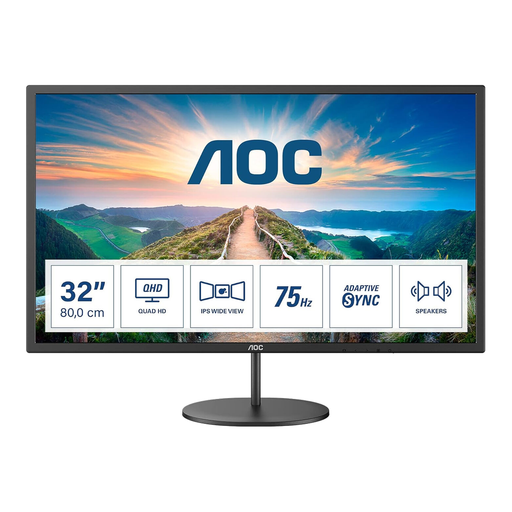
AOC Q32V4 31.5-inch IPS monitor
Consider this larger screen if desk fit and reading game details matter to you. Its product name specifies Adaptive Sync and built-in speakers; check reflection handling and SDR brightness for your lighting before deciding.
View on Joybuy
 No image available
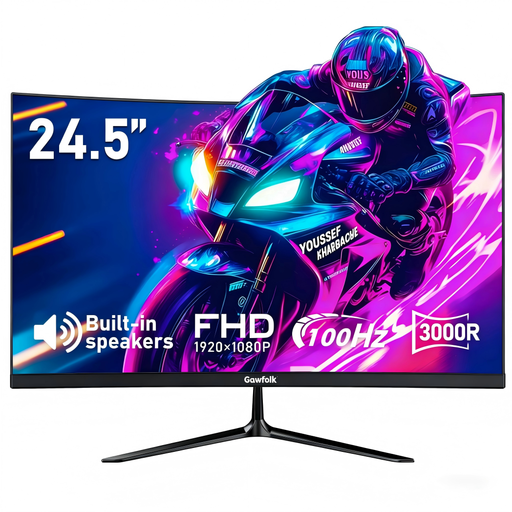
Gawfolk 24.5-inch FHD curved monitor
Consider this smaller screen if your desk space is limited and you want the stated anti-glare finish. The product name specifies 100Hz refresh, FreeSync and HDMI; check SDR brightness and whether your device supports the display mode you intend to use.
View on Joybuy
 No image available
Dahua 32-inch 4K 165Hz curved OLED gaming monitor
Consider its larger 4K screen if you have the viewing distance and source hardware for detailed game environments. The product name specifies 165Hz refresh and HDR400; check the exact screen’s reflection handling and SDR brightness before choosing it for daylight play.
View on Joybuy
 No image available
Acer Predator X27U W3 26.5-inch QHD QD-OLED monitor
Consider this size if you want a QHD screen for game detail and also value high refresh for other games. Its product name specifies 240Hz and FreeSync Premium Pro; confirm the mode your device can run, as well as the screen finish and bright-room visibility.
View on Joybuy
 No image available
LG UltraGear G8 27G850A 27-inch 4K monitor
Consider this 27-inch screen if 4K detail is a priority and your hardware can drive the display mode you want. Its product name lists dual 240Hz and 480Hz modes, HDMI 2.1 and DisplayPort 2.1; the 480Hz option runs at 1080p rather than 4K. Check screen reflections and SDR brightness for your room.
View on Joybuy
Questions about bright-room gaming monitors
Is a high HDR peak-brightness rating enough for a bright room?
No: check SDR brightness and reflection handling separately for the exact monitor. RTINGS explains that brightness helps a display compete with glare, while direct reflections depend on the screen and the room’s lighting.
Should I choose 27-inch QHD or a larger 4K monitor for detective games?
Choose by viewing distance, desk space and the resolution your PC or console can run comfortably. A 27-inch QHD screen is one route for a smaller setup; a 31.5- or 32-inch 4K screen may suit you if you want more image detail and have room to sit at a comfortable distance.
Do detective adventures need a 240Hz monitor?
Not necessarily: clear visibility and a comfortable screen size may matter more for clue-heavy play. Higher refresh can be worth considering if you also play faster games or particularly value smooth camera movement, provided your device supports the intended mode.
What should I check before replacing an old monitor in the UK?
Check the seller’s arrangements for taking back an old equivalent monitor. GOV.UK says sellers of new household electrical equipment must provide customers with a disposal route for an old version of the same item; check the product’s energy information where applicable as part of your purchase comparison.


