Dark-scene clue hunters
If much of your play involves examining dim rooms and small environmental details, compare panel type and the exact monitor’s HDR specification before treating a high refresh rate as the deciding feature.


For detective games built around dim rooms and small clues, choose the panel and resolution before paying for a higher refresh rate: OLED is worth considering when dark-scene presentation is your priority, while QHD IPS is another route for detailed play. Check which resolution and refresh mode your PC or console can use. If you plan to plug wired headphones into the monitor, confirm a headphone-out port on the exact model.
If much of your play involves examining dim rooms and small environmental details, compare panel type and the exact monitor’s HDR specification before treating a high refresh rate as the deciding feature.
A QHD screen may suit you if you want detail beyond Full HD and smooth exploration without making a 4K OLED panel a requirement. Check that your gaming device can use the display mode you choose.
Your audio connection matters most when you want to plug wired headphones into the display. If they connect to your PC, console or controller instead, a monitor headphone socket need not drive the screen choice.
For dark, detail-led detective games, compare the display route first, then check the input mode and headphone connection your setup requires.
Consider it when: fine text and environmental detail are priorities and your device can use the intended 4K mode. ASUS ROG UK specifies a 26.5-inch 4K QD-OLED panel on the PG27UCDM.
Allow for: the demands of 4K output, and check the exact OLED care features and warranty terms rather than choosing the ASUS model for its 240Hz specification alone.
Consider it when: OLED dark-scene specifications matter more to you than 4K resolution. LG UK specifies QHD OLED and DisplayHDR True Black 400 on the 27GS93QE-B.
Allow for: less resolution than 4K when inspecting fine detail, and review the exact panel-care features and warranty terms.
Consider it when: QHD detail and a high-refresh PC setup matter, but an OLED panel is not a requirement. LG UK specifies a QHD Nano IPS panel and 180Hz native refresh on the 27GS85Q-B.
Allow for: a different dark-scene specification from the OLED models; LG says the optional 200Hz mode needs a DisplayPort 1.4-capable graphics card and cable.
| Concern | What to check | Who this matters to |
|---|---|---|
| Dark scenes | Compare panel type and the exact HDR specification; for OLED, review panel-care features and warranty terms. | I spend time searching shadowy rooms and want to judge how the display presents dark areas and clues. Around 50% of consumers put dark-scene presentation first. |
| Detail and refresh | Check native resolution and refresh separately from overclocked modes, then match the intended mode to your device and cable. | Clear maps and readable clues matter to me, but I also want camera movement to feel smooth on the device I own. About 30% of consumers prioritise this balance of detail and attainable refresh. |
| Headphone routing | Decide where wired headphones will connect; check the exact monitor for audio output only if your setup needs it. | I switch between gaming devices and want a connection path that works without rearranging my desk. Roughly 20% of consumers make headphone routing their primary concern. |
An advertised maximum may have conditions: LG UK says the 27GS85Q-B runs at 180Hz natively, while its 200Hz overclocked mode requires a DisplayPort 1.4-capable graphics card and cable.
Compare native and overclocked figures, then check the output and cable you will actually use.
Monitor-side audio output is model-specific. Dell UK lists one headphone-out port on the G2725D; that does not establish the connection on another model.
Choose whether your headphones will plug into the display, gaming device or controller, and check the required socket on the exact monitor variant.
LG UK specifies DisplayHDR True Black 400 for the OLED 27GS93QE-B and DisplayHDR 400 for the IPS 27GS85Q-B. A listing that merely says HDR does not tell you which specification applies.
For dark-room play, compare the exact HDR designation alongside panel type rather than deciding from the listing title alone.
Availability can change. Dell UK marks the G2725D unavailable on its product page, so its specification is useful for comparison but not a reason to assume you can order it now.
Before ordering any exact variant, check its live availability, warranty terms and applicable return conditions on the seller’s product page.
The PG27UCDM is a reference point for the 4K OLED route, rather than a specification shared by every ASUS ROG monitor.
Two distinct QHD models make this range useful for comparing IPS and OLED specifications without treating UltraGear as one panel type.
The G2725D provides a QHD Fast IPS specification to compare when a monitor-side headphone connection is important.
These monitors offer different screen sizes and display approaches for detail-led gaming. Choose the image and input mode that suits your device, then check the headphone connection if you intend to plug into the screen.
 No image available
Consider this OLED model if you want a wider screen for atmospheric games and have space for it on your desk.
The product name specifies 34 inches, WQHD and 240Hz. Check whether your games and source device support your intended widescreen mode, and review the OLED panel-care guidance.
 No image available
This is a QHD OLED option if you prioritise that panel type without choosing a 4K screen.
The product name specifies 240Hz and 0.03ms. Confirm that your device supports the display mode you intend to use and check for headphone output if you will connect wired headphones to the monitor.
 No image available
Consider this larger curved screen if you want a QHD gaming setup rather than an OLED panel.
The product name specifies 2560 × 1440, 165Hz, Adaptive Sync, HDMI and DisplayPort. The stated maximum refresh mode calls for the supplied DisplayPort cable; check your device’s output and the exact audio connection before ordering.
 No image available
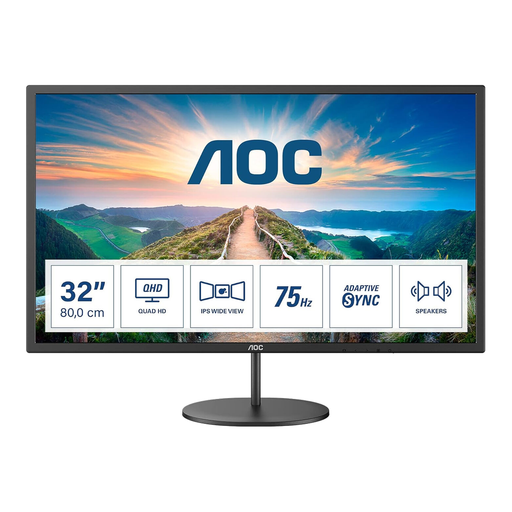
This larger IPS screen is an option for investigation games when a high-refresh gaming mode is not your priority.
The product name specifies Adaptive Sync and built-in speakers. Its listed refresh rate is 75Hz; check that its inputs support your intended mode and confirm the headphone connection you need.
 No image available
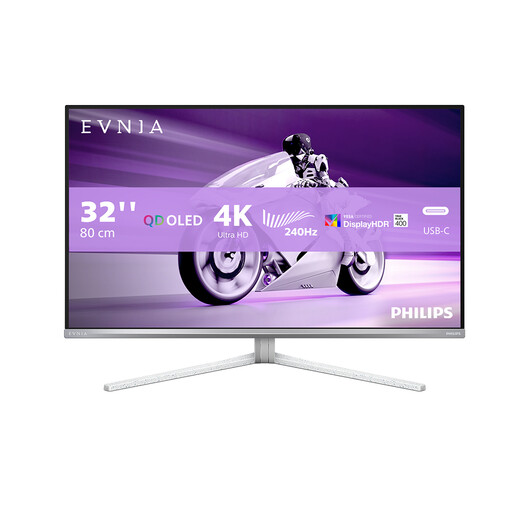
Consider this larger 4K OLED route if both screen size and fine detail matter to your detective-game setup.
The product name identifies a 32-inch UHD OLED model. Refresh-rate figures conflict between 240Hz and 175Hz, so confirm the exact variant and supported mode before buying; check headphone output separately if you plan to connect through the display.
No: built-in speakers are unnecessary if you do not plan to use them. If your wired headphones will plug into the monitor, check for a headphone-out port on the exact model; Dell UK lists one for the G2725D, but that does not establish one on other monitors.
No. LG UK specifies 180Hz natively and says the optional 200Hz mode requires both a DisplayPort 1.4-capable graphics card and a DisplayPort 1.4 cable. Match those requirements to your PC before choosing the mode.
Contact the seller promptly and explain the fault, keeping your order details and evidence of the problem. The UK Consumer Rights Act 2015 provides a short-term right to reject goods that fail its statutory standards; the applicable remedy depends on the circumstances and timing, not simply on a retailer’s change-of-mind policy.
Check an electrical-waste collection or take-back option rather than putting the monitor in ordinary household waste. GOV.UK explains that UK waste electrical and electronic equipment rules address the recovery, reuse and recycling of this equipment; your local authority or retailer can explain the available arrangements.