Atmosphere-first exploration players
If landscapes and dark scenes draw you into a game, compare panel type, contrast and the exact HDR certification tier rather than treating refresh rate as the only image consideration.


A 27-inch QHD monitor is a useful starting point if bedroom desk space is limited, but measure the desk and stand before choosing one. Prioritise an OLED panel and check its care guidance if dark-scene contrast matters most; for late-night play, check the headphone connection and screen positioning as carefully as image specifications. Match refresh rate, variable refresh rate (VRR) and cables to your PC or console rather than choosing by the monitor’s headline refresh rate alone.
If landscapes and dark scenes draw you into a game, compare panel type, contrast and the exact HDR certification tier rather than treating refresh rate as the only image consideration.
If someone else uses the room, check how you will connect headphones, adjust brightness and position the screen on the available desk. BenQ UK lists a headphone jack and stand adjustment on the EX2710Q as examples of model-specific features to look for.
If smooth motion is important, match the monitor’s VRR support, ports and refresh modes to your actual graphics card or console and cable. A monitor specification alone does not establish which modes your setup can use.
Choose your main image or room-use priority first, then check that the exact monitor can deliver the resolution and refresh mode you want with your gaming device.
Consider it when: You want a 27-inch QHD starting point for gaming and everyday PC use without OLED-specific care considerations; LG UK’s 27GS85Q-B is one high-refresh example.
Bear in mind: Its DisplayHDR 400 tier does not imply OLED-like black levels, and LG says its 200Hz overclock requires DisplayPort 1.4 support from both graphics card and cable.
Consider it when: Dark-scene contrast is a leading reason for buying; ASUS ROG UK lists the PG27AQDM as a 26.5-inch-viewable QHD OLED model with a 240Hz refresh rate.
Bear in mind: Review the exact model’s OLED-care functions and warranty if static desktop elements will often remain on screen; burn-in precautions do not remove that consideration.
| Concern | What to check | Who this matters to |
|---|---|---|
| Image atmosphere | Compare panel type and the exact model’s named VESA DisplayHDR or DisplayHDR True Black tier; check whether your games and device output HDR. | If dark scenes and landscapes are my priority, I want to assess contrast and credible HDR before focusing on peak refresh rate. Around 40% of consumers put image atmosphere first. |
| Shared-room practicality | Measure desk and stand footprint; check headphone connectivity and positioning adjustments. | When someone else is sleeping, I need quiet listening and a screen that fits my space. For around 30% of consumers, shared-room practicality comes first. |
| Device compatibility | Match the intended resolution and refresh mode to the device, monitor port and cable; check VRR support for the exact setup. | I want the motion settings to work with my existing PC or console, not just appear on a specification sheet. Device compatibility comes first for around 30% of consumers. |
An HDR claim alone does not identify a comparable performance tier. VESA defines separate DisplayHDR and DisplayHDR True Black certification requirements, so the precise tier matters when comparing monitors for dark game scenes.
Check whether the exact model carries a VESA certification logo and named tier rather than relying on an unspecified HDR label.
LG UK specifies DisplayPort 1.4 support from the graphics card and cable for the 27GS85Q-B’s 200Hz overclock. Microsoft likewise sets device, display and cable conditions for Xbox Series X gaming at 4K and 120Hz.
Identify the output on your PC or console, the monitor input and the cable required for the mode you plan to use.
Accessing that mode may require a different compatible cable or graphics card if your current equipment does not meet its requirements.
Speaker sound may disturb someone sharing the bedroom, while a headphone jack is a feature to check on the individual monitor.
Confirm how your headphones connect to the monitor or gaming device before choosing a screen for late-night use.
If neither your current headphones nor your gaming device offers a suitable connection, you may need a separate listening solution.
ASUS ROG describes heat-management measures on the PG27AQDM as intended to reduce burn-in risk, not eliminate it for every use pattern.
If static interfaces will frequently remain on screen, read the exact model’s OLED-care instructions and warranty conditions before deciding between OLED and IPS.
These examples illustrate different monitor features to compare; the details apply to the named models, not every display from each brand.
LG UK specifies the 27GS85Q-B as a 27-inch QHD IPS gaming monitor with a native 180Hz refresh rate and an optional 200Hz overclock.
BenQ UK lists the EX2710Q as a 27-inch QHD IPS model with a 165Hz refresh rate, FreeSync Premium and shared-room features worth checking.
ASUS ROG UK specifies the PG27AQDM as a 26.5-inch-viewable QHD OLED monitor with a 240Hz refresh rate for buyers considering an image-led setup.
These monitors offer different 27-inch QHD, 27-inch 4K and larger OLED options for exploration games. Compare each model’s desk fit, headphone connection and supported gaming modes against your shared-bedroom setup.
 No image available
Consider this 27-inch model if you want 4K resolution while keeping screen size in check for a bedroom desk.
The product name lists separate 240Hz and 480Hz dual modes, AMD FreeSync Premium Pro, DisplayPort 2.1 and HDMI 2.1. Check which resolution and connection requirements apply to the mode you intend to use, and confirm the exact model’s HDR certification tier.
 No image available
Consider this model if an OLED image is your priority and a 27-inch screen suits your desk.
Its product name specifies QHD resolution and 240Hz. For shared-room use, confirm your headphone connection and brightness settings; review the model’s OLED-care guidance and warranty if static elements will often remain visible.
 No image available
Consider the larger curved screen if 4K OLED is a priority and your bedroom desk has room for it.
The product name lists 3840 × 2160 resolution and 165Hz. Measure the space for the screen and stand, check the precise audio-out connection for headphones, and confirm the exact model’s HDR tier and OLED-care terms.
 No image available
Consider this 27-inch QHD IPS model if desk fit and a high-refresh PC setup are your starting points.
Its product name lists 2560 × 1440 resolution and 220Hz. Check the refresh rate available through your chosen port and cable, along with headphone connectivity and stand adjustment for shared-bedroom use.
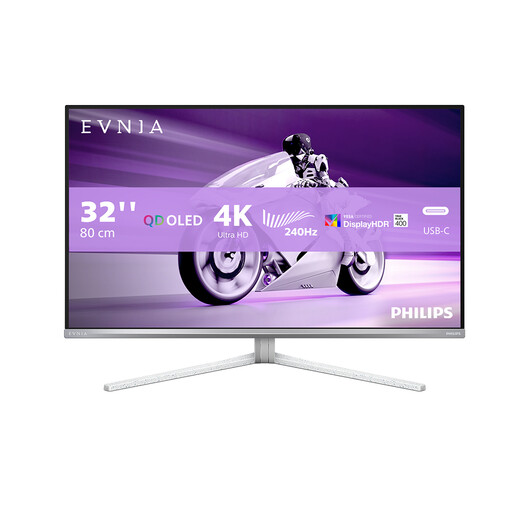 No image available
Consider this larger UHD OLED model if screen size fits your desk and image detail matters more than keeping the setup compact.
Confirm the refresh rate before choosing it: the product information gives both 240Hz and 175Hz. Also check headphone connectivity, stand adjustment, HDR certification and OLED-care guidance for your intended use.
Yes, if it fits your desk and QHD meets your gaming needs. LG UK’s 27GS85Q-B and BenQ UK’s EX2710Q show that this size and resolution can come with high refresh rates, but measure the stand footprint and compare the exact models’ connections and adjustments before buying.
No. An HDR label alone does not tell you the monitor’s certified performance tier. VESA sets distinct requirements for DisplayHDR and DisplayHDR True Black, so check the exact model’s certification and tier when dark-scene presentation is a priority.
Use headphones and check that they can connect to your monitor, PC or console rather than relying on monitor speakers. If desk positioning also matters, BenQ UK lists a headphone jack, 100mm height adjustment and VESA 100×100 mounting for its EX2710Q; check equivalent features on whichever model you choose.
Microsoft says this mode requires an Xbox Series X, an Ultra High Speed HDMI cable supporting HDMI 2.1 and a display that supports HDMI 2.1. Check the exact monitor input and supported mode; a display may still support 120Hz at a lower resolution without meeting the 4K-at-120Hz requirements.