Bright-room map and interface players
If campaigns keep you reading maps, tooltips and management panels near a window or strong room lighting, prioritise screen legibility and reflection control over the fastest available refresh mode.


For map-heavy historical strategy games in a bright room, start with a 4K screen whose text remains readable and whose reflections you can manage at your desk. A 32-inch IPS model gives maps and interface panels more physical space if it fits your setup; choose a 27-inch dual-mode IPS screen if fast games also matter, or consider OLED if you can assess reflections and accommodate panel-care routines.
If campaigns keep you reading maps, tooltips and management panels near a window or strong room lighting, prioritise screen legibility and reflection control over the fastest available refresh mode.
A dual-resolution IPS monitor lets you choose a detailed 4K mode for strategy and a lower-resolution, higher-refresh mode for faster games. The change in resolution is part of that choice, not a simultaneous benefit.
If contrast and HDR matter alongside strategy-game detail, assess how direct light reaches your desk and whether you are comfortable using the monitor’s OLED-care features during games with persistent interfaces.
Choose the screen for the lighting and space you use most often, then decide whether a separate speed-focused mode or OLED contrast changes the decision.
Consider it when: Larger maps and interface panels are your priority and you have space for the screen.
Accept: IPS contrast is more limited than OLED contrast, and an anti-glare surface may still show distracting reflections.
Consider it when: You want 4K strategy detail but also play games where a faster mode matters.
Accept: The fastest mode on the models discussed here drops to FHD, and the screen is physically smaller than a 32-inch option.
Consider it when: Contrast and HDR are important to you as well as detailed strategy play.
Accept: Glare treatments do not settle how the screen will look in your room, and persistent game interfaces make panel-care habits relevant.
| Concern | What to check | Who this matters to |
|---|---|---|
| Bright-room legibility | Check the screen finish and independent assessments of brightness and reflections; consider where windows and lamps sit relative to your desk. | If glare makes province labels or tooltips hard to follow, I need a screen I can read in my usual lighting. Around 46% of consumers put bright-room legibility first. |
| 4K detail and workspace | Compare native resolution and physical screen size, then check whether your preferred interface scaling suits your viewing distance. | When I spend hours looking between a large map and its panels, their size and clarity matter more to me than a faster secondary mode; around 36% of consumers prioritise detail and workspace. |
| Speed and compatibility | Check the resolution of each refresh mode and match your intended mode to the graphics-card output, monitor input and cable. | If I switch from strategy to fast games, I want to know which mode my PC can actually run and what resolution it uses. For around 18% of consumers, that flexibility is the primary concern. |
The selected mode also depends on the graphics-card output and monitor input. LG UK states that 4K at 144Hz on the 32GR93U-B requires a graphics card supporting DisplayPort 1.4 with Display Stream Compression or HDMI 2.1.
Before ordering, check all three parts of the connection against the resolution and refresh rate you intend to use.
Your existing setup may require a compatible cable or graphics-card change.
RTINGS found the LG 32GR93U-B bright enough for a well-lit room but noted that reflections could still be distracting.
Consider positioning the screen away from direct window or lamp reflections, and check the retailer’s applicable return terms if you cannot assess the display at your desk before purchase.
Dell UK specifies 4K at 180Hz and FHD at 360Hz for the Alienware AW2725QF. Its faster mode does not retain 4K resolution.
Compare the two modes separately: decide which you would use for strategy and whether the lower-resolution mode is useful for your other games.
Panel-care functions and manufacturer-described glare treatments do not establish how a monitor will handle your lighting or long sessions with persistent game interfaces.
Review the specific model’s care instructions and warranty, and assess the intended screen position before choosing OLED for a bright room.
These examples illustrate different monitor routes; the observations apply to the named models, not every display from each brand.
The 32GR93U-B is a 32-inch 4K IPS reference point for players who want a large, flat strategy-game workspace.
The AW2725QF offers a 27-inch IPS route for players who want distinct strategy-detail and fast-game modes.
The PG32UCDM Gen3 is a 4K QD-OLED option for players interested in contrast and HDR alongside strategy-game detail.
The G80SD is a 4K QD-OLED option with a manufacturer-described glare-reduction treatment.
These monitors offer several ways to approach detailed strategy play, from a 27-inch 4K IPS screen to dual-mode gaming displays and larger OLED options. Compare each one against your room lighting and the modes your PC can support.
 No image available
Consider this 4K QD-OLED screen if map detail and OLED contrast matter to you and you can assess reflections at your desk.
The matching G80SD model is specified by Samsung UK at 240Hz and has a manufacturer-described OLED Glare Free treatment. Check the listing’s panel-care and warranty terms, as well as your PC connection, before choosing it.
 No image available
This larger OLED screen suits players who want detailed strategy visuals and a separate mode for faster games.
Its listing describes 4K at 165Hz or FHD at 330Hz. Check reflections in your intended lighting and take account of the listing’s image-retention precautions for prolonged static interfaces.
 No image available
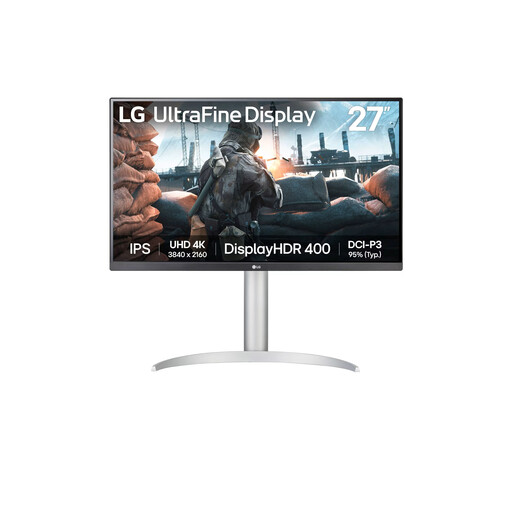
This 27-inch IPS option is worth considering if 4K map and text detail matters more to you than a high-refresh gaming mode.
The product title specifies 60Hz. Check how the screen handles reflections at your desk rather than relying on its stated brightness alone.
 No image available
Consider this 27-inch IPS screen if you alternate between detailed strategy games and games where a faster, lower-resolution mode is useful.
The listing describes 4K at 240Hz or 1080p at 480Hz. Check the PC, port and cable for your chosen mode, and assess reflections in your room.
 No image available
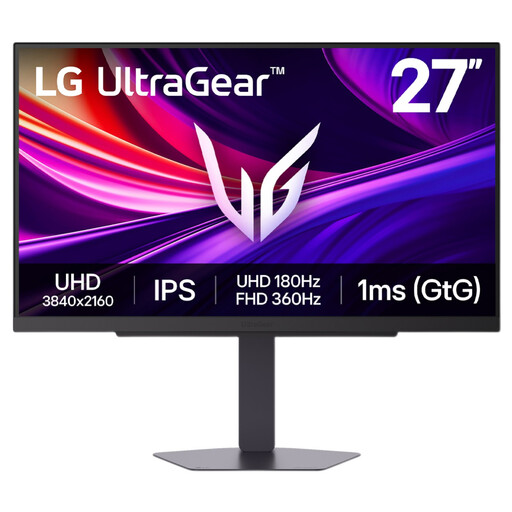
This 27-inch IPS monitor offers a 4K mode for strategy play and a separate speed-focused mode for other games.
The listing describes 4K at 180Hz or FHD at 360Hz. Confirm that your connection supports the mode you want and check how the screen handles light at your desk.
No: 240Hz is not a requirement for reading maps and managing interfaces. If you also play fast games, compare the refresh rate at the resolution you will actually use; Dell UK, for example, specifies 4K at 180Hz and FHD at 360Hz for the Alienware AW2725QF.
No: the graphics-card output, monitor input and cable must support the intended mode. LG UK states that enabling 144Hz on the 4K 32GR93U-B requires a graphics card supporting DisplayPort 1.4 with Display Stream Compression or HDMI 2.1.
Not automatically, but check direct-light reflections before choosing OLED for your desk. Samsung UK describes a glare-reduction treatment on the G80SD, while ASUS ROG UK lists panel-care features on the PG32UCDM Gen3; neither feature removes the need to assess your lighting and the exact model’s care and warranty terms.