Competitive QHD PC players
If you want 1440p presentation alongside high-refresh arena play, check what frame rates your PC can sustain and which monitor mode your graphics output and cable can carry.


A 27-inch QHD IPS monitor at 180Hz is a starting point for online arena play if your PC can sustain the frame rates you want and the monitor supports your variable refresh rate setup. Consider a higher-refresh QHD OLED if speed is your priority and your PC can make use of it; for either route, check the connection needed for your chosen mode and whether you can position the screen comfortably for a long session.
If you want 1440p presentation alongside high-refresh arena play, check what frame rates your PC can sustain and which monitor mode your graphics output and cable can carry.
If you play for extended periods at one desk, screen height, viewing distance and reflections can matter as much to your choice as the advertised refresh rate.
If your PC can deliver very high frame rates, you may want to compare a high-refresh QHD OLED with an IPS model. Treat response-time figures as manufacturer ratings, not results that apply to every setting.
For online arena matches, decide which frame rate your PC can sustain at QHD before paying attention to a monitor’s maximum refresh figure. Then check how its stand or mounting options fit the desk where you will play.
Consider it when: You want a high-refresh QHD display for arena matches and everyday desktop use.
Check: An advertised higher mode may be an overclock. LG says the 27GS75QN-B needs a DisplayPort 1.4-capable graphics card and cable for its 200Hz mode.
Consider it when: Your PC can supply very high frame rates and a higher refresh ceiling is a priority. Samsung specifies 360Hz for its Odyssey OLED G6 G60SD.
Check: Review the exact model’s connection requirements, screen-care instructions and applicable warranty terms before choosing it for extended desktop use.
| Concern | What to check | Who this matters to |
|---|---|---|
| Smooth motion | Compare native and overclocked refresh modes. Check variable refresh rate compatibility with your graphics card and chosen connection. | If inconsistent motion distracts me during arena matches, I want a refresh mode and variable refresh rate setup I can actually use; around 36% of consumers put motion consistency first. |
| Screen placement and glare | Check stand adjustment or a compatible VESA mount, then consider reflections in your room. | When I play for hours at one desk, I need to position the screen without adapting my posture to the stand. Around 29% of consumers prioritise that long-session setup. |
| PC and connection fit | Check in-game frame rates at your intended QHD settings and the resolution and refresh mode available through your GPU output and cable. | If I am upgrading from a slower display, I need the new mode to work with my existing PC and connections; for around 21% of consumers, system fit is the primary concern. |
| Higher-refresh OLED | Compare the exact OLED model’s refresh mode, connection requirements, screen-care guidance and warranty terms. | If my PC can drive exceptionally high frame rates, I may value an OLED model’s higher refresh ceiling enough to review its care requirements; around 14% of consumers put this route first. |
A maximum figure may describe an overclocked mode rather than normal operation. LG specifies 180Hz normally for the 27GS75QN-B and requires a DisplayPort 1.4-capable graphics card and cable for 200Hz.
Check the native mode, the input you intend to use and the refresh options at your chosen resolution.
Reaching a particular mode may require a different cable or graphics hardware.
The ASUS VG27AQ3A stand tilts and swivels but has no height adjustment. The Health and Safety Executive advises placing the top of a display at eye level, with the screen about an arm’s length away.
Measure your seated eye height and desk depth. If the supplied stand cannot give you the position you need, check height-adjustable alternatives or the monitor’s VESA mount compatibility.
A separate compatible arm or stand may be needed to achieve your intended position.
LG ties the 27GS75QN-B’s 1ms grey-to-grey figure to its Faster response-time setting. That figure alone does not describe how every refresh and variable refresh rate setting will look.
Check the stated test mode and the settings you plan to use rather than choosing solely by the smallest response-time number.
LG’s 27GS75QN-B is a 27-inch QHD IPS option specified at 180Hz normally, with an overclocked 200Hz mode.
The VG27AQ3A is a 27-inch QHD Fast IPS model specified by ASUS at up to 180Hz.
Samsung’s Odyssey OLED G6 G60SD is a 27-inch QHD QD-OLED model specified at 360Hz with a matte display.
These monitors cover several ways to approach QHD arena play: a 27-inch high-refresh IPS display, OLED models with different listed refresh rates, and a larger ultrawide OLED. Check the format, connections and desk fit of each model against your own setup.
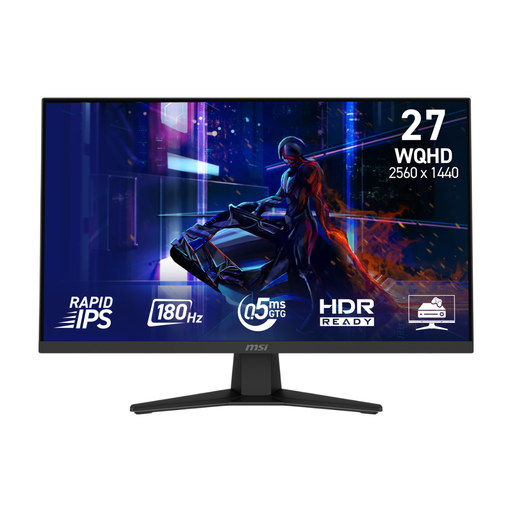 Image unavailable
Consider this Rapid IPS model if you want a 27-inch WQHD format for arena play.
The product title lists Adaptive Sync and a 0.5ms response-time rating. Check which connection supports the refresh mode you intend to use and whether the screen can sit at your preferred height.
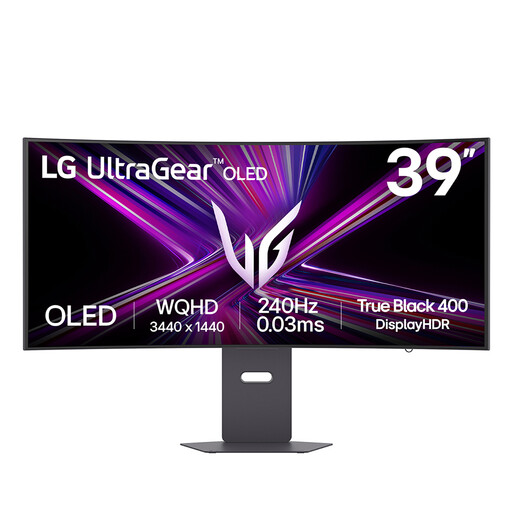 Image unavailable
Consider this larger OLED option if an ultrawide screen fits your desk and the games you play.
Its listed refresh rate is 240Hz. Check game support for the ultrawide format, your viewing distance and the refresh mode available through your intended connection.
 Image unavailable
This model suits a player considering a 27-inch QHD OLED rather than a larger screen format.
Its product title lists 240Hz and a 0.03ms response-time rating. This S27DG612 is not the 360Hz G60SD model; check the connection modes and applicable OLED-care and warranty terms for this exact variant.
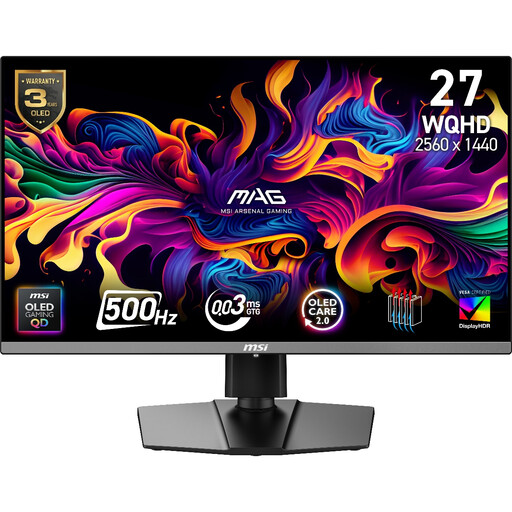 Image unavailable
Consider this QD-OLED model if reaching a very high frame rate at WQHD is a priority for your arena games.
The title specifies 2560 × 1440, 500Hz and AMD FreeSync. Check whether your PC, game and chosen connection can use that refresh mode, along with the applicable OLED-care terms.
 Image unavailable
This is another QHD OLED option for players who want to compare screen positioning and connection fit as well as refresh rate.
The product title specifies 2560 × 1440, 240Hz, FreeSync Premium Pro and G-SYNC Compatible. Check the stand’s adjustment range and the refresh mode available through your intended input.
Prioritise either height adjustment or a compatible mount if the supplied stand cannot place the screen where you need it. The Health and Safety Executive advises positioning the top of a display at eye level and the screen about an arm’s length away, so check your seated eye height and desk depth before choosing.
No: requirements depend on the exact monitor and mode. LG specifies 180Hz normal operation for the 27GS75QN-B and says its 200Hz overclocked mode requires both a DisplayPort 1.4-capable graphics card and a DisplayPort 1.4 cable.