If you create maps on a compatible USB-C laptop and have few free sockets, look for a monitor that can carry video and supply enough power to charge the laptop: that may let you leave its separate charger unplugged, although the monitor still needs mains power. Prioritise QHD and a higher refresh rate when smooth play matters most, or consider 4K when inspecting map detail and editor panels matters more; check the refresh rate of the particular 4K model rather than assuming all 4K screens favour editing over gaming.
Who this suits
Laptop map creators with one free socket
If your laptop supports video output and charging through USB-C, a suitably equipped monitor could take over the laptop charger’s socket while you build or test maps. Check both the laptop’s requirements and the monitor’s connections before counting on a single cable.
Detail-first world builders
When terrain edges, textures, object placement and crowded editor panels take priority, compare 4K models for screen size and the colour specifications relevant to your work. A creator-oriented display may have a lower refresh rate than you want for fast games.
Creators who also play fast games
If the same screen is used for map editing, level testing and fast-paced play, check its refresh rate and variable refresh rate (VRR) support alongside resolution and laptop connectivity. A gaming specification alone does not establish that the screen will charge your laptop.
What to check before buying
Start with the socket constraint: work out whether the monitor can replace your laptop charger’s connection. Then choose the balance of map detail and gaming smoothness you need, checking that your computer can drive the intended resolution and refresh rate.
| Concern |
What to check |
Who this matters to |
| Occupied sockets and cables |
Confirm USB-C video support and Power Delivery wattage against your laptop’s charging needs; check whether you need a USB hub or KVM. |
With only one free socket, I want the monitor connection to handle my laptop’s display and charging without a separate charger. Around 38% of consumers put that single-cable need first. |
| Map detail and workspace |
Compare native resolution, screen size and relevant colour coverage; check that your computer can run the editor at that resolution. |
When I inspect textures and place objects beside crowded tool panels, room to see fine detail matters more than a high gaming refresh rate. That is the primary need for around 31% of consumers. |
| Gameplay smoothness |
Check refresh rate at your intended resolution and input, VRR support and what your graphics hardware can output. |
I also test levels and play fast games, so I do not want to choose a screen solely for its editing resolution. Around 31% of consumers prioritise smooth gameplay while still needing room for map work. |
Buying pitfalls
-
Assuming every USB-C monitor charges a laptop
USB-C describes the connector, not a complete single-cable setup. The monitor must provide suitable Power Delivery, and the laptop connection must support the required video and charging functions.
Compare the monitor’s stated Power Delivery wattage and video connection with your laptop’s charging requirement and USB-C capabilities before ordering.
-
Choosing 4K at 60Hz when fast gaming is a priority
Extra editing detail does not replace a higher refresh rate for someone who also prioritises fast play. For example, BenQ specifies the PD2706U at 4K and 60Hz, while ASUS specifies the QHD PA278CGRV at 144Hz with VRR.
Decide which use takes precedence, then compare the exact models’ resolution, refresh rate and VRR support rather than choosing by resolution alone.
-
Forgetting the monitor’s own power lead
USB-C Power Delivery may remove the separate laptop charger from your socket count, but the desk monitor still needs its own power connection.
Count the sockets used by the monitor and every other device in your setup before deciding whether the arrangement solves your space constraint.
You may also need to rearrange where the devices sit to reach the available sockets.
-
Assuming a larger gaming screen suits map work automatically
A 32-inch or 49-inch display changes how much desk width and viewing distance you need; its gaming features do not settle whether your map editor will feel comfortable at your desk.
Measure the available space and consider where the viewport, panels and toolbars will sit before choosing a larger format.
Brands to consider
These model-specific examples show different ways to balance laptop connections, editing detail and gaming speed; a brand name alone does not establish which features another model has.
ASUS ProArt
The PA278CGRV is a QHD option for someone who alternates between map creation and higher-refresh gaming on a compatible laptop.
- ASUS specifies a 27-inch QHD display, 144Hz VRR, USB-C video through DisplayPort Alt Mode, 96W Power Delivery, a USB hub and KVM on the PA278CGRV.
- If 4K detail is your priority, compare its QHD resolution with 4K alternatives before choosing.
Dell
The P2725QE focuses on a 4K editing workspace and a consolidated USB-C laptop connection.
- Dell specifies 27-inch 4K at 100Hz; its USB-C connection can carry video, data and Ethernet while providing up to 90W Power Delivery.
- Its specified 100Hz maximum is a trade-off if your requirement is 144Hz or higher for gaming.
BenQ
The PD2706U is a detail- and colour-oriented 4K option when map assets and editor work take precedence over fast gaming.
- BenQ specifies 4K IPS, 90W USB-C Power Delivery, DisplayPort Alt Mode and KVM, with stated coverage of 95% P3 and 100% sRGB and Rec.709.
- Its specified 60Hz refresh rate may not suit someone buying primarily for fast-paced play.
LG UltraGear
The 32GX870B-B is a larger gaming-led option for a desk where high-refresh play matters at least as much as editing.
- LG lists a 32-inch 4K OLED screen, 90W USB-C Power Delivery and modes specified at 4K 240Hz or FHD 480Hz.
- Check whether a 32-inch screen fits your desk and viewing distance before choosing it for map work.
Joybuy product choices
These monitors offer different combinations of editing resolution, screen size and gaming refresh rate. If freeing the laptop charger’s socket is essential, confirm that the particular monitor and your laptop support video and adequate charging through the intended USB-C connection.
 No image available
Dahua 32-inch curved 4K 165Hz OLED gaming monitor
Consider this for detailed map work alongside high-refresh gaming if a large curved screen fits your desk.
The product name specifies 3840 × 2160 resolution, 165Hz, 99% DCI-P3 coverage and Type-C 65W. Before relying on one laptop cable, confirm that Type-C carries video and that 65W meets your laptop’s charging needs. The monitor also needs its own power connection.
Joybuy
 No image available
Acer X Predator X49X 49-inch curved ultrawide QD-OLED monitor
Consider the ultrawide format if you want space for a map viewport and editing panels as well as high-refresh play, and have a desk that can accommodate it.
The product name specifies a 32:9, 1800R curved display, Double Quad HD resolution and 240Hz. Check your laptop’s USB-C video and charging compatibility before planning a single-cable setup, and measure your desk for the 49-inch screen.
Joybuy
 No image available
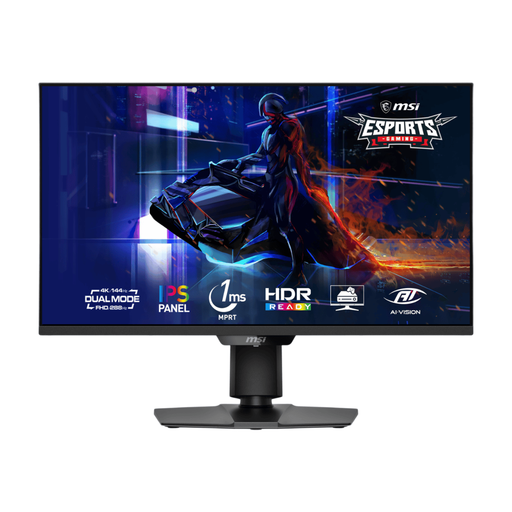
MSI MAG 275UPD E14 27-inch dual-mode gaming monitor
This is a choice to examine when you want 4K map detail and a specified high-refresh gaming mode in a 27-inch screen.
The product name states UHD 144Hz and FHD 288Hz modes with Adaptive Sync. Check that your graphics hardware supports the mode you intend to use. If replacing a laptop charger’s socket is essential, confirm the monitor’s USB-C Power Delivery capabilities before choosing it.
Joybuy
 No image available
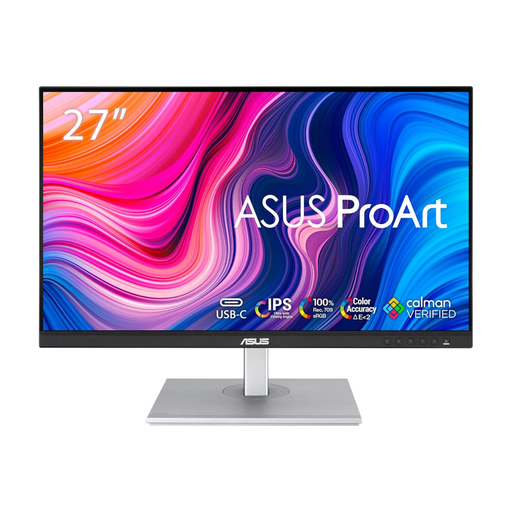
ASUS ProArt PA278CV IPS WQHD monitor
Consider this for QHD map editing when you can accept a less gaming-focused refresh specification than the high-refresh choices.
The product name identifies the PA278CV IPS WQHD model. Confirm its USB-C Power Delivery wattage against your laptop’s charging requirement before counting on it to free a socket; do not confuse the PA278CV with the separately specified PA278CGRV.
Joybuy
 No image available
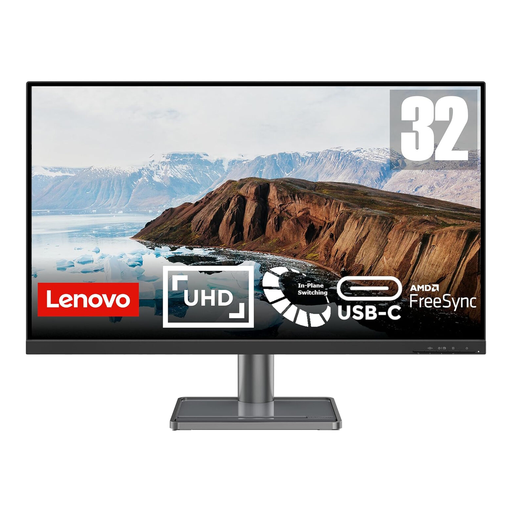
Lenovo L32p-30 31.5-inch 4K UHD IPS USB-C monitor
Consider this when a larger 4K editing screen matters more to you than prioritising fast-game refresh rates.
The product name specifies a 31.5-inch 4K UHD IPS display with USB-C. Check the USB-C charging wattage and your laptop’s video compatibility before relying on it to replace a separate charger. Allow space for the screen and a mains connection for the monitor.
Joybuy
Common questions
Will a USB-C Power Delivery monitor free a wall socket?
It can free the socket used by a separate laptop charger if the laptop accepts enough power and video through the intended USB-C connection. The monitor itself still needs mains power, so count its plug when planning your desk.
How much USB-C charging power does my monitor need?
Start with your laptop manufacturer’s charging requirement, then compare it with the monitor’s stated Power Delivery wattage and confirm USB-C video compatibility. ASUS specifies up to 96W for the PA278CGRV, while Dell specifies up to 90W for the P2725QE and BenQ specifies 90W for the PD2706U; those ratings alone cannot establish how every laptop will charge or perform.
Should I choose 4K 60Hz, 4K 100Hz or QHD 144Hz?
Choose according to which compromise matters most: 4K 60Hz can suit detail-led editing when fast gaming is secondary, 4K 100Hz offers a different balance, and QHD 144Hz suits someone placing more weight on smooth play and map testing. BenQ specifies the PD2706U at 4K 60Hz, Dell the P2725QE at 4K 100Hz and ASUS the PA278CGRV at QHD 144Hz; also check whether your graphics hardware supports the resolution and refresh rate you intend to use.


