For one screen shared between home-office work and mystery games, start by considering a QHD IPS monitor with a stand you can position comfortably and inputs that support your devices. An OLED monitor is worth considering when dark-scene contrast matters more to you, but prolonged static desktop use makes panel care a more important part of the decision. Whichever panel you choose, check the refresh rate available through the input you will actually use.
Who is this for?
Work-first mystery-game players
If the screen spends long stretches showing documents and browser windows before a gaming session, readable resolution, comfortable positioning and the effect of fixed desktop elements deserve attention alongside refresh rate.
Dark-scene atmosphere seekers
If shadowy interiors and night-time scenes are a priority, compare panel contrast and reflections as well as speed. OLED is one route to consider, provided its static-image trade-off fits your working habits.
PC-and-console desk gamers
If you switch between a PC and a console, match each device’s resolution, refresh-rate and variable refresh rate (VRR) options to the monitor’s specific HDMI or DisplayPort input.
What matters when choosing?
The central choice is between an IPS screen that suits substantial desktop use and an OLED screen chosen primarily for dark-scene presentation. Device compatibility and desk positioning still need checking whichever panel you favour.
QHD IPS
Choose it when: The monitor will regularly show work windows as well as games, and comfortable positioning is a priority.
Trade-off: The BenQ EX2710Q lists 1000:1 native contrast; an IPS specification alone does not promise the dark-scene appearance you may want in a dim room.
QHD OLED or QD-OLED
Choose it when: Dark-scene contrast is a leading reason for the purchase and you are willing to account for static desktop content.
Trade-off: RTINGS notes that prolonged static, high-contrast images can cause image retention. Check the exact monitor’s panel-care provisions and terms before using it for long work sessions.
| Concern |
What to check |
Who this matters to |
| Desk comfort and static use |
Stand adjustment or VESA mounting, reflections and how long fixed desktop elements remain on screen. |
If my monitor shows work windows for hours, I need to position it comfortably and consider what stays fixed on screen. Around 36% of consumers put desk comfort and static-use suitability first. |
| Dark-scene appearance |
Panel type, contrast, reflection treatment and the conditions attached to brightness claims. |
When a game takes place in dim rooms, I care most about how those scenes look rather than the highest refresh-rate figure. Dark-scene appearance is the primary concern for around 29% of consumers. |
| PC and console connections |
Resolution, refresh rate and VRR support through each input you plan to use. |
If I share the screen between a PC and a console, I want both devices to reach the display modes I need. Around 21% of consumers chiefly prioritise that connection match. |
| Motion smoothness |
Refresh rate at your chosen resolution, adaptive-sync support and your device’s available output. |
I want movement to look smooth, but I would not choose a faster mode my equipment cannot use. Motion smoothness comes first for around 14% of consumers. |
Buying pitfalls
-
Buying by the largest refresh-rate number
The maximum can change with the input and resolution. Dell UK lists QHD at up to 144Hz over HDMI but up to 180Hz over DisplayPort for the Alienware AW2725DM.
Check the mode available through the port, cable and device you intend to connect.
-
Treating OLED as a consequence-free office upgrade
RTINGS explains that static, high-contrast images left in place for long periods can cause image retention. Repeated taskbars and application panels make this relevant to a work screen.
If static work dominates, consider IPS or check the OLED model’s panel-care features and the terms that apply to the exact purchase.
-
Judging dark scenes by an HDR label alone
LG UK and AOC UK list different HDR-related specifications for the 27GS95QE-B and Q27G4X. A shared label does not establish how two monitors will look under the same lighting and measurement conditions.
Compare the specified conditions, panel type and reflection treatment; consider comparable independent tests when they are available.
-
Overlooking the work setup
A fast gaming specification does not tell you whether the screen will sit at a comfortable position on your desk. The UK Health and Safety Executive’s display-screen guidance makes workstation setup relevant to regular work use.
Check the stand’s adjustment and mounting options against your desk, and plan screen positioning and breaks as part of the setup.
If the supplied stand cannot reach a suitable position, a compatible monitor arm or replacement stand may be needed.
Brands to consider for these monitor routes
BenQ MOBIUZ
The EX2710Q is a specific QHD IPS option to examine for a shared work-and-gaming desk.
- BenQ UK lists a 165Hz refresh rate, 100 mm of stand height adjustment and 100 × 100 mm VESA mounting for the EX2710Q.
- Its listed 1000:1 native contrast is a model-specific consideration if dark-scene appearance is your leading priority.
Alienware
The AW2725DM and AW2725D illustrate different QHD panel choices within Dell’s Alienware range.
- Dell UK lists Fast IPS for the AW2725DM and QD-OLED with a maximum 280Hz refresh rate for the AW2725D.
- Port-specific modes vary by model; the OLED option also calls for consideration of prolonged static desktop use.
LG UltraGear
The 27GS95QE-B is a QHD OLED example for buyers drawn to dark-scene presentation.
- LG UK lists a 27-inch QHD OLED panel, a 240Hz refresh rate and anti-glare, low-reflection treatment for this model.
- Consider static-image use at a work desk, and compare any brightness figures under their stated measurement conditions.
AOC / AGON
The Q27G4X offers another QHD Fast IPS specification to compare with the exact desk and device requirements.
- AOC UK lists a 27-inch 2560 × 1440 Fast IPS panel, 180Hz refresh rate and Adaptive Sync for the Q27G4X.
- Check its stand and input specifications against the particular alternative you are considering rather than assuming the same setup options.
Joybuy product choices
These choices span IPS and OLED screens for a desk shared between work and mystery games. They include QHD models and a 4K option, so compare the resolution, panel and device modes of each rather than treating them as interchangeable.
 No image available
LG UltraGear G8 27G850A 27-inch 4K Nano IPS
Consider this if you want a 4K IPS screen for the shared desk rather than the QHD route discussed above.
The product title lists dual-mode 240Hz/480Hz operation, FreeSync Premium Pro, DisplayPort 2.1 and HDMI 2.1. Check which resolution and refresh-rate combination your device can use through your chosen input.
View on Joybuy
 No image available
MAG 274QP QD-OLED X24 27-inch QHD
This QD-OLED model is relevant if dark-scene presentation takes priority over prolonged static desktop use.
Its title specifies 2560 × 1440 resolution, 240Hz and Adaptive-Sync. Check panel-care and warranty terms for the exact purchase, as well as the modes supported by your device and chosen input.
View on Joybuy
 No image available
Samsung Odyssey G6 S27DG612 27-inch QHD OLED
Consider this OLED choice if game atmosphere is central to the purchase and you can account for fixed work-screen elements.
The title specifies QHD resolution and 240Hz. Before buying, check panel-care and warranty terms and confirm the refresh rate available on the input you will use.
View on Joybuy
 No image available
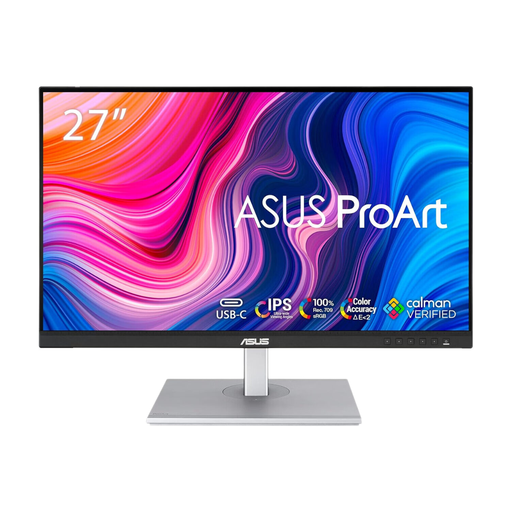
ASUS ProArt PA278CFRV QHD IPS 100Hz
This IPS option may suit a desk where work takes priority and 100Hz meets your gaming needs.
Check adaptive-sync support and the refresh rate available through your intended input. If USB-C is important to your setup, confirm its video and power-delivery capabilities for the exact unit.
View on Joybuy
 No image available
HKC G27H2DPro 27-inch QHD Fast IPS 220Hz
This Fast IPS model is an option if you want QHD and place particular value on a high stated refresh rate.
Check stand adjustment, screen finish and the rate supported by your chosen input. Clarify the contrast specification before relying on it for dark-scene gaming.
View on Joybuy
Common questions
Does QHD make sense for a screen shared by a PS5 and PC?
QHD can work for both if the particular monitor and inputs support the modes you want. PlayStation UK says a PS5 can test 1440p output at 60Hz or 120Hz, including VRR options when the connected display supports them; also check the monitor’s per-port limits and your PC’s output.
Should I rule out OLED if I work at the same desk?
Not automatically: OLED remains an option if dark-scene presentation matters enough to justify its static-use trade-off. RTINGS explains that prolonged static, high-contrast images can cause image retention, so consider your working habits and the exact model’s panel-care provisions before choosing it over IPS.
Does home-office use change how I should choose a monitor?
Yes: a screen used regularly for work needs a suitable workstation setup as well as gaming specifications. The UK Health and Safety Executive says its display-screen equipment rules apply to workers who use a screen daily for continuous periods of an hour or more; check positioning, stand adjustment and reflections, and plan breaks as part of your setup.


