For narrative puzzles in a shared bedroom, start with a screen that fits the available space, can be dimmed comfortably and can be positioned away from reflections. A compact Full HD monitor suits a tighter desk, while a 27-inch QHD model offers more pixels for clues and artwork. Check how you will connect headphones before giving extra weight to a high refresh rate.
Who this setup suits
Low-light bedroom players
If you play after dark near someone else, look for brightness controls and a screen position that keeps lamps from reflecting in your view. The Health and Safety Executive advises arranging screens and lighting to avoid glare and reflections.
Detail-focused puzzle solvers
If clues, menus and maps occupy much of your screen time, compare a compact Full HD display with a 27-inch QHD option. BenQ and LG list 27-inch QHD models, while ASUS lists a smaller Full HD model; the right footprint depends on your desk.
Quiet shared-room gamers
If another person is sleeping or working nearby, plan a private-audio connection. BenQ lists a headphone jack on the EX271Q, whereas Samsung lists speakers on the Odyssey G65B; speakers alone do not keep game audio private.
What to check before buying
Choose the screen size and position around the space you share, then check low-light controls and your headphone connection. Treat refresh rate as an additional consideration, particularly if you also play faster games.
| Concern |
What to check |
Who this matters to |
| Low-light viewing |
Check brightness controls and the screen surface; see whether the stand lets you turn the display away from nearby lights. |
If I play after dark, reflections from a lamp and a screen that feels too bright matter more to me than gaming-speed specifications. Around 42% of consumers put low-light comfort and reflection control first. |
| Private audio |
Check where headphones connect and whether your PC, console or controller can route audio through that connection. |
When someone else needs quiet, I want game sound in my headphones rather than through open speakers. Roughly 33% of consumers place private audio first. |
| Detail and desk fit |
Measure the available space, then compare a compact Full HD screen with a 27-inch QHD option for text and artwork. |
If I spend time reading small clues, I want more image detail without crowding the shared desk. About 25% of consumers make that balance their primary concern. |
Common buying mistakes
-
Relying on an eye-care label to solve room lighting
Low-blue-light or flicker-free features do not remove a lamp reflected in the screen. The Health and Safety Executive advises arranging both the display and lighting to avoid glare and reflections.
Check where the monitor can sit, whether its stand gives you enough positioning flexibility and how easily you can adjust brightness for evening use.
-
Assuming built-in speakers provide quiet listening
Speakers play into the room. Audio connections differ by model: BenQ lists a headphone jack for the EX271Q, while Samsung lists speakers for the Odyssey G65B.
Decide whether your headphones will connect to the monitor, computer, console or controller, and check audio routing for that exact setup.
Private listening may also require headphones or a suitable audio cable or adapter.
-
Choosing by the headline refresh rate alone
The available rate can depend on the input and source device. BenQ specifies up to 144Hz through HDMI and 180Hz through DisplayPort for the EX271Q; a source producing fewer frames cannot make full use of a higher monitor refresh rate.
Check the rate supported by the port, cable and device you intend to use, especially if faster games are part of the plan.
Relevant brands to consider
BenQ MOBIUZ
The EX271Q is a 27-inch QHD example for buyers balancing puzzle detail with shared-room setup needs.
- BenQ specifies a matte coating, headphone jack, height adjustment, low-blue-light and flicker-free features, and HDMI and DisplayPort inputs for the EX271Q.
- BenQ specifies different maximum refresh rates for HDMI and DisplayPort on this model, so check the connection you will use.
LG UltraGear
The 27GS93QE-B is a 27-inch QHD OLED option for buyers particularly interested in the presentation of dark scenes.
- LG lists anti-glare and low-reflection treatment and DisplayHDR True Black 400 for this model.
- Its LG-listed 240Hz and 0.03ms GtG specifications need not drive a purchase made mainly for slower-paced narrative puzzles.
ASUS Eye Care
The VZ24EHF illustrates a smaller Full HD route when desk space matters more than a QHD display.
- ASUS lists a 23.8-inch IPS panel, 100Hz refresh rate, VESA mounting and TÜV Rheinland-certified flicker-free and low-blue-light features.
- Its Full HD resolution provides fewer pixels than the 27-inch QHD examples, so weigh the compact footprint against your preference for detail.
Samsung Odyssey
The 32-inch Odyssey G65B is relevant if the same screen will also serve higher-refresh gaming and there is room for a larger display.
- Samsung lists QHD resolution, 240Hz, a 1000R curve, HDMI, DisplayPort and speakers for this model.
- Check its footprint on the shared desk and plan a separate private-audio route when open sound would disturb someone nearby.
Joybuy monitor choices
These choices span compact Full HD screens and larger monitors for puzzle play. Compare each footprint with your available space, then check the lighting controls and audio connection that your shared-room setup requires.
 No image available
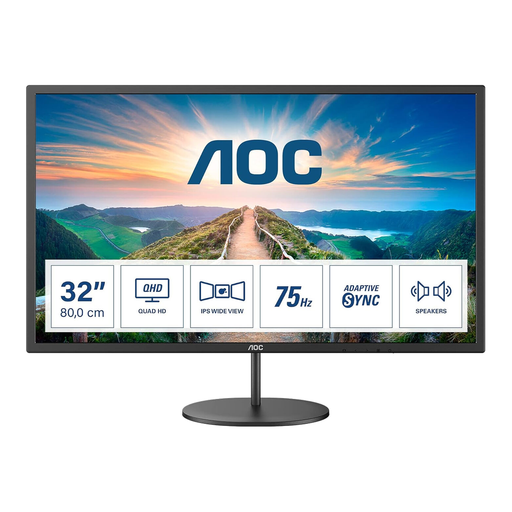
AOC Q32V4 31.5-inch IPS monitor
Consider this larger screen if you have space for it alongside the other uses of your shared desk.
The product name lists a 31.5-inch IPS display, Adaptive Sync and built-in speakers. Check how you will dim the screen and route private audio for evening play.
View on Joybuy
 No image available
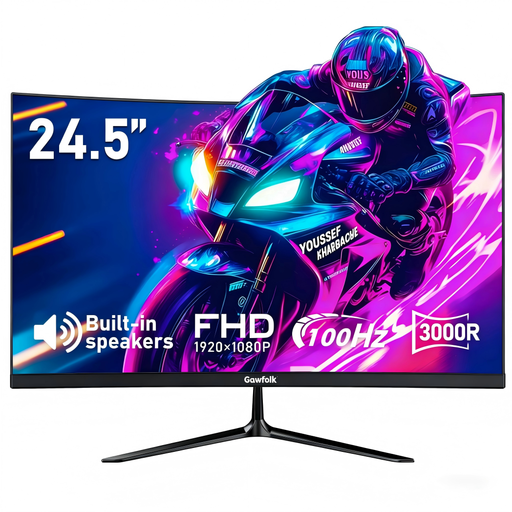
Gawfolk 24.5-inch Full HD curved monitor
The smaller screen is worth considering when a shared desk leaves limited room for a monitor.
Its product name lists 100Hz, a 3000R curve, anti-glare treatment, built-in speakers, HDMI and 75 × 75 mm VESA mounting. Full HD has fewer pixels than QHD; check the headphone route and brightness controls before relying on it for quiet, late-night use.
View on Joybuy
 No image available
CRUA 32-inch 1500R QHD curved gaming monitor
This larger QHD option may suit puzzle scenes and maps if the curved screen fits the room.
The product name specifies 2560 × 1440 resolution, 165Hz, HDMI, DisplayPort, flicker-free and low-blue-light features, and 100 × 100 mm VESA mounting. Measure the desk and check the screen surface and required private-audio connection.
View on Joybuy
 No image available
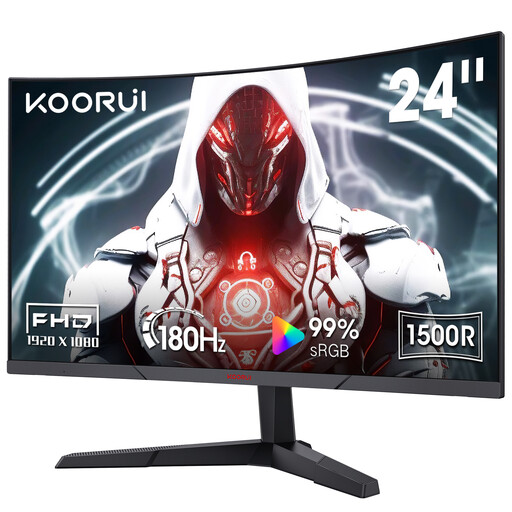
KOORUI MG24A12FV2 24-inch Full HD curved gaming monitor
This compact option suits a space-conscious setup if Full HD provides enough detail for the clues you play through.
The product name lists a 1500R VA screen, 180Hz, Adaptive Sync, two HDMI inputs, DisplayPort, tilt adjustment and VESA compatibility. Check reflection treatment, headphone routing and brightness controls for your room.
View on Joybuy
Frequently asked questions
What matters most for late-night puzzle games in a shared bedroom?
Start with screen position, reflections and adjustable brightness, then plan private audio. The Health and Safety Executive advises arranging screens and lighting to avoid glare and reflections; an eye-care feature alone cannot replace those setup checks.
Do narrative puzzles need a 240Hz monitor?
No: 240Hz is not a requirement for narrative puzzles. A source device must produce enough frames to make full use of a monitor’s refresh rate, so consider a higher rate alongside screen fit and viewing needs if you also play fast-moving games.
How do I keep game audio from disturbing someone nearby?
Use a private-audio route that works with your device and the exact monitor. Check whether your headphones connect to the computer, console, controller or monitor; built-in speakers send sound into the room rather than keeping it private.


