What matters when choosing
Choose the screen format around your rig and the resolution your system can run, then check the refresh and variable-refresh-rate modes available through your intended connection.
27-inch QHD
Choose it when: You want a conventional-size screen for track detail without committing space to an ultrawide rig.
Trade-off: It provides less horizontal screen space than the wider formats.
34-inch ultrawide
Choose it when: A fixed desk or cockpit has room for a wider view and your game supports the format.
Trade-off: A 3440 × 1440 display places greater demands on space and rendering than a 2560 × 1440 screen; OLED versions also call for panel-care checks.
49-inch super-ultrawide
Choose it when: You specifically want a very wide fixed installation and can accommodate a 5120 × 1440 display.
Trade-off: Check rig clearance and source performance carefully; Samsung notes that its stated refresh and response results can vary with the input source and settings.
| Concern |
What to check |
Who this matters to |
| Smooth frame delivery |
Check variable-refresh-rate compatibility between the monitor, source device and intended connection; confirm the resolution and refresh mode you plan to use. |
If changing frame rates make it harder to follow a corner approach, consistent motion comes before maximum screen width. Around 33% of consumers would put frame consistency first. |
| Wider cockpit context |
Measure desk or rig clearance, check game support for the screen format and assess performance at its native resolution. |
For a permanent cockpit, I may want more of the approach to a bend visible across the screen, provided the setup can accommodate it. Roughly 25% of consumers would make wider context their primary concern. |
| Track-detail balance |
Compare native resolution and screen size; keep differently labelled response-time measurements separate. |
If I use braking markers and road detail to refine a wet line, I want that detail without moving to the widest display. About 25% of consumers would prioritise this QHD-and-size balance. |
| Room light and panel care |
Assess light placement and reflections; for OLED, read the exact model’s panel-care guidance and warranty terms. |
When room lighting or long periods with a static game display shape my choice, the screen surface and care requirements matter more than extra width. Around 17% of consumers would put room fit and panel care first. |
Joybuy monitor choices
These models cover conventional 27-inch QHD screens and wider 34-inch and 49-inch formats for a fixed games-room setup. Choose by the space available and the display modes your system can use, rather than treating a wider screen as an automatic upgrade.
 No image available
LG UltraGear 34GX900A-B 34-inch OLED WQHD monitor
Consider this for a fixed setup where a 34-inch OLED screen fits the rig. The title states a 240Hz refresh rate; check the resolution and refresh modes available from your source, along with model-specific OLED care terms.
View on Joybuy
 No image available
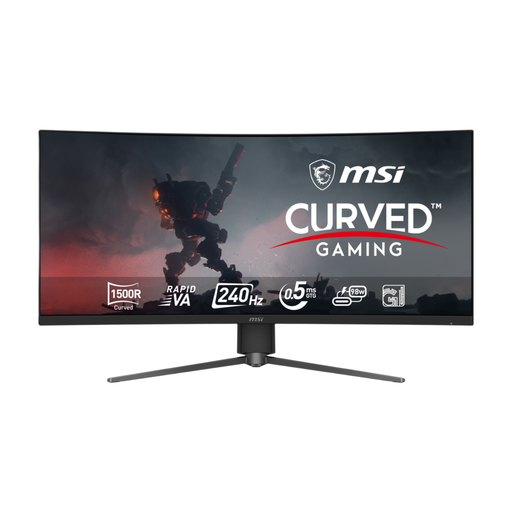
MSI MPG 346CQRF X24 34-inch curved UWQHD monitor
This curved Rapid VA option suits a rig with room for a wider screen. Its title states 240Hz, Adaptive Sync and a 0.5ms response time; check the response measurement and the modes supported by your chosen connection.
View on Joybuy
 No image available
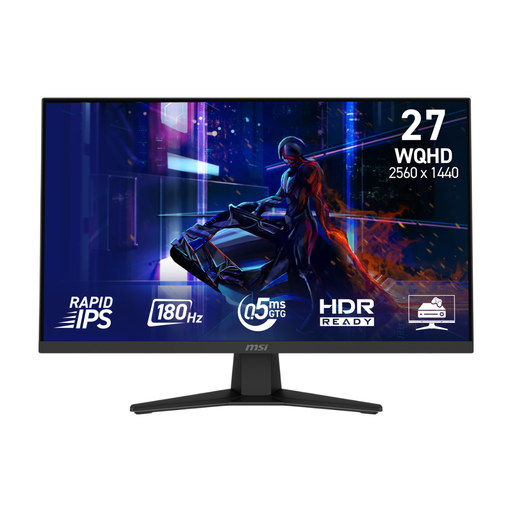
MSI MAG 274QF 27-inch WQHD Rapid IPS monitor
The 27-inch WQHD format suits a conventional desk or compact cockpit. The title states 180Hz and Adaptive Sync; confirm which refresh and variable-refresh-rate modes your intended connection supports.
View on Joybuy
 No image available
Acer X Predator X49X 49-inch curved QD-OLED monitor
Consider this 32:9 format only where a very wide display fits the rig. Its title states a 1800R curve, Double Quad HD resolution, 240Hz and AMD FreeSync Premium; check input modes, source performance and OLED care terms.
View on Joybuy
 No image available
HKC G27H2DPro 27-inch QHD Fast IPS monitor
This 27-inch format suits a conventional fixed setup. The title states 2560 × 1440 and 220Hz; check which connection supports the desired refresh mode and how the screen surface will work with your room lighting.
View on Joybuy
Common questions
Do I need variable refresh rate if the monitor already has a high refresh rate?
Variable refresh rate is worth checking if your racing-game frame rate changes. VESA explains that unsynchronised frame delivery and display refresh can cause tearing or stutter; confirm that the monitor, source device and connection support a compatible mode.
Will a 240Hz monitor run at 240Hz with my PC or console?
Not necessarily at your chosen resolution and connection. Check the source device, cable, monitor input mode and game performance; Samsung cautions that refresh results for its G95SD can vary with input-source performance and settings.
Should I choose OLED for a dedicated games room?
Choose OLED only if the particular screen format, room lighting and panel-care requirements suit your setup. ASUS describes its PG27AQDM thermal design as reducing burn-in risk, not removing it, so read the exact model’s guidance and warranty terms if static game displays are part of your use.
What should I check about monitor safety and disposal?
Check the product documentation for your delivery destination and plan for electrical-waste collection when the monitor reaches the end of its life. The Office for Product Safety and Standards’ guidance describes electrical-equipment requirements for Great Britain; requirements for Northern Ireland can differ. GOV.UK’s waste electrical and electronic equipment guidance addresses collection, reuse and recycling.


