Who is this choice for?

Bright-room ranked players

If daylight or nearby lamps make dark areas harder to see, assess reflections and screen placement before treating an HDR label as a solution. RTINGS.com reports distracting sunny-room reflections on its tested LG 27GX704A-B OLED.

High-frame-rate esports players

If your PC sustains very high frame rates, a compact FHD monitor may fit your focus on fast-moving targets. Check motion measurements for the exact model: RTINGS.com found strong motion performance at maximum refresh on the related ZOWIE XL2586X, which is not the XL2586X+.

Competitive and general gamers

If the same screen also serves detailed games, a dual-mode monitor lets you choose between resolution and a faster FHD mode. LG lists the 27G850A-B at 4K 240Hz or FHD 480Hz; the modes are alternatives, not simultaneous capabilities.

What matters when buying?

Compact FHD esports monitor

Choose when: ranked play takes priority and your PC can deliver frame rates suited to a very high refresh rate.

Accept: less resolution for detailed games, and check motion quality at the refresh rate you will actually use.

27-inch IPS dual-mode monitor

Choose when: you want a higher-resolution mode for general gaming alongside a faster FHD mode for ranked matches.

Accept: switching down to FHD for maximum refresh; RTINGS.com also notes some fast-motion blur and limited contrast on the LG 27G850A-B.

High-refresh OLED monitor

Choose when: you value OLED contrast and motion characteristics and can position the screen away from troublesome reflections.

Accept: a room-dependent fit; RTINGS.com found distracting sunny-room reflections on its tested glossy LG 27GX704A-B, which does not establish how every OLED will perform.

ConcernWhat to checkWho this matters to
Visibility and reflections Look for reflection-handling and SDR brightness tests of the exact model; consider where windows and lamps will appear on the screen. If daylight falls across my display, I need to see dark-game detail without a distracting reflection. Around 36% of consumers put bright-room visibility first.
Clean motion Compare response behaviour, overshoot and input lag at your intended refresh rate, alongside the frame rate your PC sustains. When tracking targets in ranked matches, I care about blur and responsiveness, not just the advertised Hz. For around 36% of consumers, clean competitive motion comes first.
Resolution flexibility Check the resolution attached to each refresh mode and whether your graphics card and connection can run the one you want. I want detail in other games without giving up a faster setting for ranked play, so a mode change could suit me. Around 21% of consumers make that flexibility their main priority.
OLED and HDR picture quality Check the screen finish, any VESA DisplayHDR tier and the OLED warranty terms rather than relying on a generic HDR label. Once I have accounted for lighting and competitive play, I may put richer-looking games first. That picture-quality priority leads the choice for around 7% of consumers.

Buying pitfalls

  • Choosing by the refresh-rate number alone

    A high Hz rating does not tell you how much blur or inverse ghosting you will see. RTINGS.com explains that pixel response affects both, while the frames supplied by your PC also matter.

    Compare independent response and input-lag tests for the exact monitor at your planned refresh rate, then check the frame rate your game can sustain.

  • Expecting OLED or an HDR label to fix glare

    RTINGS.com found that reflections remained distracting in sunny rooms on its tested LG 27GX704A-B OLED. VESA DisplayHDR branding identifies displays that meet a specified certification tier; it is not a substitute for checking room-lighting fit.

    Consider your window and lamp positions, seek exact-model reflection tests where available, and check which HDR certification tier the monitor carries.

  • Overlooking the resolution change in dual mode

    LG specifies 4K at 240Hz or FHD at 480Hz for the 27G850A-B. Choosing its faster mode also means choosing the lower resolution.

    Confirm the resolution, refresh rate and connection for the mode you intend to use before ordering.

  • Leaving warranty and disposal checks until later

    OLED warranty coverage depends on the model and its terms. Replacing a monitor also leaves an electrical item to handle.

    Read the warranty and retailer return terms for your purchase, and check local electrical-waste recycling or retailer take-back arrangements for the old screen.

Brands to consider

BenQ ZOWIE

An esports-focused range to consider if compact FHD play and very high refresh rates take precedence over resolution.

  • ZOWIE specifies 600Hz, Fast TN and DyAc 2 for the XL2586X+.
  • RTINGS.com found low contrast, no HDR and weaker results at lower refresh rates on the related XL2586X; its tests should not be treated as measurements of the XL2586X+.

LG UltraGear

Includes dual-mode IPS and OLED choices, with different implications for resolution and room lighting.

  • LG specifies 4K 240Hz and FHD 480Hz modes for the 27G850A-B; RTINGS.com reports low input lag on that model.
  • RTINGS.com also notes limited contrast and some fast-motion blur on the 27G850A-B. Its tested glossy 27GX704A-B OLED had distracting reflections in sunny rooms.

ASUS ROG

Offers high-refresh OLED models for buyers who can manage reflections and want QHD detail alongside competitive modes.

  • ASUS lists the ROG Swift OLED PG27AQWP-W at QHD 540Hz, with a lower-resolution 720Hz mode and DisplayPort 2.1 and HDMI 2.1 connections.
  • The PG27AQWP-W has a glossy surface. Check its fit against your windows and lamps rather than assuming that its HDR specification resolves glare.

Alienware

A QHD OLED option for players whose competitive target does not require a 480Hz-or-higher mode.

  • Dell lists the AW2725D as a 26.7-inch QHD QD-OLED monitor at 280Hz, with variable-refresh-rate support.
  • Its 280Hz specification is a different refresh-rate choice from the faster modes discussed above; assess reflection handling for your own room before choosing an OLED.

Gaming monitors on Joybuy

These models offer dual-mode or QHD choices for ranked play and other games. Their advertised modes help narrow the choice, but screen reflections and motion handling still need attention in a bright room.

LG UltraGear G8 27G850A gaming monitor

LG UltraGear G8 27G850A 27-inch dual-mode monitor

Consider this if you want a higher-resolution mode for other games and a faster FHD mode for ranked matches. LG specifies 4K 240Hz and FHD 480Hz, with DisplayPort 2.1 and HDMI 2.1 listed for this model.

RTINGS.com reports low input lag and glare handling suited to most rooms, but also notes some fast-motion blur. Check whether the faster FHD mode suits your preferred image detail.

View on Joybuy
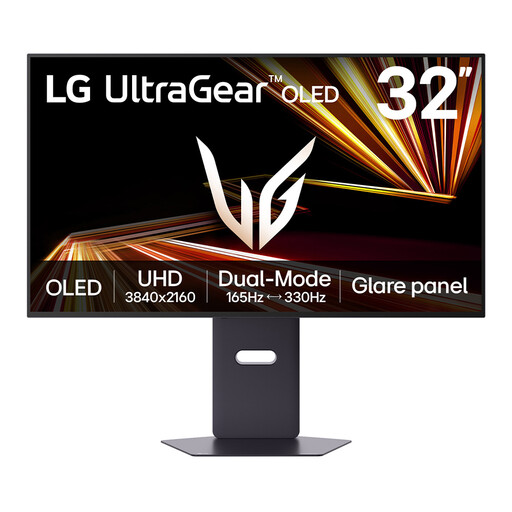
LG UltraGear 32GX850A-B OLED gaming monitor

LG UltraGear 32GX850A-B 32-inch OLED dual-mode monitor

Consider this larger OLED if you want a 4K option for other games as well as a faster ranked-play mode. Its product title specifies dual mode with a maximum 330Hz refresh rate.

Check which resolution enables that maximum, and assess reflections under your room lighting. Follow the product's guidance on prolonged static images when considering OLED use.

View on Joybuy

Samsung Odyssey G6 S27DG612 OLED gaming monitor

Samsung Odyssey G6 S27DG612 27-inch QHD OLED monitor

Consider this if you want a 27-inch QHD OLED screen for ranked play rather than a larger dual-mode display. Its product title specifies 240Hz and a manufacturer-stated 0.03ms response time; that figure is not an independent motion test.

Check how its screen handles reflections where you will use it. Glare-reduction wording alone does not establish visibility in a sunny room.

View on Joybuy

LG UltraGear 27G810A-B IPS gaming monitor

LG UltraGear 27G810A-B 27-inch IPS dual-mode monitor

Consider this LCD option if you want a 4K mode for general gaming and a higher-refresh option for ranked play. Its product title specifies a maximum 360Hz refresh rate; the 360Hz mode uses FHD rather than 4K.

Check the screen finish and reflection handling for your room, along with the connection needed for your chosen mode. The advertised response-time figure should not be treated as an independent measure of motion clarity.

View on Joybuy

Common questions

Is a 600Hz monitor automatically better for ranked tactical games?

No. A higher refresh rate can feel smoother, but your PC must supply enough frames and the monitor must handle pixel transitions well at the setting you use. RTINGS.com explains that slower response can cause blur or inverse ghosting, so compare exact-model motion tests as well as Hz ratings.

Should I choose OLED for a bright room?

Choose OLED for a bright room only after checking how reflections will affect your screen position. RTINGS.com found distracting sunny-room reflections on its tested glossy LG 27GX704A-B; that result is a reason to assess the exact model and your lighting, not a verdict on every OLED.

Does an HDR label tell me how the monitor will perform?

No. Look for the specific VESA DisplayHDR or DisplayHDR True Black tier rather than treating generic HDR wording as a performance measure. VESA says displays carrying its DisplayHDR logo must meet the applicable specifications; also check independent results for the qualities that matter to you.

Which connection do I need for the advertised refresh rate?

Check the exact resolution and refresh mode against both the monitor's supported input and your graphics card's output, then confirm the cable requirements. For example, LG lists the 27G850A-B with DisplayPort 2.1 and separate 4K 240Hz and FHD 480Hz modes; the faster number does not apply at 4K.

What should I do with an old monitor in the UK?

Check your local authority's electrical-waste recycling arrangements or a retailer take-back option rather than putting the monitor in ordinary household waste. GOV.UK identifies the Waste Electrical and Electronic Equipment Regulations 2013, as amended, as the underlying UK legislation.