Competitive reaction-training PC players
If fast response tasks or esports games are your main use, you may prioritise refresh rate, motion-focused features and the PC setup needed to use them over resolution.


For PC reaction-timing practice, consider a specialist Fast TN monitor if your system can deliver frames close to its highest refresh mode and motion-focused features matter more to you than QHD detail. A high-refresh OLED is an alternative when dark-room contrast and image detail matter too, provided you account for static-screen care. Fast IPS offers another high-refresh route, but check the connection and mode needed for the rate you intend to use.
If fast response tasks or esports games are your main use, you may prioritise refresh rate, motion-focused features and the PC setup needed to use them over resolution.
If you train and play in a dim room, you may want fast motion handling alongside OLED black levels, QHD detail and adaptive-sync support.
If you are considering a higher-refresh screen, check your graphics output, cable, game frame rate and the monitor’s exact maximum-refresh mode before choosing a specialist model.
For reaction-timing training in a dark room, decide whether fast-moving targets, dark-scene presentation or fit with your existing setup will drive the choice.
| Concern | What to check | Who this matters to |
|---|---|---|
| Motion clarity and refresh | Check the refresh mode and motion features you would use, alongside the frame rate your game and PC can deliver. | For fast-moving targets, I want clear motion and frequent screen updates more than extra image detail; around 42% of consumers would put motion clarity first. |
| Dark-room image and panel care | Consider contrast and detail, reflections in your room, and the care instructions for any OLED used with persistent timers or targets. | When training leads into games with dark scenes, I want image detail as well as speed; roughly 33% of consumers would make dark-room image quality their primary concern. |
| PC and room setup | Confirm input and graphics-card requirements for the chosen mode, then check screen and light positions for reflections. | Before upgrading, I need a monitor mode my PC can use and a screen position that keeps targets visible; about 25% of consumers would put setup fit first. |
Dell UK specifies 500Hz for the Alienware AW2524HF through DisplayPort overclocking, compared with 480Hz through standard DisplayPort and up to 255Hz through HDMI. Your preferred connection therefore changes which stated mode you can use.
Compare your graphics output and cable with the exact monitor’s input-specific refresh specifications before buying.
A high-refresh specification does not make a PC produce matching game frames. ASUS also specifies an NVIDIA RTX 20 Series-or-later GPU and the latest Windows version to enable the ROG Swift Pro PG248QP’s 540Hz overclocked mode.
Check the mode’s system requirements and the frame rate your usual training game can sustain before choosing a specialist display.
Training screens may keep timers, targets or HUD elements in fixed positions. MSI describes its OLED Care 2.0 features as reducing burn-in risk, not eliminating it.
Read the exact model’s panel-care instructions and warranty terms before planning long sessions with static elements.
Panel-care routines can also add maintenance steps to regular use.
A lamp or another bright source can still reflect in the screen. UK workplace display-screen regulations address disturbing glare and reflections through workstation layout and light positioning; that workplace rule is not a household monitor specification.
Check the screen from your seated position and adjust reflected light sources as well as the monitor’s position.
ZOWIE’s UK XL2586X+ represents the specialist Fast TN esports route for PC players concentrating on refresh and motion-focused features.
LG’s UK 27GX790B-B represents a high-refresh QHD OLED route for buyers combining competitive play with dark-room gaming.
Dell UK’s Alienware AW2524HF represents a 24.5-inch Full HD Fast IPS route with adaptive-sync support.
The UK ROG Swift Pro PG248QP represents an NVIDIA-oriented, Full HD Esports TN route.
These choices include OLED screens for dark-room gaming, an IPS monitor with separate 4K and Full HD refresh modes, and a 180Hz VA option. Compare each model’s intended mode and panel-care needs with your training setup.
 No image available
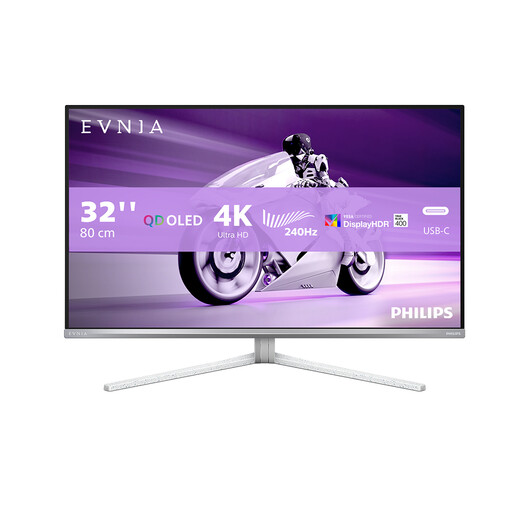
Consider this for dim-room gaming when a 32-inch 4K QD-OLED screen matters alongside fast play.
The product description specifies 240Hz, 0.03ms GtG and OLED Glare Free. Check which input supports the intended refresh mode on your PC, and read the model’s OLED-care and warranty terms if training screens remain static.
 No image available
This is a non-OLED option if you want to choose between a detailed mode and a faster Full HD mode for training.
The product description specifies 4K at 240Hz or 1080p at 480Hz, a Nano IPS panel and 1ms GtG. Check the connection and graphics requirements for the mode you plan to use; its IPS Black designation does not establish OLED-like contrast.
 No image available
Consider this model when QHD OLED presentation in a dim room matters alongside a high refresh rate.
The product description specifies 280Hz, 0.03ms GtG and DisplayHDR True Black 400. Confirm the input needed for 280Hz; for persistent training interfaces, check the OLED Care 2.0 instructions and the exact warranty terms rather than assuming panel-care features remove burn-in risk.
 No image available
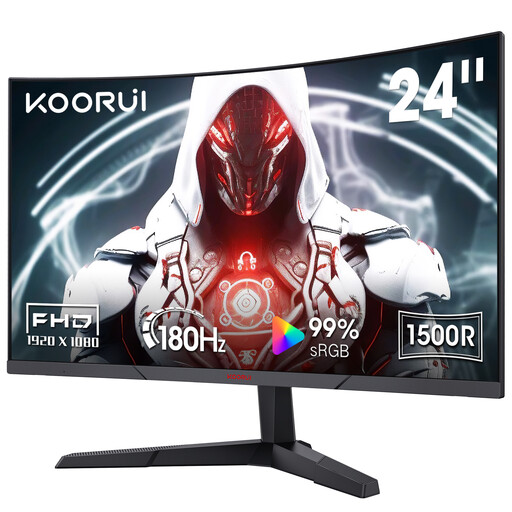
This is a 180Hz option if that refresh level fits your training needs rather than the 480Hz-plus specialist routes.
The product description specifies a 1500R curve and a 3000:1 contrast ratio. Check which input supports 180Hz. Its stated 1ms MPRT is not a confirmed 1ms GtG response time.
 No image available
Consider this model for an OLED gaming screen in a dim room, but establish its motion specifications before choosing it for reaction practice.
The product information gives conflicting refresh-rate and response-time figures. Confirm both for the exact model, the refresh mode supported by your intended input, and the care instructions for prolonged static images.
Not necessarily: a specialist 540Hz–600Hz screen makes more sense when fast PC gaming is the main task and your system can use its required mode. ASUS specifies an RTX 20 Series-or-later GPU and the latest Windows version for the ROG Swift Pro PG248QP’s 540Hz overclocked mode; if dark-room image detail matters equally, consider a high-refresh QHD OLED instead.
No: OLED is worth considering when dark-scene contrast and image detail matter alongside refresh rate, but it also calls for attention to static training screens. Read the exact model’s care instructions and warranty; MSI describes OLED Care 2.0 as reducing burn-in risk, not eliminating it.
No: UK workplace display-screen guidance should not be treated as a mandatory specification for a private reaction-training monitor. The Health and Safety Executive addresses workplace display-screen use, while Schedule paragraph 3 of the UK Display Screen Equipment Regulations addresses disturbing glare and reflections through workstation and lighting layout in that workplace context. At home, checking reflections remains a practical visibility step.
Check the screen from your normal seated position, then move or adjust any light that reflects across the training area. Darkness alone does not settle the question: screen position and artificial lighting need to be considered together, a principle also used in UK workplace display-screen guidance.