For online arena matches on a shared bedroom desk, start with a compact, high-refresh Full HD monitor if space and responsive play matter most. Consider a 27-inch QHD model if you also want sharper everyday desktop detail and your device can sustain the resolution and refresh rate. In either case, check model-specific input lag, the refresh rate available through your intended port and variable refresh rate (VRR) compatibility; headphones are the more practical late-night audio plan when someone else shares the room.
Who is this for?
Competitive players short on desk space
If online arena matches are the main use, you may favour a compact screen, clear motion and low display delay over extra desktop detail. RTINGS.com discusses refresh rate and input lag as relevant gaming considerations; the fit of any particular monitor still depends on its measured performance and your setup.
Players using the same screen for study or work
If matches share desk time with reading and other PC tasks, a 27-inch QHD screen may be worth considering for its sharper desktop image. Check that its size, stand and graphics demands suit the same room and computer.
Late-night players sharing a room
A headphone connection, suitable input ports and a manageable desk setup may matter as much as built-in conveniences. Speakers can be useful at other times, but they are not a private-listening solution when a room-mate is sleeping.
What matters when choosing?
Choose the screen size and resolution that fit both your desk and your device, then check motion performance and connection limits for the exact model. In a shared bedroom, make a separate plan for late-night audio.
| Concern |
What to check |
Who this matters to |
| Responsive play |
Compare model-specific input-lag and motion tests where available; confirm refresh rate, response-time metric and VRR compatibility with your device. |
When quick reactions decide my arena matches, I want motion that stays clear and a display that adds little delay. Around 36% of consumers put responsiveness first. |
| Desk fit |
Measure usable width and depth, including the stand; compare 23.8–24-inch Full HD and 27-inch QHD options. |
If my desk also has to accommodate someone else's shared-bedroom routine, the screen and stand need to fit without taking over the space. Around 29% of consumers make desk fit their primary concern. |
| Everyday clarity and positioning |
Check resolution and the stand's actual adjustment options; assess any stated display-comfort features as features, not health claims. |
I use the monitor for reading or study between matches, so image detail and a workable viewing position matter throughout the day. Around 21% of consumers prioritise this mixed-use need. |
| Shared-room setup |
Confirm the required input, its resolution and refresh limits, and a suitable connection for headphones. |
When someone else is resting, I need private audio and connections that work with my gaming device without complicating the desk. Around 14% of consumers put shared-room practicality first. |
Buying pitfalls
-
Comparing every “1ms” claim as though it measures the same thing
Response time and input lag are different measurements. BenQ lists both 1ms MPRT and 4ms GtG for the EX240N; neither number alone establishes how much display delay you will experience.
Compare response figures measured on the same basis and look for independent, model-specific input-lag and motion tests if fast arena play is your priority.
-
Assuming the advertised refresh rate works through every input
Dell specifies QHD at up to 180Hz through DisplayPort but up to 144Hz through HDMI on the G2725D. The connection can therefore change the mode available on that model.
Match the exact monitor's resolution and refresh specifications to your PC or console output, chosen port and cable before buying.
-
Treating all HDR labels as equivalent
VESA's DisplayHDR criteria distinguish tiers using requirements that include luminance, black level and colour. An HDR label alone does not tell you how a particular monitor performs in arena matches.
If HDR also matters to you, check the exact certified tier and model-specific assessments without letting it replace checks for refresh rate, input lag and VRR.
-
Relying on built-in speakers for late-night play
Speakers may reduce separate equipment on the desk, but their sound can still disturb someone sharing the bedroom. BenQ lists speakers and a headphone jack on the EX240N; those features serve different listening situations.
Check that your preferred headset can connect to the planned setup, and treat speakers as an option for times when shared-room noise is not a concern.
Brands worth considering
AOC / AGON by AOC
AOC's 24G4X is a compact gaming-monitor reference: AOC lists a 23.8-inch Full HD Fast IPS panel, 180Hz and Adaptive Sync.
- Its stated size and refresh rate make it relevant to a desk-limited, high-refresh setup.
- AOC's 1ms GtG specification is a response-time claim, not an independent input-lag measurement.
Dell
Dell's G2725D illustrates the 27-inch QHD Fast IPS route for matches and everyday desktop use.
- Dell specifies QHD up to 180Hz through DisplayPort and up to 144Hz through HDMI, making the connection choice clear.
- Dell marked this exact model unavailable on its UK page when the product information was gathered; check availability before treating it as a purchase option.
BenQ MOBIUZ
BenQ's 23.8-inch Full HD EX240N is a compact 165Hz VA example with built-in speakers and a headphone jack.
- The listed audio connections offer a choice between built-in sound and a private-listening setup.
- BenQ lists 1ms MPRT and 4ms GtG as different response metrics; the stand offers tilt adjustment only.
Joybuy monitor options
These monitors cover compact Full HD play and larger, higher-resolution setups. Their different panel types, sizes and stated refresh modes make desk fit and compatibility worth checking for each model rather than treating the list as one interchangeable route.
 No image available
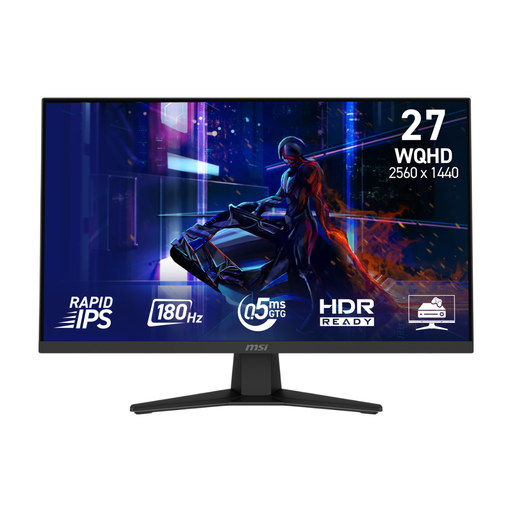
MSI MAG 274QF 27-inch WQHD gaming monitor
Consider this 27-inch Rapid IPS and WQHD model if the screen will serve both arena matches and everyday desktop tasks. Its title lists Adaptive Sync and a 0.5ms response-time claim, which should not be read as measured input lag.
The listed refresh limits differ by connection: up to 180Hz through DisplayPort and 144Hz through HDMI at WQHD. Check the mode supported by your device and cable.
View on Joybuy
 No image available
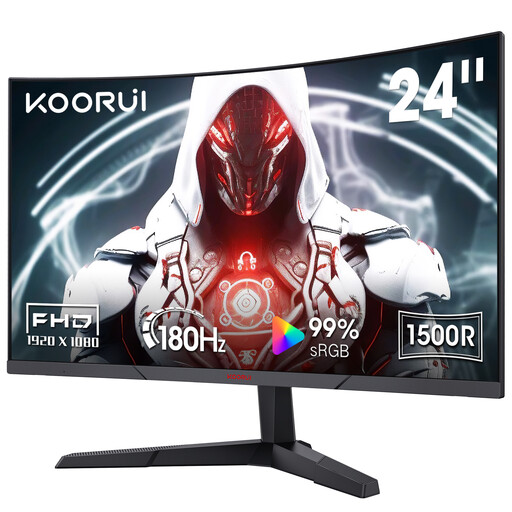
KOORUI MG24A12FV2 24-inch curved gaming monitor
This compact Full HD option may suit a smaller desk if you prefer a curved VA screen. The product name specifies 180Hz, a 1500R curve, Adaptive Sync and tilt adjustment.
Its stated 1ms figure is MPRT, not measured input lag. Confirm the refresh and Adaptive Sync modes available with your device and connection.
View on Joybuy
 No image available
LG UltraGear G8 27G850A 27-inch 4K dual-mode monitor
This 27-inch Nano IPS model is an option to assess if you want a 4K desktop image as well as a separate high-refresh Full HD mode. Its product name lists 240Hz at 4K and 480Hz at Full HD.
Check that your device and chosen connection can drive the particular mode you intend to use; the stated modes alone do not establish the frame rate you will achieve in a game.
View on Joybuy
 No image available
HKC G27H2DPro 27-inch QHD gaming monitor
The 27-inch, 2560 × 1440 Fast IPS format may suit players who also want QHD desktop detail. The product name states a 220Hz refresh rate.
Check the refresh mode available through your intended input, as well as the stand dimensions and adjustment options, before deciding whether it fits your desk.
View on Joybuy
 No image available
CRUA 32-inch 1500R curved QHD gaming monitor
Consider this larger 2560 × 1440 option only if the shared-bedroom desk has enough space for a 32-inch screen. The product name lists 165Hz, Adaptive Sync and VESA 100 × 100 mm mounting.
Measure the screen and stand space you can use. Check the intended connection too: the listed maximum refresh calls for DisplayPort, while HDMI may have a lower limit depending on the source.
View on Joybuy
Common questions
Will FreeSync or VRR work with any PC or console?
No. AMD describes FreeSync operation with compatible displays and Radeon graphics; compatibility with another source cannot be assumed from a monitor's feature name. Check the exact monitor, device, port and cable before relying on VRR.
Why might a 180Hz monitor offer a lower refresh rate through HDMI?
The available refresh mode can depend on the model and input. Dell, for example, specifies QHD up to 180Hz through DisplayPort and up to 144Hz through HDMI on the G2725D. Check the resolution-and-port limits for the monitor you plan to buy.
Does a 1ms response-time claim mean low input lag?
No. Response time describes pixel transitions, while input lag concerns the delay before a received signal begins to appear on screen. BenQ separately lists 1ms MPRT and 4ms GtG for the EX240N; use model-specific input-lag tests to assess that different measure.


