For PC space-combat missions, a 34-inch 21:9 ultrawide offers a wider view than conventional 16:9 without committing to a 49-inch screen. Consider 49-inch 32:9 only if your desk, game and PC suit its size and 5120 × 1440 resolution; choose 4K 16:9 if conventional aspect ratio and image detail matter more to you than horizontal span. Whichever format you favour, check the graphics-card connection and variable refresh rate (VRR) compatibility rather than treating the monitor's maximum refresh rate as an in-game frame-rate promise.
Who these choices suit
Immersion-first PC space pilots
You want a wider view for a dedicated flight setup and need to decide whether 21:9 provides enough space before making room for 32:9. RTINGS notes that ultrawide games can show more surroundings than standard 16:9 displays, though the result depends on the game.
Smooth-motion combat players
Rapid movement and changing frame rates make compatible VRR, the PC's achievable frame rate and the display connection important to your choice. NVIDIA and AMD describe their respective variable-refresh technologies in the context of compatible graphics hardware.
Dedicated-room setup planners
You need the screen and stand to fit a fixed desk and viewing position. For long sessions, you also want to check glare, model-specific OLED care where applicable, and the seller's support terms.
What to check before choosing
34-inch 21:9 ultrawide
Choose it when: You want more horizontal game view than 16:9 without accommodating a 49-inch panel; RTINGS describes this wider view as a reason to consider ultrawide gaming.
Trade-off: Your game must handle 21:9 as you expect, and your PC must run the chosen resolution and refresh mode.
49-inch 32:9 super-ultrawide
Choose it when: A very wide single screen is your priority and you can accommodate its physical size; Samsung UK lists a 49-inch, 5120 × 1440 example.
Trade-off: Desk fit, the game's 32:9 behaviour and PC performance at 5120 × 1440 all need checking.
4K 16:9 gaming monitor
Choose it when: You prefer a conventional aspect ratio and prioritise 4K detail over extra horizontal screen space.
Trade-off: You give up the ultrawide view, while high-refresh 4K still calls for a capable PC and suitable output connection, as RTINGS notes.
| Concern |
What to check |
Who this matters to |
| Screen format and view |
Check the game's 21:9 or 32:9 behaviour, native resolution and available desk space. |
If the cockpit view is my main reason for changing monitors, I need to know how much of the scene my game will actually display. Around 33% of consumers would put screen format first. |
| Motion during combat |
Match VRR support to the graphics card; check achievable in-game frames and the required connection mode. |
When the action speeds up and frame rate varies, I care most about keeping movement consistent. Roughly 27% of consumers would make smooth motion their primary concern. |
| Dark scenes and detail |
Check the exact model's HDR certification or stated capabilities, then balance resolution against PC performance. |
I want dark-space scenes and fine detail to influence my choice more than screen width, but I still need acceptable frame rates. About 20% of consumers would prioritise image quality. |
| Room fit and ownership |
Measure the desk and seating position; for an OLED model, check its care settings and warranty terms. |
Before choosing a large screen for long sessions, I need it to fit comfortably and want to understand its upkeep. Around 20% of consumers would put setup and ownership first. |
Buying pitfalls
-
Choosing by the maximum Hz figure alone
A monitor's 240Hz or 360Hz capability does not mean a space-combat game will run at that frame rate. RTINGS notes that high-resolution, high-refresh displays need a capable PC and suitable connections to make use of them.
Check performance in the game at your intended resolution and settings, then confirm the graphics-card output, monitor input and cable needed for the chosen mode.
-
Assuming a 49-inch screen will suit the room and game
A 5120 × 1440 super-ultrawide needs substantial physical space, and the game's handling of 32:9 determines how useful the extra width will be.
Measure the desk and stand area, plan where you will sit, and check the game's 32:9 behaviour before ordering.
-
Treating OLED care features as a warranty guarantee
ASUS describes OLED Care Pro for the PG34WCDN, while Samsung describes static-image controls for its OLED gaming monitors. Such features and their operating conditions are model-specific.
Read the selected model's care instructions and warranty terms, particularly if your game keeps HUD elements on screen for long periods.
Relevant brands to consider
These examples illustrate different monitor formats and model-specific features; the brand name alone does not establish which screen will suit your game and PC.
ASUS ROG
The ROG Swift OLED PG34WCDN represents a 34-inch, 3440 × 1440 QD-OLED ultrawide route.
- ASUS lists 360Hz refresh, Adaptive-Sync/VRR and DisplayPort 2.1 for this model.
- Check whether your game, graphics card and connection can use the mode you want; ASUS's OLED Care Pro description is specific to this model.
Alienware
Dell UK lists the AW3425DW as a 34.2-inch, 21:9 QD-OLED monitor at 3440 × 1440.
- Dell UK specifies a 240Hz maximum refresh rate and both NVIDIA G-SYNC Compatible and AMD FreeSync Premium Pro support for the AW3425DW.
- Its 21:9 format does not provide a 32:9 canvas; confirm the graphics-card output needed for your intended mode.
Samsung Odyssey
Samsung UK's 49-inch Odyssey OLED G95SD represents the 5120 × 1440 super-ultrawide route.
- Samsung lists 240Hz refresh and OLED Glare Free treatment for the G95SD.
- Its size and resolution make desk placement, game support and graphics-card performance particularly important checks.
Joybuy monitor choices
These monitors cover 34-inch ultrawide, 49-inch super-ultrawide and 4K 16:9 choices for a PC space-combat setup. Compare each model's stated format with your game, graphics card and available desk space.
 No image available
LG UltraGear 34GX900A-B 34-inch OLED gaming monitor
Consider this 34-inch model if you want an ultrawide screen rather than a 49-inch setup. Its stated specifications include WQHD resolution and 240Hz refresh; check how your game handles the wider view and read the OLED care and warranty terms.
View on Joybuy
 No image available
LG UltraGear 32GS95UV-B 32-inch 4K OLED gaming monitor
This is the conventional-format choice if you prioritise 4K rather than an ultrawide view. The stated dual modes are 4K at 240Hz and FHD at 480Hz, with G-SYNC and FreeSync Premium Pro listed; check which mode your PC and connection can deliver, and review the OLED care terms.
View on Joybuy
 No image available
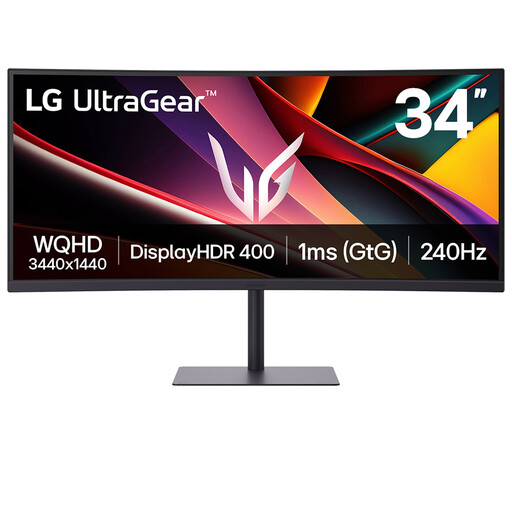
LG UltraGear 34G630A-B 34-inch VA gaming monitor
Consider this VA model if a 34-inch ultrawide format suits your desk and game. The title specifies WQHD and 240Hz; confirm the graphics-card output and connection required for your intended refresh mode.
View on Joybuy
 No image available
Acer Predator X49X 49-inch curved QD-OLED gaming monitor
Consider this 32:9 model only if you can accommodate a very wide screen and your game handles the format as you expect. Its stated features include Double Quad HD resolution, a 1800R curve, 240Hz and AMD FreeSync Premium; check the desk or mount and the PC's intended output mode before ordering.
View on Joybuy
 No image available
Lenovo R34w-30 34-inch UWQHD gaming monitor
This 34-inch UWQHD model is worth considering if you want an ultrawide PC flight setup without a 49-inch screen. Check your game's aspect-ratio behaviour, the available desk space and the graphics-card mode you intend to use.
View on Joybuy
Frequently asked questions
Should I choose G-SYNC Compatible or FreeSync?
Choose VRR support that works with the graphics card and connection you use. NVIDIA describes G-SYNC in relation to compatible displays, while AMD describes FreeSync with compatible Radeon graphics; check the exact monitor, cable and settings before relying on either feature.
Is an HDR label enough for dark space scenes?
No: check the exact model's HDR certification rather than treating every HDR label as equivalent. VESA publishes separate performance criteria for DisplayHDR and DisplayHDR True Black tiers, so compare the tier claimed for the monitor you are considering.
How should I position a large monitor?
Start by checking that you can sit centrally at a workable distance and adjust the screen to suit your position. The Health and Safety Executive suggests an arm's length from the display and the top of the screen around eye level as a starting point for display-screen use.
What should I check when ordering a monitor for a UK games room?
Confirm the exact model code, seller identity, warranty route and applicable product marking before paying. Great Britain and Northern Ireland have different market processes; for disposal at the end of the monitor's life, check the electrical-equipment collection arrangements available to you.


