Start with the space available for the monitor and its stand, then consider the resolution of the footage you review. A compact Full HD display makes sense when desk space is the overriding constraint; a 27-inch QHD IPS display offers more room for detail if it fits. Consider 4K or OLED when their image attributes matter to your work, while checking your device connections and, for OLED, how long static review interfaces stay on screen.
Who each approach suits
Space-limited replay reviewer
If the stand must leave room for your keyboard, capture equipment and notes, start with a compact display. AOC’s 23.8-inch 24G4XED illustrates the Full HD route, but its screen size alone cannot tell you whether its stand fits your desk.
Balanced competitive analyst
If you review fast clips alongside timelines or other windows and have space for a 27-inch screen, QHD IPS is worth considering. LG and BenQ list high-refresh QHD models, though the refresh mode you can use depends on your connection.
Detail-first footage reviewer
If fine image detail and stated HDR or colour attributes take priority, compare 4K IPS and OLED options against your footage and source device. A larger stand still needs to fit, and an OLED choice calls for care with long-lived static interfaces.
What to check before choosing
Compact Full HD
Choose when: Desk clearance matters more than fine-detail viewing.
Trade-off: Full HD gives you fewer pixels for footage and review windows than QHD or 4K.
27-inch QHD IPS
Choose when: A 27-inch screen fits and you want more review detail while retaining a high-refresh option.
Trade-off: Allow for the larger stand and check connection requirements for any overclocked refresh mode.
27-inch 4K IPS
Choose when: Inspecting fine detail matters and your source device supports the output mode you intend to use.
Trade-off: Do not assume every port and cable supports the monitor’s stated 4K refresh mode.
4K QD-OLED
Choose when: You value the stated 4K, colour and contrast attributes and the screen fits your desk.
Trade-off: Prolonged static timelines and overlays make panel care and the exact warranty terms important.
| Concern |
What to check |
Who this matters to |
| Desk footprint |
Measure desk width and depth against the monitor’s dimensions with its stand; check mounting requirements if you plan to use an arm. |
If my keyboard, capture equipment and notes share a small surface, the screen must leave usable desk space. Around 36% of consumers put physical fit first. |
| Motion and detail |
Compare resolution and native refresh rate; check the source device and connection needed for any higher mode. |
When I pause a fast replay, I want enough image detail without giving up the refresh rate I need for playback. Around 29% of consumers prioritise that balance. |
| Device switching |
List your devices and ports; check USB-C video support, power delivery and KVM behaviour where relevant. |
If I move between a laptop and a tournament PC, repeated cable changes can interrupt review. Roughly 21% of consumers make a workable multi-device setup their primary need. |
| Colour and HDR |
Check the stated gamut and colour mode, any VESA DisplayHDR tier, and OLED care and warranty terms. |
For footage where colour and dark-scene viewing matter to me, I need to know what the monitor’s image claims actually describe. Around 14% of consumers place these attributes first. |
Buying pitfalls
-
Judging desk fit by screen diagonal alone
Stand depth can be as restrictive as screen width. BenQ lists the EX271Q at 613.8 × 276.8 mm with its stand in landscape orientation.
Compare the exact with-stand dimensions with your clear desk space. If you plan to use an arm, check the monitor’s mounting pattern, weight and required clearance separately.
A stand that does not fit may mean rearranging the desk or using a suitable monitor arm.
-
Assuming an overclocked refresh rate works through every input
LG specifies a DisplayPort 1.4-capable graphics card and cable for the 27GS75QN-B’s optional 200Hz mode; its stated native refresh rate is 180Hz.
Match your intended resolution and refresh rate to the monitor’s input, your device’s output and the cable before choosing a model.
-
Treating an HDR10 label as a DisplayHDR certification
VESA says a display must meet its specifications to carry a DisplayHDR logo. Generic HDR support does not establish a certified performance tier.
If HDR footage matters to your review, check the exact model’s stated certification tier alongside its colour specifications and your source workflow.
-
Overlooking static interfaces on an OLED screen
Samsung explains that a still image displayed for a long period can leave a persistent ghost-like imprint. Timelines, scoreboards and other fixed review elements make this worth considering.
Check the exact OLED model’s written burn-in warranty and panel-care features, and follow its manufacturer’s care guidance.
Relevant brands for reference
AOC
AOC’s 24G4XED is an example of the compact Full HD route: AOC lists a 23.8-inch Fast IPS panel at 1920 × 1080 and 180Hz.
- Its screen size makes it relevant when desk space drives the choice.
- Full HD has fewer pixels for fine detail and review windows than QHD or 4K; check the stand dimensions separately.
LG
LG’s 27GS75QN-B represents a 27-inch QHD IPS option with a stated 180Hz native refresh rate.
- QHD provides more pixels than Full HD if a 27-inch setup fits your workspace.
- LG’s optional 200Hz mode requires a DisplayPort 1.4-capable graphics card and cable.
BenQ MOBIUZ
BenQ lists the QHD EX271Q with USB-C power delivery and KVM, and the EX271U as a 27-inch 4K, 165Hz option with USB-C and KVM.
- These model-specific connections are relevant if you switch between compatible review devices.
- Measure the stand and check the selected port and source device for your intended display mode.
Alienware
Dell lists the Alienware AW2725Q as a 4K QD-OLED monitor with a 240Hz refresh rate.
- Its stated 4K resolution makes it relevant to buyers considering a detail-focused OLED route.
- For long sessions with static review elements, check this model’s panel-care features and written burn-in warranty.
Joybuy products for this setup
These models cover compact Full HD and larger QHD or 4K approaches to tournament-footage review. Check the complete monitor-and-stand footprint before choosing a 27-inch model for a small desk.
 No image available
LG UltraGear G8 27G850A 27-inch 4K Nano IPS
Consider this for detailed footage review if a 27-inch screen fits your desk and your source supports the mode you intend to use.
The product title specifies 4K UHD, Nano IPS and dual-mode 240Hz/480Hz operation. Check which resolution, port and cable apply to each mode; do not assume both refresh figures apply at 4K.
View on Joybuy
 No image available
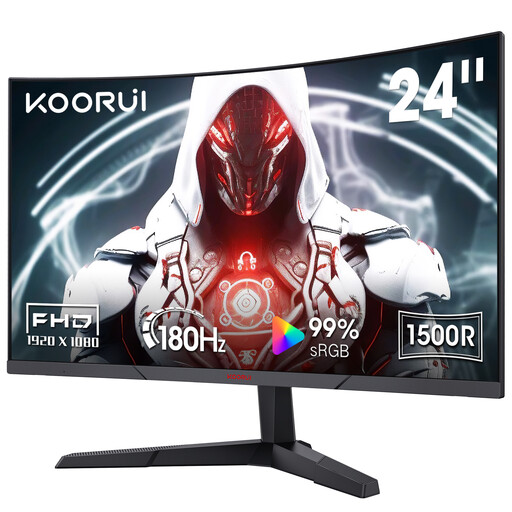
KOORUI MG24A12FV2 24-inch curved gaming monitor
Consider this compact Full HD route when desk space takes priority over the extra pixels of QHD or 4K.
The product title specifies a 1080p VA panel, 180Hz refresh rate and 1500R curvature. Measure the installed stand footprint rather than relying on screen size alone.
View on Joybuy
 No image available
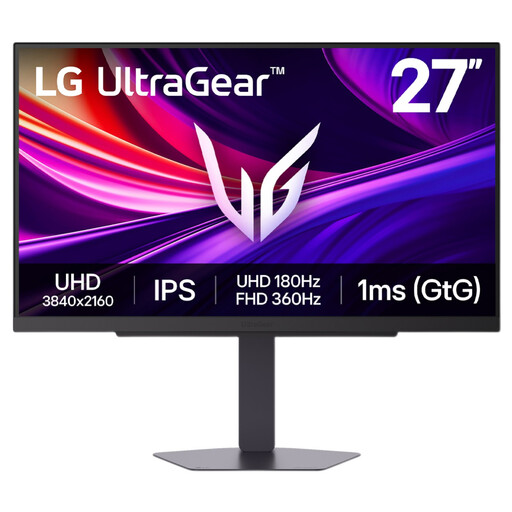
LG UltraGear 27G810A-B 27-inch 4K IPS
This is another 27-inch option for reviewing fine detail, provided the monitor and stand fit your workspace.
The product title specifies 4K UHD IPS and a dual mode with a stated maximum of 360Hz. Confirm the resolution and connection required for the particular refresh mode you want.
View on Joybuy
 No image available
HKC G27H2DPro 27-inch QHD Fast IPS
Consider this if you want more pixels than Full HD for replay review and can accommodate a 27-inch display.
The product title specifies 2560 × 1440 resolution and 220Hz. Check the monitor’s dimensions with its stand and whether your device can supply the intended display mode.
View on Joybuy
 No image available
Samsung Odyssey G6 S27DG612 27-inch QHD OLED
Consider this OLED route if a 27-inch QHD display fits and you can manage prolonged static review interfaces.
The product title specifies a 240Hz refresh rate. Check the stand footprint, panel-care features and written burn-in warranty for this exact model before buying.
View on Joybuy
Frequently asked questions
Will a 200Hz monitor run at 200Hz from my laptop or tournament PC?
Not automatically. LG says the 27GS75QN-B’s optional 200Hz mode requires a DisplayPort 1.4-capable graphics card and cable; check your own device’s output and the requirements for the exact monitor you choose.
Is HDR10 support enough to compare HDR performance?
No. HDR10 support does not establish a VESA DisplayHDR performance tier. VESA says only displays meeting its specifications may carry a DisplayHDR logo, so compare the exact certification tier when HDR footage matters to you.
Should I rule out OLED if my review software has a static timeline?
Not necessarily, but prolonged static imagery is a material consideration. Samsung describes screen burn as a persistent imprint that can follow long display of a still image; check the exact monitor’s care features and written burn-in warranty.
What if a monitor is faulty shortly after purchase in the UK?
A monitor that does not meet statutory standards may qualify for the short-term right to reject under the Consumer Rights Act 2015. The Act provides a minimum 30-day period for that right; this is distinct from a retailer’s voluntary change-of-mind returns policy.


