Choose an ultrawide monitor if a panoramic cockpit view matters most and your games support its aspect ratio; choose a 16:9 4K monitor if fine detail and a conventional layout take priority. Before buying, check performance at the native resolution, the inputs needed for your preferred refresh rate, and whether the screen and stand fit your desk.
Who is each screen for?
Panoramic-space explorers
If cockpit views and a large physical image matter most, compare curved 21:9 monitors, then check desk depth, game support and PC performance at the native resolution. LG Electronics UK and Dell Technologies UK list models that illustrate different sizes and resolutions within this format.
Detail-first galaxy travellers
If planetary scenery and readable interface text matter more than peripheral width, compare native resolution as well as screen size. A conventional 16:9 4K display is another route; BenQ UK lists a 31.5-inch 4K OLED example.
Smoothness-and-HDR buyers
If fluid camera movement and the appearance of dark and bright scenes are priorities, check the refresh mode, variable refresh rate (VRR) support and the exact HDR certification. NVIDIA describes its G-SYNC Compatible designation as validation of a basic VRR experience; VESA sets requirements for displays carrying its DisplayHDR logo.
What matters when choosing?
45-inch 21:9 5K2K
Consider it: when a physically large, detailed panoramic PC view is the priority and the desk accommodates a curved screen.
Trade-off: native 5120 × 2160 places substantial demands on the graphics card; LG Electronics UK lists this resolution and an 800R curve for its 45GX950A.
34-inch 21:9 ultrawide
Consider it: when you want panoramic play at a smaller screen size and a lower native pixel count than 5K2K.
Trade-off: the 3440 × 1440 Alienware AW3425DW listed by Dell Technologies UK provides less physical scale and native detail than LG's documented 45-inch 5K2K example.
31.5-inch 16:9 4K
Consider it: when a conventional screen shape and 4K detail matter more than ultrawide width.
Trade-off: it does not provide a 21:9 view, and high-frame-rate gaming at 4K still calls for a capable PC; BenQ UK lists its EX321UZ as a 31.5-inch 3840 × 2160 example.
| Concern | What to check | Who this matters to |
|---|
| Panoramic scale |
Check whether your games display properly at 21:9 or 32:9, then compare screen and stand dimensions with your desk. |
If I want expansive cockpit views, width matters only if my games use the extra space well. Around 36% of consumers put panoramic scale first. |
| Image detail |
Compare native resolutions and check your PC's expected performance in the games you play. |
When I read maps and small interface text, I care more about detail than extra width. Roughly 29% of consumers prioritise image detail. |
| Motion and HDR |
Confirm the refresh rate at your chosen resolution and input, VRR compatibility, and any VESA DisplayHDR certification. |
I notice uneven camera movement and want to assess HDR beyond a generic label. Around 21% of consumers make motion and HDR their primary concern. |
| Setup compatibility |
Check GPU outputs and cables, the stand footprint or mount, and each game's display options. |
If I am keeping my current PC and desk, I need a screen that fits the setup before chasing more pixels. Approximately 14% of consumers put compatibility first. |
What should you check before ordering?
-
Choosing by inches alone
Ultrawide screens of different sizes can also have very different native resolutions, affecting both displayed detail and graphics workload.
Compare the exact resolution alongside screen size, then check expected performance in your games at that resolution.
-
Treating every HDR or refresh-rate label alike
A stated refresh rate does not establish the frame rate your PC will produce or which input enables that display mode. VESA says displays must meet its specifications to carry a DisplayHDR logo.
Check the model's certification and manual, including the resolution, port and cable requirements for the mode you intend to use.
-
Overlooking the stand and curve
A large curved screen may fit across a desk but leave too little depth for a comfortable viewing position.
Compare the full stand footprint with your desk and check mount requirements if you intend to use an arm.
Using an arm may add an accessory to the setup and requires a mount suitable for the monitor.
-
Assuming OLED panel care removes static-image risk
Panel-care functions are intended to reduce risk, not to make every pattern of static HUD or desktop use risk-free.
Read the exact model's care instructions and warranty terms, especially if static elements will remain on screen for long periods.
Relevant brands and models
LG UltraGear
LG Electronics UK lists the 45GX950A as a 45-inch curved OLED with 5120 × 2160 resolution, a 165Hz mode at that resolution and an 800R curve.
- A model to examine if large physical scale and a detailed 21:9 image are both priorities.
- Its native resolution increases graphics workload, while its size and curve call for a suitable desk and viewing position.
Alienware
Dell Technologies UK lists the AW3425DW as a 34-inch-class 3440 × 1440 QD-OLED ultrawide with a stated 240Hz refresh rate.
- A smaller 21:9 option with a lower native pixel count than the documented 45-inch 5K2K LG model.
- It offers less physical screen area and native detail than that LG model; check the connection and PC needed for the refresh mode you want.
BenQ MOBIUZ
BenQ UK lists the EX321UZ as a 31.5-inch 3840 × 2160 OLED with a stated 240Hz refresh rate.
- A conventional 16:9 model to compare when 4K detail takes priority over ultrawide width.
- It does not provide a 21:9 view, and its stated refresh capability does not establish the frame rate achievable in a particular game.
Joybuy monitor choices
These Joybuy choices cover 49-inch 32:9 screens and 34-inch ultrawides for panoramic play. Compare their native formats with your games and PC rather than treating screen width alone as a reason to buy.
 No image available
Acer X Predator X49X 49-inch QD-OLED
Consider this 32:9 screen if an especially wide view is your priority; check how your games handle that format and whether the monitor fits your desk.
The product title specifies a 49-inch QD-OLED display, 1800R curve, Double Quad HD resolution and 240Hz refresh rate. Confirm the input and PC needed for the mode you plan to use.
View on Joybuy
 No image available
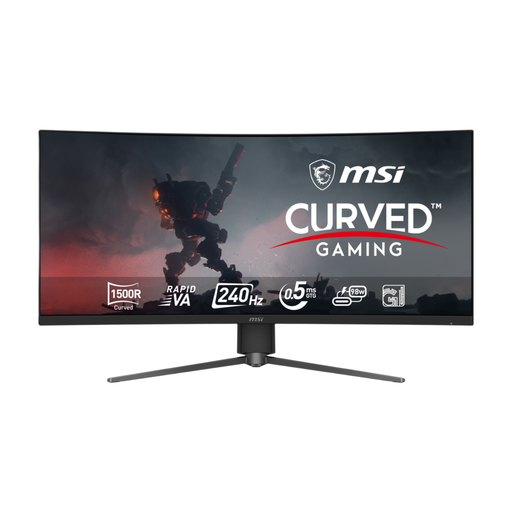
MSI MPG 346CQRF X24 34-inch Rapid VA
Consider this curved 34-inch ultrawide if you want panoramic play without moving to a 49-inch screen; check the stand footprint and your games' display options.
The product title states UWQHD resolution, a 240Hz refresh rate and Adaptive Sync. Check which connection enables your preferred mode.
View on Joybuy
 No image available
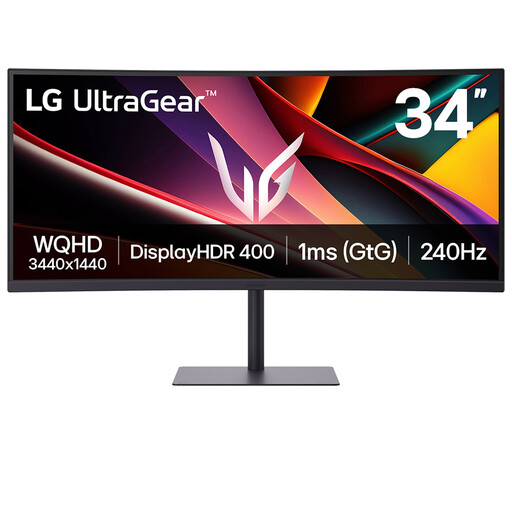
LG UltraGear 34G630A-B 34-inch VA
Consider this 34-inch monitor for a large gaming setup, but check its format against the space games you play and confirm the stand suits your desk.
The product title specifies a VA panel, WQHD resolution and 240Hz refresh rate. Check the correct model manual and the connection requirements for that refresh mode.
View on Joybuy
 No image available
LG UltraGear 34GX900A-B 34-inch OLED
Consider this curved ultrawide for panoramic play if you also intend to follow the model's OLED panel-care guidance, particularly during extended use with static HUDs.
The product title specifies WQHD resolution and 240Hz. Check game-format support, achievable PC performance and the connection needed for your chosen mode.
View on Joybuy
 No image available
CRUA 49-inch 5120 × 1440 curved VA monitor
Consider this screen if you want a 32:9 view, provided your games handle that format and your desk or mount can safely accommodate a 49-inch monitor.
The product title specifies a 1500R curve, 165Hz refresh rate, HDR10 and AMD FreeSync. Confirm the stand configuration before ordering; HDR10 in the title should not be read as a VESA DisplayHDR certification.
View on Joybuy
Frequently asked questions
Is 21:9 always the right format for space-exploration games?
No: choose 21:9 for panoramic play when your games support it, or consider 16:9 4K if fine detail and a conventional layout matter more. Check each game's aspect-ratio and interface options before deciding.
Will a 165Hz or 240Hz monitor make my games run at that frame rate?
No: the monitor's refresh specification does not determine what your PC can render. Check game performance at the native resolution and the monitor manual for input, cable, HDR and VRR requirements; Joybuy Insights' UK ultrawide guidance notes that high-refresh modes can depend on the connection.
What should I check when comparing HDR monitors?
Check the exact certification rather than relying on a generic HDR label. VESA says only displays meeting its requirements may carry a DisplayHDR logo; compare the stated certification tier and consider the games and content you use.
Does OLED panel care mean I can ignore static HUDs?
No: read the exact monitor's panel-care guidance and warranty if you expect long sessions with static HUDs or desktop elements. ASUS describes the OLED Care functions on its PG32UCDP as designed to reduce burn-in risk, not eliminate it.


