Players practising flicks and tracking
You want a mouse whose movement, sensitivity settings and connection suit repeated shooter drills. Headline sensor figures alone will not tell you whether its shape feels controllable in your hand.


Choose a shape that suits your grip and a connection and power arrangement you can live with before chasing maximum DPI or polling rate. A lightweight symmetrical mouse is worth considering for claw or fingertip grip, while a contoured right-handed model is another option if you want more palm support. Neither shape establishes that its clicks will be quiet enough for someone sharing your bedroom, so check the seller’s return terms and, if possible, hear the specific mouse before buying.
You want a mouse whose movement, sensitivity settings and connection suit repeated shooter drills. Headline sensor figures alone will not tell you whether its shape feels controllable in your hand.
You would rather find a shell that supports your usual hand position than choose by advertised weight alone. A symmetrical shape and a contoured right-handed shape are different fit choices.
You need to consider whether clicks disturb someone nearby, as well as where the wireless dongle or cable will go and how you will charge or replace the battery. Switch descriptions do not establish how loud a mouse will sound in your room.
Start with the grip and movement you want for aim practice, then decide how much bedroom noise and wireless upkeep matter to you. Treat a mouse’s highest available settings as options to assess, not targets you must use.
Consider it when: you favour a symmetrical-feeling shell for repeated flicks and tracking.
Trade-off: its shape may not give you the palm support you want, and low weight does not establish quiet clicks.
Consider it when: a contoured right-handed shell matters more to you than a symmetrical feel.
Trade-off: that handed shape is less flexible if you use your left hand or prefer a symmetrical shell.
Consider it when: you want a 2.4 GHz connection for your gaming PC and Bluetooth for another device.
Trade-off: the SteelSeries Rival 3 Wireless Gen 2 uses a AAA battery and is listed at 95–106 g wirelessly, rather than the 54–60 g listed for the lightweight models discussed here.
| Concern | What to check | Who this matters to |
|---|---|---|
| Aim input and movement | Compare the exact model’s weight, connection mode and sensitivity controls. Do not use maximum DPI as a measure of how well it will fit your practice. | If I spend my sessions on flicks and small tracking corrections, I want movement and settings I can keep consistent. Around 36% of consumers put aim input and movement first. |
| Shape and grip | Look at the shell’s form, dimensions and hump position in relation to your normal grip. | When a shell strains my grip over a long session, its sensor figures matter less to me than how my hand rests on it. Shape comfort comes first for around 29% of consumers. |
| Bedroom disruption | Seek sound evidence for the specific mouse or hear its clicks in person; check the seller’s return terms before relying on a quietness claim. | I do not want repeated clicks to disturb the person sharing my room. Avoiding that disruption is the primary concern for around 21% of consumers. |
| Power and device use | Confirm the battery type, the conditions behind stated battery life and whether the connection modes suit your devices. | If I move between a gaming PC and another device, or dislike frequent charging, I need the wireless routine to fit both uses. Around 14% of consumers put power and device flexibility first. |
Maximum DPI describes the available sensitivity range; it does not identify a comfortable grip or the setting that will suit your practice.
Choose a shell you can control and settle on sensitivity settings you can use consistently. Check how the mouse saves those settings if you switch devices.
A description of switch feel or responsiveness does not tell you how noticeable repeated clicks will be to someone else in the bedroom.
If click sound could decide the purchase, hear the specific model where possible and check the individual seller’s return terms beforehand.
Razer states up to 180 hours at 1,000 Hz and up to 45 hours at 8,000 Hz for the Viper V4 Pro. Those are model-specific, manufacturer-stated figures, not a battery-life rule for every mouse.
Use a polling setting that suits your PC, game and charging routine rather than assuming the maximum is necessary for practice.
A higher setting can mean more frequent charging on this rechargeable model.
The SteelSeries Rival 3 Wireless Gen 2 uses a replaceable AAA battery and offers 2.4 GHz plus Bluetooth; rechargeable wireless models involve a different routine.
Check the exact model’s power source and connection modes before deciding which arrangement suits your desk and devices.
A replaceable-battery mouse requires spare batteries; a rechargeable one requires time and access to charge it.
The PRO X SUPERLIGHT 2 is a lightweight wireless route for players considering a symmetrical esports mouse.
The Viper and DeathAdder lines offer different shapes to consider for shooter practice.
The Rival 3 Wireless Gen 2 is an option for buyers who want both 2.4 GHz wireless and Bluetooth with a replaceable AAA battery.
These mice offer different ways to approach shooter aim practice, including lightweight wireless models, charging-dock options and adjustable-sensitivity models. Choose for your grip and power routine, and check click sound separately if bedroom disruption could decide the purchase.
 No image available
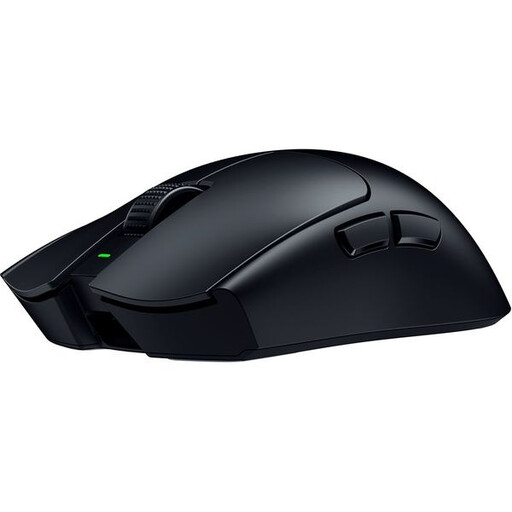
Consider this model if you want a lightweight, right-handed symmetrical shell for repeated aim drills. Razer lists it at 54 g; the product title specifies a Focus Pro 35K sensor and 8 kHz polling. Check its click sound for your room rather than assuming a light esports mouse will be quiet.
 No image available
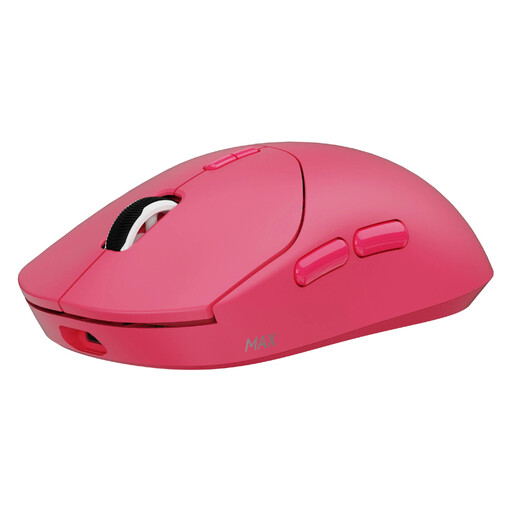
Consider it if low listed weight is important to your movement drills. Its product title specifies 53 g, 8 kHz wireless polling and ten programmable buttons. If the stated battery endurance matters to you, check the conditions for the 750-hour figure: it applies at 1,000 Hz with a driver update for low-power mode. Assess shell fit and click sound separately.
 No image available
Consider this variant if a charging dock and several connection options suit your desk. Its title names a PAW3311 sensor and Bluetooth, 2.4 GHz and USB-C modes. Before choosing it for low-weight movement, confirm the exact weight: the title states 63 g, while another product description states 65 g. Check click sound if you share the room.
 No image available
Consider this model if you want a listed 56 g mouse with a magnetic charging base for aim practice. Its title names a PAW3950 sensor and 8 kHz polling. Confirm the exact variant’s DPI specification and Bluetooth availability before relying on either, and check its click sound for shared-room use.
 No image available
Consider it if adjustable sensitivity and a USB wireless connection are your starting requirements. The product title specifies five DPI levels and LED backlighting. If click disturbance is your priority, ask for model-specific sound evidence rather than relying on the seller’s silent-button description; confirm the sensor and weight if they will affect your aim-practice choice.
No: an 8,000 Hz option is not, by itself, a requirement for aim practice. Choose a setting that works with your PC, game and charging routine. Razer states up to 180 hours at 1,000 Hz and up to 45 hours at 8,000 Hz for the Viper V4 Pro; that battery trade-off applies to that model.
If you choose the SteelSeries Rival 3 Wireless Gen 2 for a gaming PC, its 2.4 GHz dongle mode is the connection SteelSeries describes as its high-speed wireless option. Bluetooth offers a separate connection choice when using another compatible device; check which mode you intend to use before buying.
Look for a suitable electrical-waste collection or recycling option rather than treating the mouse as ordinary household waste. GOV.UK guidance on waste electrical and electronic equipment describes the aim of reducing electrical waste sent to landfill and encouraging recovery, reuse and recycling; check your local authority’s collection options or ask a retailer about take-back.