Players who use game shortcuts
If your board-game adaptation lets you bind recurring actions to mouse buttons, accessible controls may save you trips to the keyboard. Check the particular game before choosing a button-rich layout.


Choose a mouse that fits your grip and gives you comfortable control through long turns before comparing headline sensor figures. A conventional six-button layout suits straightforward point-and-click play; extra programmable controls are worth considering only if your game supports bindings you will use, while Bluetooth-capable models make more sense if you also switch between compatible devices. Headphones do not, by themselves, call for a particular mouse connection.
If your board-game adaptation lets you bind recurring actions to mouse buttons, accessible controls may save you trips to the keyboard. Check the particular game before choosing a button-rich layout.
For extended turns or campaigns, establish which shape suits your hand and grip before comparing maximum DPI. Glorious Gaming's mouse-selection guidance likewise places grip style, hand size and game type at the centre of fit.
If you move between a desk setup and a Bluetooth-capable portable device, a compact mouse offering both Bluetooth and 2.4 GHz connections may be useful. Confirm that each device supports the connection you intend to use.
For board-game adaptations played with headphones, start with grip and pointer control, consider extra buttons only for confirmed game commands, then choose a connection that suits your devices.
| Concern | What to check | Who this matters to |
|---|---|---|
| Comfortable pointer control | Compare shape and dimensions with your hand and grip; treat maximum DPI as secondary to fit and usable sensitivity settings. | During long turns, I want a mouse that feels manageable as I select pieces, drag items and navigate menus; around 44% of consumers put comfortable control first. |
| Accessible game commands | Check the game's button-binding options and whether the mouse has enough reachable programmable controls for actions you repeat. | When I use the same game commands often, I want them within easy reach rather than repeatedly switching to the keyboard; roughly 33% of consumers make command access their primary concern. |
| Portable connections | Confirm Bluetooth support on the intended device, or an available USB port for a 2.4 GHz receiver; check the battery arrangement. | If I play at a desk and on a compatible portable device, switching connections matters more to me than adding buttons; about 23% of consumers prioritise portable, multi-device use. |
A button-rich mouse helps only when the adaptation accepts useful bindings and the controls are comfortable to reach.
Identify the actions you repeat, then check the game's control settings before deciding how many programmable buttons you need.
A high sensitivity figure does not establish whether a shape suits your grip through an extended pointer-driven session.
Check hand fit first, then look for sensitivity settings you can adjust to suit your display and game interface.
The connection you choose affects which devices and ports you can use; manufacturers may also state different battery-life figures for different modes.
Check the intended connection, receiver-port availability and the conditions attached to any battery-life claim.
A mouse powered by replaceable AA or AAA cells also means keeping suitable replacement or rechargeable batteries available.
Citizens Advice explains that warranties and guarantees add to legal rights; a change-of-mind return is a separate question from a remedy for faulty goods.
Read the seller's return terms and any warranty conditions, and keep your order confirmation in case you need to make a claim.
The G305 and G502 HERO illustrate two different layouts: a conventional wireless mouse and a wired mouse with more programmable controls.
The Orochi V2 addresses compact, dual-wireless use, while the Naga V2 HyperSpeed addresses players seeking many mouse-based commands.
The Rival 3 Wireless Gen 2 is another model to consider when switching between 2.4 GHz and Bluetooth matters.
These models cover wired and wireless approaches to board-game adaptations, from straightforward pointer use to optional button mapping. Check your game's controls and your preferred connection before choosing a layout.
 No image available
Consider this if you want to choose between wireless use and a wired desk connection; check hand fit and your game's button-binding settings before relying on remapping.
The product name lists Bluetooth, 2.4 GHz and USB-C modes, a PAW3311 sensor and a charging dock.
 No image available
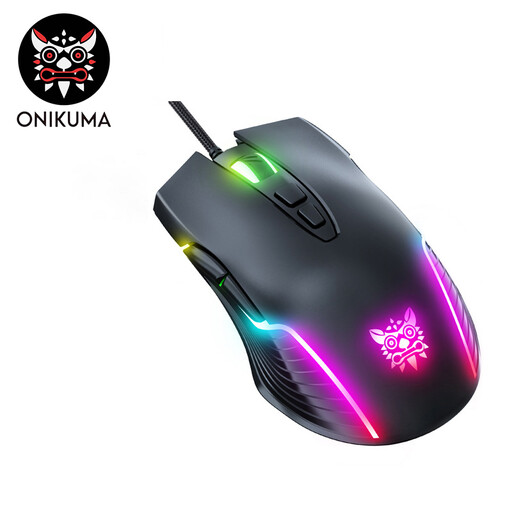
This is a wired option if you play at a fixed desk and want to explore mouse-based commands. Check whether your adaptation accepts the bindings you need and whether the shape suits your grip.
Its product name identifies adjustable settings and programmable buttons.
 No image available
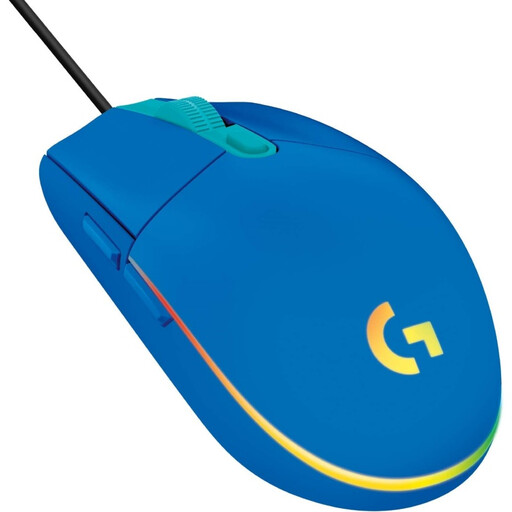
Consider this for a wired desk setup if a conventional mouse layout meets your needs. Check its fit and any game-specific command bindings before buying.
The listed variant is blue and uses a USB connection.
 No image available
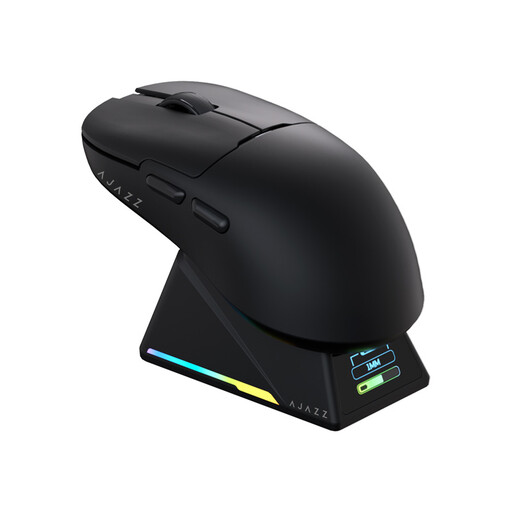
This model is worth considering if you want 2.4 GHz wireless and wired options with button customisation. Confirm Bluetooth support separately if you need it for another device.
The product name lists a 56 g body, PAW3950 sensor, magnetic charging base and colour screen. Check the advertised maximum DPI for the exact variant before making it a deciding factor.
 No image available
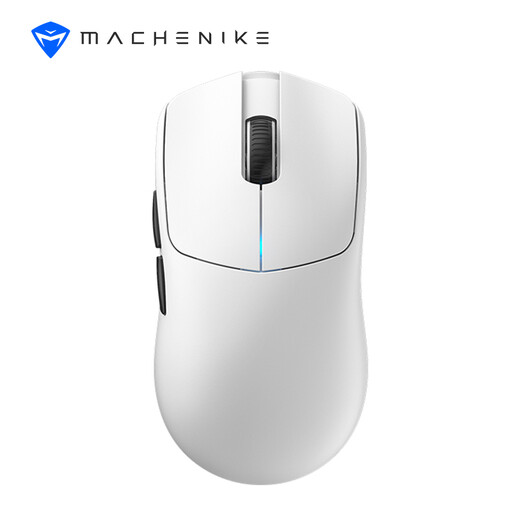
Consider this if switching between a wired desk connection and compatible wireless devices matters more than confirmed game-command mapping. Check its shape against your grip and confirm button options if shortcuts are important.
The product name lists wired, 2.4 GHz and Bluetooth modes, a PAW3395 sensor and a 49 g body.
No particular mouse connection follows from playing with headphones. Choose around grip, the controls your board-game adaptation accepts and the devices you use; if desk cables bother you, compare wired and wireless layouts on that basis.
No: start with a shape that suits your grip and sensitivity settings you can use comfortably for selecting and moving through the game interface. A maximum DPI figure alone cannot tell you how the mouse will fit your hand.
For a qualifying online purchase from a business, Citizens Advice says there is normally a 14-day cooling-off period starting the day after delivery, subject to exceptions. Check the applicable cancellation terms; a change-of-mind cancellation is distinct from seeking a remedy for faulty goods.
No. Citizens Advice says warranties and guarantees add to legal rights. Read the warranty terms for its duration and claim process, but do not assume those terms are your only recourse if a mouse is faulty.
Use an appropriate electrical-recycling route where one is available rather than treating the mouse as ordinary household waste. GOV.UK explains that the UK's waste electrical and electronic equipment rules support recovery, reuse and recycling.