Fast competitive replay reviewers
If you often pause, click and reposition the pointer to compare decisive moments, prioritise a shape that fits your grip, manageable weight and a receiver connection for competitive sessions.


Choose the shape and controls around how you review: a lightweight symmetrical mouse suits frequent pointer movement and clicks if it fits your grip, while an ergonomic mouse with more controls and a configurable wheel suits repeated scrolling and shortcuts. If you switch devices, consider dual connectivity and battery arrangements too; for competitive use, favour a dedicated 2.4 GHz receiver over Bluetooth. A bright room is a reason to decide whether RGB matters to you, not to assume you need a particular mouse sensor.
If you often pause, click and reposition the pointer to compare decisive moments, prioritise a shape that fits your grip, manageable weight and a receiver connection for competitive sessions.
If you work through long timelines and repeat the same commands, accessible buttons and a wheel that can handle both deliberate and rapid scrolling may matter more than the lowest stated weight.
If you move between a gaming PC and another device, compare connection modes and battery arrangements. Bluetooth can be convenient for the second device; RTINGS recommends a dedicated USB receiver for gaming.
Start with grip fit, then decide whether your replay work depends more on rapid movement, mouse-based shortcuts or switching devices. Treat lighting as a preference rather than a substitute for those choices.
| Concern | What to check | Who this matters to |
|---|---|---|
| Fit during long sessions | Compare shell dimensions, grip shape and side-button placement with a mouse you know. | If long reviews leave my hand uncomfortable, I want a shape I can hold and control consistently; around 33% of consumers put fit and comfort first. |
| Competitive navigation | Check for a dedicated 2.4 GHz receiver; assess polling and sensor figures as specifications, not proof of a better fit. | When I pause and reposition the pointer quickly, I do not want the connection to add uncertainty; roughly 27% of consumers prioritise responsive navigation. |
| Replay controls | Count the commands you would assign to buttons and check whether the wheel offers the scrolling modes you need. | I regularly move through long recordings and repeat commands, so reachable controls would help my workflow; around 20% of consumers place replay controls first. |
| Bright-room and ownership choices | Decide whether lighting is useful to you, then check connection modes, battery type and stated battery-life conditions. | In a bright room, I would rather consider how I switch devices and manage batteries than choose lighting by default; approximately 20% of consumers make these practical considerations their primary concern. |
A high stated DPI or low weight cannot tell you whether a shell suits your hand. SCAN UK identifies comfort as a particularly important and difficult part of choosing a gaming mouse.
Compare the dimensions and side-button positions with your current mouse, and check the seller’s applicable return terms when deciding whether to try a different shape.
RTINGS advises using a dedicated USB receiver for gaming because Bluetooth has higher latency and is less reliable.
Use a dedicated 2.4 GHz receiver for competitive play or fast review work; keep Bluetooth as an option for a secondary device.
Room brightness does not establish a need for illuminated mouse effects or a particular sensor. RGB also cannot replace a suitable shape, connection or set of controls.
Decide whether you would use the lighting in your setup before giving it priority over features that affect your review workflow.
Long stated battery life does not remove the need to manage replacement batteries. Check whether the model uses replaceable batteries or charges directly.
If you choose replaceable batteries, plan how you will replace and dispose of them, and use an appropriate collection route for the mouse at end of life.
Replacement batteries remain an ongoing practical requirement.
Its Viper and Basilisk lines illustrate a choice between a lighter competitive shape and more mouse-based replay controls.
The G PRO X SUPERLIGHT 2 and right-handed DEX give buyers different shell shapes within a lightweight wireless range.
The Rival 3 Wireless line is relevant if switching connection modes and managing longer periods between battery changes matter to you.
These mice offer different starting points for replay work, from lighter wireless models to options with charging docks or a focus on accessible controls. Compare their shape and connection details against your own workflow rather than treating the list as a ranking of comfort or performance.
 No image available
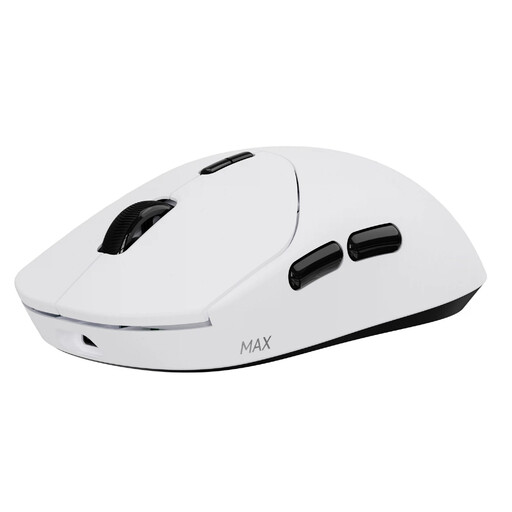
Consider this model if frequent pointer movement and mouse-based commands are both part of your replay work.
Its title specifies 53 g, 8K wireless polling and 10 programmable buttons. The stated battery life is up to 750 hours at 1,000 Hz after a driver update enables low-power mode; check the receiver connection and shell fit for your setup.
 No image available
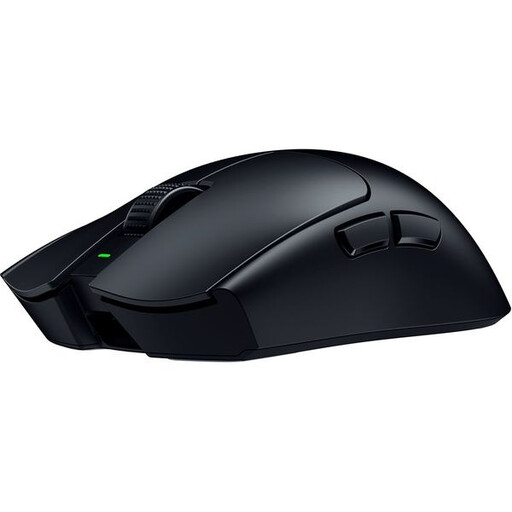
Consider its lightweight, symmetrical design if your review work centres on repeated clicks and rapid pointer movement and that shape suits your grip.
Razer specifies a 54 g body, eight programmable controls and a 35K optical sensor for this model. Check the shell dimensions before choosing it for long sessions; the sensor figure does not establish a bright-room advantage.
 No image available
This is an option to consider if you want a lighter mouse and a charging base at your review desk.
The title states 56 g, 2.4 GHz wireless and wired modes, and 8 kHz polling. Confirm the exact connection modes and accessories, as well as whether the button layout and shell fit your workflow.
 No image available
Consider this model if you want to switch between 2.4 GHz, Bluetooth and USB-C wired connections while keeping a dock at your desk.
Its title specifies a PAW3311 sensor rated at 24,000 DPI. Weight figures of 63 g and 65 g differ across the product information, so confirm the weight if it affects your choice; check the number and placement of controls and whether the described medium-to-large-hand fit suits you.
 No image available
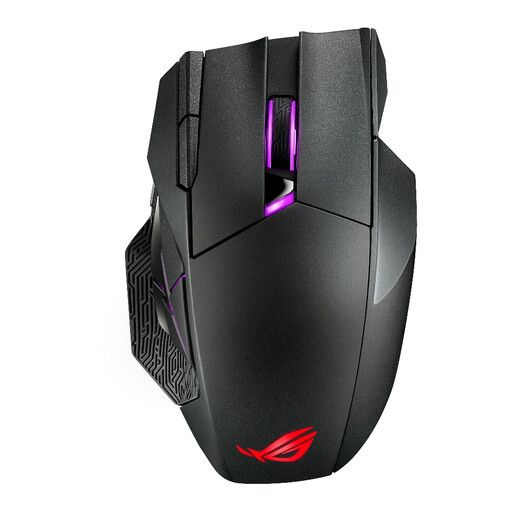
Consider this model if accessible mouse controls are important to your replay routine.
Check whether its button placement suits your recurring commands and whether the ergonomic shell fits your hand. If rapid scrolling is essential, confirm the wheel’s available modes rather than assuming they match those of another control-focused mouse.
Use a dedicated 2.4 GHz receiver when responsiveness matters in competitive sessions. RTINGS advises against Bluetooth for gaming because it has higher latency and is less reliable; Bluetooth can still be convenient when connecting to another device.
Do not choose RGB or a sensor specification solely because the room is bright. Decide whether you want visible lighting, and assess monitor glare separately if daylight makes the replay difficult to see.
For an eligible distance purchase from a business, Citizens Advice describes a statutory 14-day cooling-off period, subject to applicable exceptions. Check the terms that apply to your purchase and keep your order details; any longer change-of-mind period offered by a retailer is a separate, voluntary policy.
A fault is a different issue from changing your mind about the fit. Citizens Advice explains that goods must be of satisfactory quality, fit for purpose and as described, and that a faulty item may give you rights to a refund, repair or replacement; consult the guidance applicable to your part of the UK for the relevant remedy and conditions.
Use an appropriate electrical-equipment collection or retailer take-back route where available rather than putting the mouse in general waste. GOV.UK explains that the UK’s Waste Electrical and Electronic Equipment Regulations 2013, as amended, underpin measures encouraging recovery, reuse and recycling.