Laptop card-game players with limited desk space
You play digital card games at a compact desk and want less cable clutter without overlooking how the mouse connects to your laptop.


For digital card games, choose a mouse that fits your grip and desk setup before focusing on high DPI figures or extra buttons. A wired mouse suits a fixed desk if you want no battery routine; wireless reduces cable clutter, while a Bluetooth-capable model can free a receiver port on a compatible laptop. Extra programmable controls are worth considering only if you have recurring shortcuts to assign.
You play digital card games at a compact desk and want less cable clutter without overlooking how the mouse connects to your laptop.
You mainly click, drag and scroll through card-game interfaces and have little use for a large set of shortcuts.
You also use your computer for other games, study or browser-heavy tasks and have repeatable actions you could assign to mouse controls.
Start with a shape that suits your usual grip, then decide whether a cable, a USB receiver or Bluetooth works with your desk and laptop. Consider extra controls only after identifying the actions you would assign to them.
| Concern | What to check | Who this matters to |
|---|---|---|
| Shape and grip | Compare the shape with your usual palm, claw or fingertip grip, and check whether it suits your handedness. | During longer card-game sessions, I want a shape that feels comfortable through repeated clicking and dragging. Around 33% of consumers put grip fit first. |
| Desk and device flexibility | Check the exact connection modes and whether your laptop has Bluetooth or an available port for a receiver. | With study materials on a small desk, I want fewer cables and a connection that works where I use my laptop. Roughly 25% of consumers prioritise this flexibility. |
| Simple upkeep | Check the connection method and, for a battery-powered model, its battery type or charging arrangement. | For ordinary clicking and scrolling, I would rather keep setup and battery upkeep straightforward than gain controls I will not use. Around 25% of consumers make simplicity their primary concern. |
| Shortcut controls | Check button placement, remapping options and whether your game or other tasks have useful actions to assign. | When I regularly switch between card games and other computer tasks, I want accessible buttons for commands I actually repeat. Approximately 17% of consumers put shortcut customisation first. |
A high maximum sensitivity does not, by itself, establish that a mouse is more suitable for digital card games. Shape and connection method can have a more direct bearing on this desk setup.
Choose for grip, connectivity and useful controls, then adjust sensitivity to your display and desk space.
Wireless connection modes vary by model. A receiver-based mouse still needs a suitable USB port, while Bluetooth use requires a compatible computer.
Check the exact model's connection modes and whether its receiver would occupy a port you need.
Programmable controls add little to basic clicking and scrolling unless you have actions you will assign and use regularly.
List those actions before choosing a multi-button mouse, and check how its controls are configured.
Its G305 and G502 HERO illustrate different choices: an AA-powered wireless mouse and a wired mouse with more shortcut controls.
The Basilisk V3 X HyperSpeed is a right-handed, dual-wireless option for consumers who also want remappable controls.
The Rival 3 Wireless Gen 2 is a right-hand symmetrical option with receiver and Bluetooth connectivity.
These mice cover receiver-based wireless use, a listed multi-mode option and wired setups for digital card games at a student-room desk. Choose by the connection and controls you need, then check the individual model's fit.
 No image available
Consider this for a cable-free desk if you can spare a USB port for its receiver. The title lists five adjustable DPI settings and LED backlighting; check the battery arrangement and grip fit before choosing it.
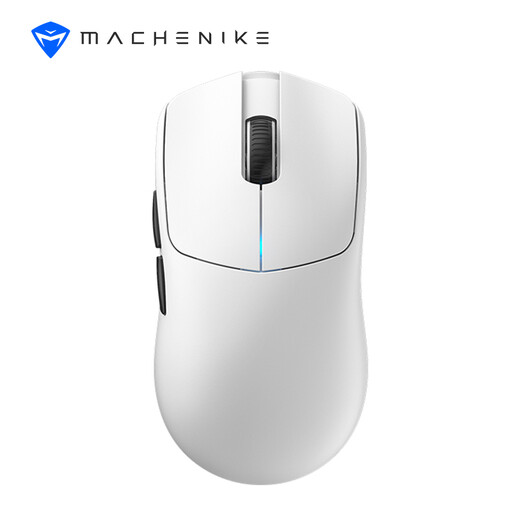 No image available
Consider this if you move between laptop locations and want a choice of connection methods. Its title lists wired, 2.4G and Bluetooth modes and a 49 g weight; check charging arrangements and whether its shape suits your grip.
 No image available
Consider its extra controls only if you have recurring commands to assign. The title lists a 53 g weight and up to 750 hours of battery life; that runtime claim depends on a driver update and 1,000 Hz operation. Check its connection modes if you need Bluetooth.
 No image available
Consider this for a fixed desk if you prefer a USB cable to managing a mouse battery. Its title lists four buttons, 1000/1200/1600 DPI settings and Windows and Mac compatibility; allow space for the cable and check the shape against your grip.
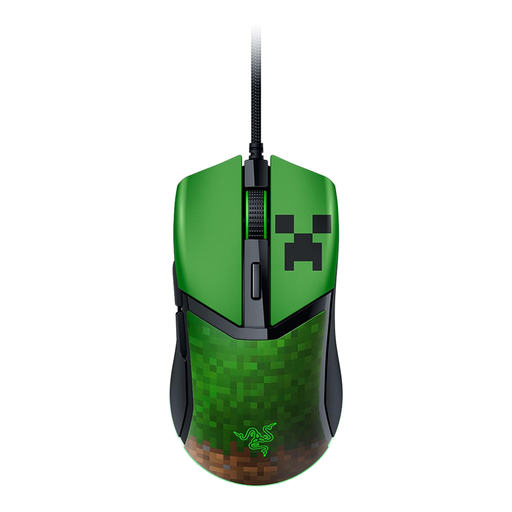 No image available
Consider this if the mouse will stay at one desk and a wired connection suits your setup. Check whether the cable leaves enough room for comfortable movement; the Minecraft Edition styling is a separate preference from the controls needed for card games.
No particular high DPI maximum is established as necessary for digital card games. Prioritise a comfortable shape and suitable connection, then set sensitivity to work with your display and desk space.
Choose wired for a fixed desk if avoiding battery upkeep matters most; choose receiver-based wireless to remove the cable if you have a suitable USB port. Bluetooth is useful when your computer supports it and you want to connect without occupying that port, but check that the exact mouse offers it.
Programmable buttons are useful when you have recurring game or computer actions to assign. If you mainly click, drag and scroll, check whether the extra controls justify the configuration work rather than choosing by button count alone.
Check your local authority's electrical recycling instructions or whether a retailer offers a take-back route for your old mouse. The Office for Product Safety and Standards and the Department for Environment, Food & Rural Affairs identify the Waste Electrical and Electronic Equipment Regulations 2013, as amended, as the underlying UK legislation.