Competitive aim-drill trainees
If you repeat flick, tracking and click-timing drills, you may value a comfortable, light mouse and predictable input more than extra command buttons.


Choose a mouse that fits your grip and lets you keep your connection and sensitivity settings consistent through repeated drills. A lightweight design may suit frequent aim movements, but an 8 kHz polling specification does not establish faster reactions. In a dark room, assess screen glare and room lighting separately from the mouse’s RGB lighting.
If you repeat flick, tracking and click-timing drills, you may value a comfortable, light mouse and predictable input more than extra command buttons.
If your practice sessions are lengthy or your current mouse feels awkward to grip, compare shell shape and hand support before choosing by weight alone.
If you practise in low ambient light, consider whether mouse lighting can be adjusted while checking the display and room separately for reflections and glare.
Start with grip fit and a sensitivity you can reproduce, then decide whether wireless freedom, extra controls or adjustable lighting matters to your drills. Treat the percentages below as approximate shares of consumers grouped by their main priority for this dark-room training scenario, not as a measure of mouse performance.
| Concern | What to check | Who this matters to |
|---|---|---|
| Repeatable input | Check the connection mode and how you set or recall your preferred DPI. If high polling matters, confirm its supported mode. | For repeated flicks and click drills, I want my settings to feel familiar each session; around 40% of consumers put repeatable input first. |
| Hand fit | Compare shell dimensions and shape with your palm, claw or fingertip grip; check side-button placement if you use your left hand. | A mouse I can hold comfortably through a longer session matters more to me than a low weight on its own. Roughly 30% of consumers prioritise fit and sustained comfort. |
| Low-light distractions | Check whether mouse lighting can be dimmed or disabled, and position the display and room lights to limit glare. | If bright LEDs or screen reflections draw my attention away from a drill, I want control over the desk setup; about 20% of consumers make low-light comfort their main concern. |
| Extra controls | Count the buttons you would actually bind and check that their placement works with your grip. | When my drills or other games use several shortcuts, accessible buttons matter more than a minimal layout. Around 10% of consumers put control flexibility first. |
A DPI range describes sensitivity options, while RGB provides lighting customisation; neither tells you whether the shell fits or your chosen setting is easy to repeat.
Choose a comfortable shape and connection, then check how to set and retain the sensitivity you use for drills.
A higher polling rate changes how often the mouse reports to the PC. It does not establish that a particular consumer will react faster, and its use depends on the connection and wider setup.
Confirm which connection supports the stated rate and choose a setting your PC handles satisfactorily.
Mouse LEDs and reflections on a display are separate issues. The Health and Safety Executive advises adjusting screens and lighting to avoid reflections and glare.
Check lighting controls on the mouse if they matter to you, and adjust the display position and room lighting independently.
The outline alone does not show whether side buttons are accessible or get in the way when used with the left hand.
Check the button positions and whether they can be swapped, removed or disabled.
The Viper models are aimed at a lighter, simpler competitive setup, while the Basilisk V3 Pro offers more programmable controls.
The PRO X SUPERLIGHT 2 represents the lightweight wireless route; the G502 X Plus places more emphasis on controls and RGB.
The Aerox 5 Wireless combines a relatively light stated weight with several programmable controls for consumers who use shortcuts as well as aim drills.
The M75 Wireless is a model to consider when adaptable side-button placement for either hand is a priority.
These mice offer wired or wireless choices for repeated gaming drills. Compare their stated features with your grip, preferred connection and sensitivity setup; assess any lighting separately for dark-room use.
 No image available
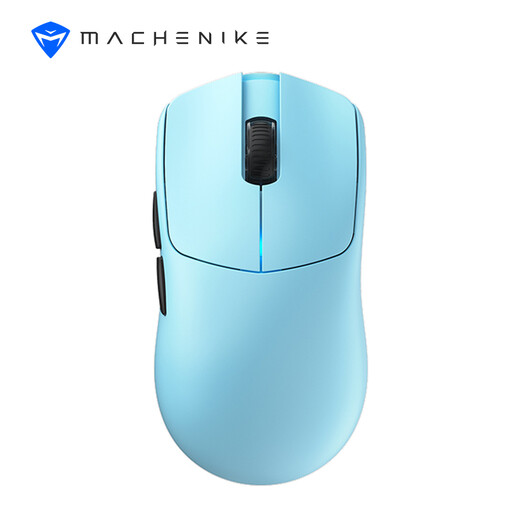
Consider this blue wireless model if you want an 8K-labelled mouse for aim drills. Check its shape against your grip and confirm that your chosen connection and PC can use the polling setting you intend to select.
 No image available
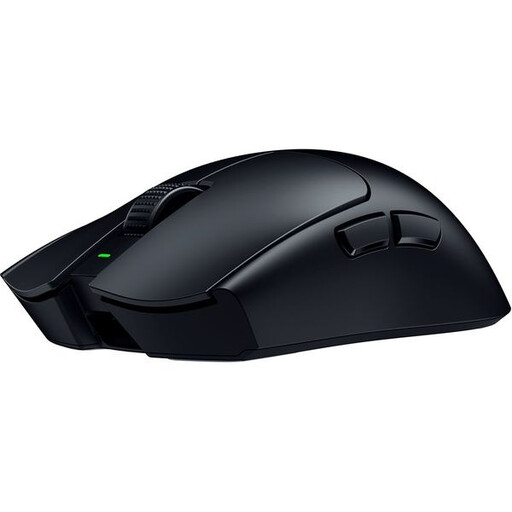
For repeated aim movements, consider this model if its shape suits your hand. Razer specifies a 54 g weight, and the Joybuy model listing states polling of up to 8,000 Hz; that maximum is a connection and setup consideration, not a promised reaction-time improvement.
 No image available
Consider this model if you want a charging base alongside a mouse for repeated drills. Its title states 56 g, 8 kHz polling and 2.4 GHz wireless or wired modes; check whether the dock’s screen and lighting suit a dark-room desk.
 No image available
This model may suit drills that also use extra button bindings. Its title states 53 g, 8 kHz wireless polling and 10 programmable buttons; check that the button layout works with your grip. The stated battery maximum of up to 750 hours applies to low-power mode at 1,000 Hz after a driver update, not to 8 kHz use.
 No image available
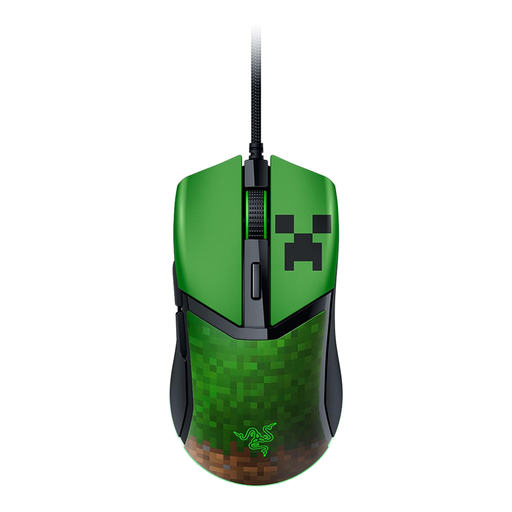
Consider this wired option if you prefer not to manage a wireless connection during drills. Check that its shape fits your grip and whether its lighting can be adjusted to your preference in a dark room.
Not necessarily. Razer says 8,000 Hz reduces the nominal reporting interval to 0.125 ms, compared with 1 ms at 1,000 Hz, but that technical difference does not establish a faster reaction from the person using it. Check the supported connection mode and whether your PC handles the setting satisfactorily.
No. Mouse lighting is a preference, not a substitute for arranging the desk and display. The Health and Safety Executive advises adjusting screens and lighting to avoid reflections and glare; if mouse LEDs distract you, check whether the model lets you dim or disable them.
Start with the palm, claw or fingertip grip you naturally use, then compare the shell’s dimensions and shape with a mouse you find comfortable. SCAN UK’s gaming-mouse guide emphasises comfort when choosing, so a lower stated weight should not override a poor fit.
For a qualifying online purchase, GOV.UK says you can tell the seller you wish to cancel within 14 days of receiving the item, then have another 14 days to return it under the applicable distance-selling rules. Check the terms for a change-of-mind return before use. Remedies for a faulty or misdescribed mouse are separate from the retailer’s voluntary returns policy.