What to check before buying
Start with hand fit and the movements you practise, then check wireless settings against your computer and software. Treat button count and charging arrangements as choices driven by how you use the same desk outside drills.
| Concern |
Buying checks |
Who this matters to |
| Controlled movement |
Compare stated weight and available sensitivity settings; check whether your computer and practice software can use the polling setting you want. |
For repeated swipes and quick stops, I want a mouse I can move and reposition consistently. Around 36% of consumers put controlled movement first. |
| Grip fit |
Check handedness, shell dimensions and side-button reach against your hand and usual grip. |
During longer sessions at my desk, a shell that does not suit my grip would be distracting. Fit is the primary concern for around 29% of consumers. |
| Wireless continuity |
Check the battery claim's operating mode and the charging connection you would use at your desk. |
When the same mouse stays in use through work and practice, I want charging to fit my routine. Around 21% of consumers chiefly prioritise wireless continuity. |
| Work and game controls |
Count the commands you would actually assign and check configuration-software compatibility and button reach. |
If I regularly switch between shortcuts and game commands, accessible extra controls have a purpose. They come first for around 14% of consumers. |
Relevant brands to consider
These product lines illustrate different approaches to weight, shell shape and controls; a brand name does not establish personal fit or faster reactions.
Razer
Razer's Viper V3 Pro is a competition-focused wireless option for buyers who want a light mouse for repeated movement.
- Razer specifies a 54 g weight for the Viper V3 Pro.
- Weight and sensor specifications do not establish how its shape will fit your grip or affect your reaction time.
Logitech G
The PRO X SUPERLIGHT 2 line offers a choice between its standard shape and the shaped right-hand PRO X SUPERLIGHT 2 DEX.
- Logitech G specifies up to 8 kHz polling for the PRO X SUPERLIGHT 2 and describes the 60 g DEX as asymmetrical.
- The DEX's right-hand shape is a fit-specific choice, not a reason for every buyer to prefer it.
SteelSeries
The Aerox 5 Wireless is relevant when a mouse must handle both reaction practice and shortcut-heavy desk work.
- SteelSeries specifies a 66 g weight and nine programmable buttons for the Aerox 5 Wireless.
- If you do not use extra controls, their presence need not drive your choice over a simpler layout.
Joybuy mice for desk use and reaction drills
These wireless mice cover lightweight layouts and options with additional desk-use controls. Compare their stated features with your grip, connection needs and the commands you actually use; product specifications alone cannot establish a reaction-time benefit.
 No image available
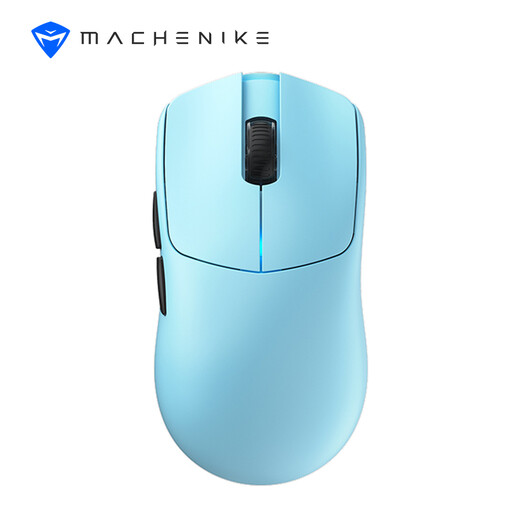
MACHENIKE L9 X1 8K-Blue 3395 wireless mouse
Consider this model if a lightweight wireless layout is your priority for repeated cursor movements. Its stated 8K setting is a configuration feature: check the connection mode, computer and training-software compatibility before relying on it.
View on Joybuy
 No image available
Rapoo VT7 MAX white wireless gaming mouse
This option combines a stated 53 g weight with programmable controls for consumers who practise at a work desk. The title specifies 8K wireless polling; check computer compatibility and shell dimensions. Its stated battery figure of up to 750 hours applies at 1,000 Hz, with the latest driver needed for low-power mode.
View on Joybuy
 No image available
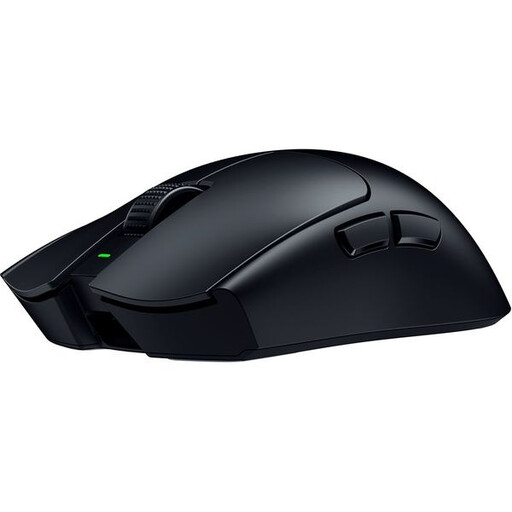
Razer Viper V3 Pro black wireless gaming mouse
Consider this model for a relatively simple, low-mass approach to reaction drills. The product name specifies 54 g, a Focus Pro 35K sensor and 8K polling; check whether its right-handed form fits your grip and whether your setup supports the polling setting.
View on Joybuy
 No image available
AJAZZ AJ159 APEX wireless gaming mouse with charging base
This 56 g model is worth examining if you want a charging base alongside a light mouse for desk practice. Its title states 8K polling, but the maximum DPI and connection modes are described inconsistently; confirm the exact variant, modes and software compatibility before choosing it.
View on Joybuy
 No image available
AJAZZ AJ200 AI MC wireless gaming mouse with charging dock
Consider this option if switching between work and gaming connections matters more than finding the lightest shell. Its title lists Bluetooth, 2.4G and USB-C modes, a charging dock and a PAW3311 sensor; confirm which polling settings apply to each mode and check the ergonomic shape against your hand. The stated weight varies between product descriptions.
View on Joybuy
Frequently asked questions
Will an 8 kHz mouse make my reactions faster?
An 8 kHz setting does not, by itself, establish that you will react faster. Logitech G lists up to 8 kHz polling for the PRO X SUPERLIGHT 2, but your choice should also account for grip control and whether your connection, computer and practice software can use the setting.
Can I return an online mouse if its grip does not suit me?
For an eligible UK online purchase, GOV.UK says you can notify the seller that you wish to cancel within 14 days of receiving the item, then have another 14 days to return it. Check the seller's return instructions and limit handling to what is needed to assess the mouse: use or damage beyond that may affect a refund. Rights concerning faulty or misdescribed goods are separate from a change-of-mind return.
Which product marking should I check for delivery in Great Britain?
Check the marking and documentation applicable to the specific product and its delivery market. In its electrical-equipment sector table dated 31 March 2026, the Department for Business and Trade lists UKCA or CE for Great Britain; the table gives different arrangements for Northern Ireland, listing CE, or UKNI together with CE.
What should I do with an old gaming mouse?
Use an appropriate electrical-equipment reuse or recycling route rather than treating the mouse as ordinary waste where local arrangements provide for collection. UK guidance from the Office for Product Safety and Standards and the Department for Environment, Food & Rural Affairs describes waste-electrical-equipment measures intended to encourage recovery, reuse and recycling.


