For competitive movement practice, choose a dedicated 2.4 GHz connection and a mouse shape you can control consistently, then decide how you will power it. A rechargeable lightweight mouse needs planned USB charging; an AA-powered mouse lets you swap batteries instead, but requires spares and battery disposal. Check endurance claims in the connection and polling mode you intend to use.
Who this choice affects
Competitive players without spare sockets
If you practise flicks, tracking or rapid repositioning, your power routine needs to work without regularly taking up a mains socket. USB charging and replaceable batteries offer different ways to manage interruptions.
Low-sensitivity swipe players
Broad, repeated movements make mouse mass and controllable grip worth assessing together. Razer, Logitech G and Corsair specify lightweight competitive models, but their stated weights cannot tell you which shape will suit your hand.
Multi-device desk users
A second wireless mode may be useful when switching devices. For competitive practice, check that the mouse also has a dedicated 2.4 GHz connection rather than relying on Bluetooth endurance as the deciding figure.
What to check before buying
Settle the power routine first: can you charge from an available USB port, or would keeping spare batteries be simpler? Then assess the gaming connection and how the mouse feels during your usual movements.
Rechargeable wireless
Choose it when: You can plan USB charging around practice and want to consider lower-mass models for repeated swipes.
Trade-off: Charging still needs a USB power source, and a manufacturer's maximum battery-life figure is not a guaranteed session length.
Replaceable-battery wireless
Choose it when: Swapping a compatible spare battery is more practical than scheduling a recharge.
Trade-off: Batteries need replacing and recycling; assess movement weight with the battery installed.
| Concern |
What to check |
Who this matters to |
| Power interruptions |
Check the power type and battery-life conditions. For rechargeable models, confirm how and where you can connect the charging cable. |
If spare sockets are scarce, I need a power routine that will not regularly interrupt practice. Roughly 33% of consumers put uninterrupted access to power first. |
| Consistent movement input |
Confirm the dedicated 2.4 GHz connection and the receiver and polling mode you intend to use with your PC. |
During repeated fast movements, I want a gaming-oriented connection I can use consistently rather than choosing by a headline polling figure. For around 27% of consumers, movement input is the primary concern. |
| Mass and grip fit |
Compare mouse weight with a battery fitted where relevant, and assess the shell shape against your usual grip. |
With broad, repeated swipes, I need a shape I can control, not merely the lowest stated weight. Grip and movement comfort come first for roughly 27% of consumers. |
| Battery upkeep |
Check what accessories are included and how you will replace and recycle batteries or electrical equipment. |
If I choose replaceable power, I need to be comfortable keeping spares and dealing with used cells. Around 13% of consumers make ongoing upkeep their main concern. |
Common buying mistakes
-
Choosing solely by the highest polling rate
A maximum polling figure does not establish how a mouse will fit your hand or how long it will run in your chosen settings. Some modes also depend on the appropriate receiver and PC setup.
Choose a workable shape and power routine, then check the requirements and battery-life conditions for the polling mode you plan to use.
-
Using Bluetooth endurance to plan 2.4 GHz sessions
The two connection modes can have different manufacturer-rated runtimes. SteelSeries, for example, states separate Bluetooth and 2.4 GHz figures for the Aerox 3 Wireless Gen 2.
Plan competitive sessions around the rating for the dedicated gaming connection, not the Bluetooth figure.
-
Forgetting the replacement routine for AA power
A spare battery can avoid waiting for a recharge, but depleted cells still need appropriate disposal. GOV.UK advises against putting batteries and electrical products in household rubbish.
Keep a compatible spare available and take used batteries to an appropriate collection point.
Keeping spares adds an ongoing battery-replacement task.
-
Assuming the lowest stated weight will feel right
Mouse mass alone cannot establish whether the shell and button positions suit your hand or grip.
Assess shape and grip guidance before using weight to narrow the choice, and check the applicable return terms if you need to assess fit after delivery.
Relevant brands to consider
Logitech G
Its G305 LIGHTSPEED and PRO X SUPERLIGHT 2 illustrate different power routes for wireless practice.
- Logitech G specifies up to 250 hours from one AA battery for the G305.
- The rechargeable, 60 g PRO X SUPERLIGHT 2 needs a charging routine; the G305 needs spare batteries rather than USB charging.
Razer
The Viper V3 Pro and Viper V3 HyperSpeed give buyers different stated mass and endurance figures to assess.
- Razer specifies the rechargeable Viper V3 Pro at 54 g and up to 95 hours of battery life.
- Razer lists the Viper V3 HyperSpeed at 82 g and up to 280 hours; neither rating establishes which shape or power routine will suit an individual player.
SteelSeries
The Aerox 3 Wireless Gen 2 offers separate 2.4 GHz and Bluetooth modes for a desk shared across devices.
- SteelSeries states up to 120 hours on 2.4 GHz and up to 200 hours on Bluetooth.
- Use the 2.4 GHz figure when planning competitive practice; the longer Bluetooth rating applies to a different connection mode.
Corsair
The SABRE v2 PRO ULTRALIGHT WIRELESS is a rechargeable option for buyers assessing low stated mass.
- Corsair specifies 36 g and up to 70 hours at 2.4 GHz with 1 kHz polling.
- That battery-life condition may not reflect a different polling setting, and the mouse still needs USB charging.
Joybuy product choices
These wireless gaming mice include rechargeable choices and a replaceable-battery option for movement practice. Check each model's connection and power details against the way you intend to play.
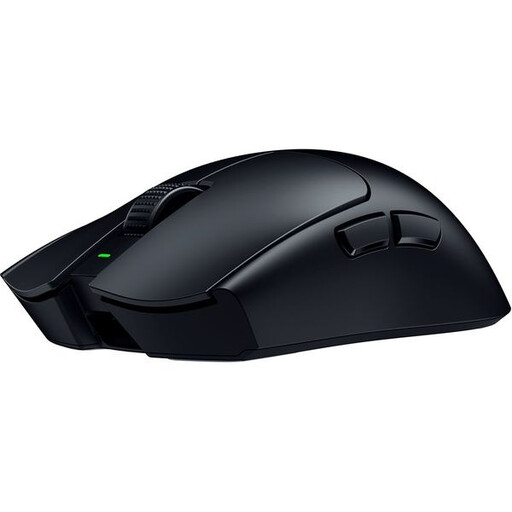 Image unavailable
Razer Viper V3 Pro, Black
Consider this rechargeable model if low stated mass matters and you can schedule USB charging between practice sessions.
Razer specifies 54 g and up to 95 hours of battery life. The listed variant has a Focus Pro 35K Sensor Gen-2 and HyperPolling 8KHz; check the settings you will actually use.
The Joybuy product information identifies a supplied wireless dongle and USB cable, but no USB wall adapter. Check that its shape suits your grip.
Joybuy
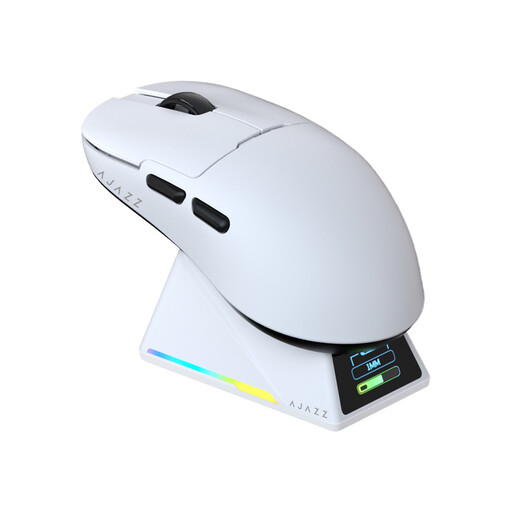 Image unavailable
AJAZZ AJ159 APEX with magnetic charging base
Consider this model if a charging base fits your desk routine and you want a 2.4 GHz wireless option for practice.
The listed variant states 56 g, a PAW3950 sensor, up to 8 kHz polling and 2.4 GHz or wired operation.
Check battery runtime and charging time before deciding whether the base will work with your limited access to power.
Joybuy
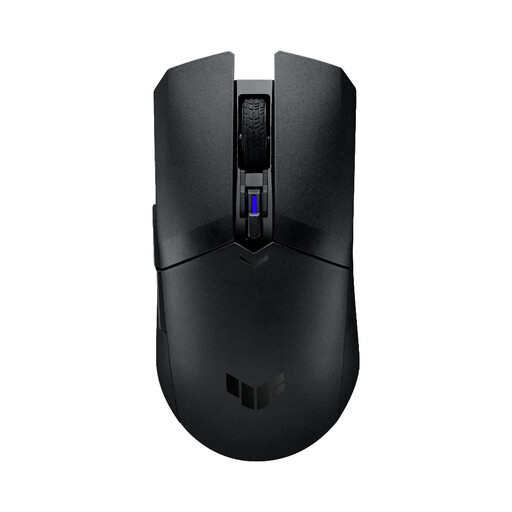 Image unavailable
ASUS TUF Gaming M4 Wireless, Black
Consider this replaceable-battery option if swapping a spare is easier than finding time to recharge.
Check the runtime for the battery type you intend to use and assess movement weight with that battery fitted; a battery-free weight will not describe how the mouse feels in use.
Plan for replacement batteries and take depleted cells to an appropriate collection point.
Joybuy
 Image unavailable
AJAZZ AJ200 AI MC with charging dock
Consider this model if you want a charging dock and intend to use its 2.4 GHz mode for practice.
The listed variant names a PAW3311 sensor, up to 24,000 DPI and Bluetooth, 2.4 GHz and USB-C modes.
Check the exact variant's weight before buying because the product information gives differing figures. Also confirm battery runtime, charging time and fit for your hand and grip.
Joybuy
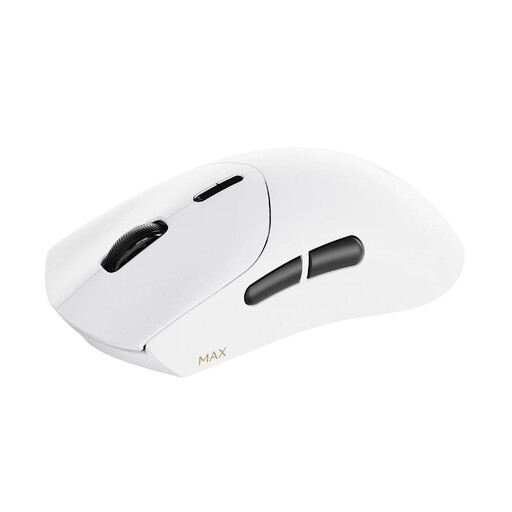 Image unavailable
Rapoo VT7 MAX, White
Consider this wireless model if its stated mass and endurance interest you, but confirm its connection mode before choosing it for competitive practice.
The listed variant states 53 g and up to 8 kHz wireless polling. Its up-to-750-hour battery claim depends on 1,000 Hz operation and a driver update for low-power mode; check runtime at your intended settings.
Confirm how the mouse charges and whether its shape suits your grip.
Joybuy
Questions about power and use
Do I need a mains socket to charge a rechargeable gaming mouse?
Not necessarily: a model that charges by USB may be able to use an available computer USB port. Confirm the exact charging connector, supplied cable and suitable power source; a cable does not mean a wall adapter is included.
Should I use Bluetooth or 2.4 GHz for competitive movement practice?
Use a mouse's dedicated 2.4 GHz receiver for competitive practice when that is its recommended gaming connection. Bluetooth can serve as a secondary connection on models that support it, but compare endurance using the mode you will actually use.
Can I put a used AA battery or retired mouse in household rubbish?
GOV.UK advises that batteries and electrical products should go to an appropriate recycling collection point rather than household rubbish. Check the suitable local collection route for each item.
What should I check about the accessories and after-sales terms?
Check the exact product listing for the wireless receiver, charging cable or dock, applicable warranty and current seller return terms. These details can differ by model and retailer; do not assume that accessories or terms shown for one mouse apply to another.


